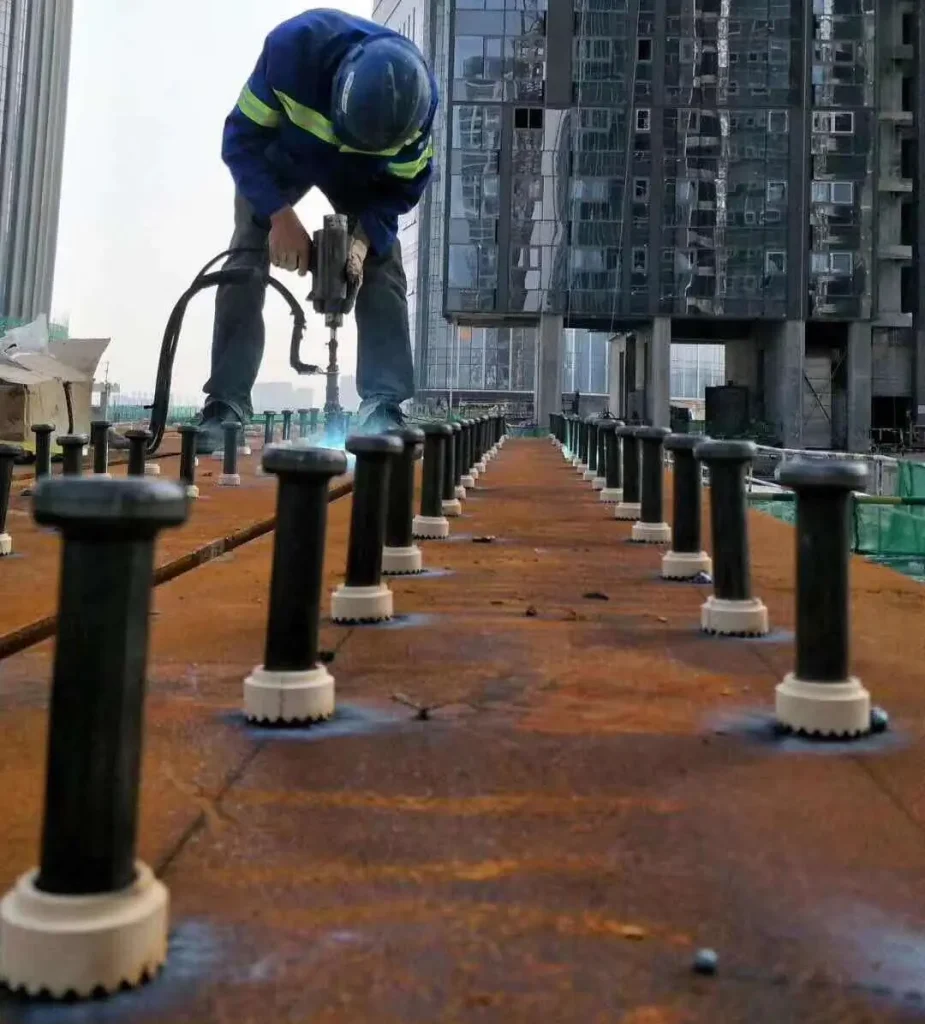
In heavy-duty industrial projects—from bridge construction in Dubai to shipbuilding in Southeast Asia—weld failure is a nightmare scenario. Weak joints, porosity, and inconsistent fillets do not just look bad; they compromise structural integrity and lead to costly rework. Here is the deal: You cannot afford to gamble with welding parameters when deadlines are tight and safety standards like ISO/ASTM are non-negotiable.
Ignoring the small components often leads to the biggest failures, risking both your project budget and your professional reputation. This is where high-quality ceramic ferrules prove their worth as a critical component in drawn arc stud welding, ensuring reliability, safety, and precision. At ZOCMachinery, we empower global contractors with factory-direct welding solutions that guarantee results every time.
What is the main role of ceramic ferrules?
How do they control molten metal?
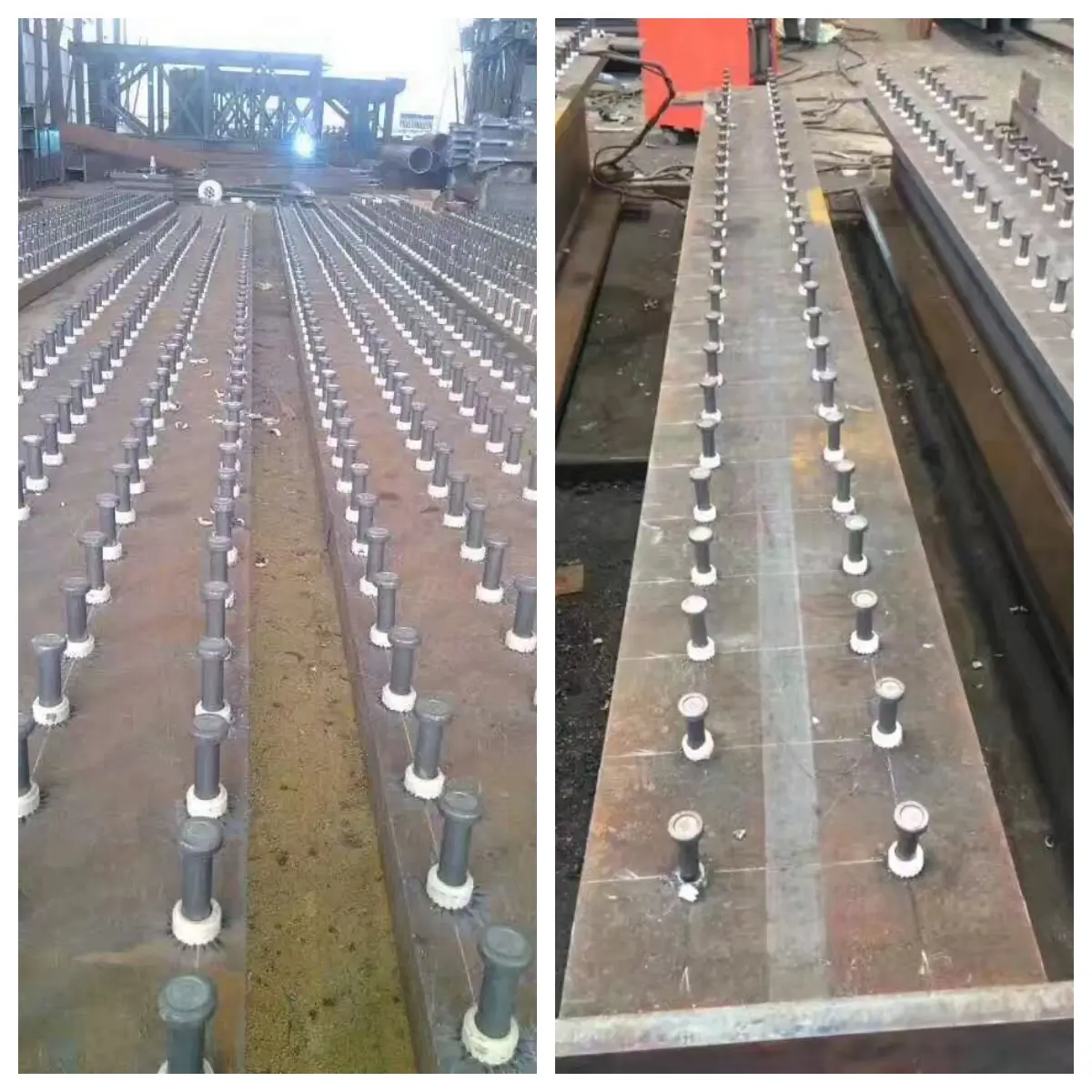
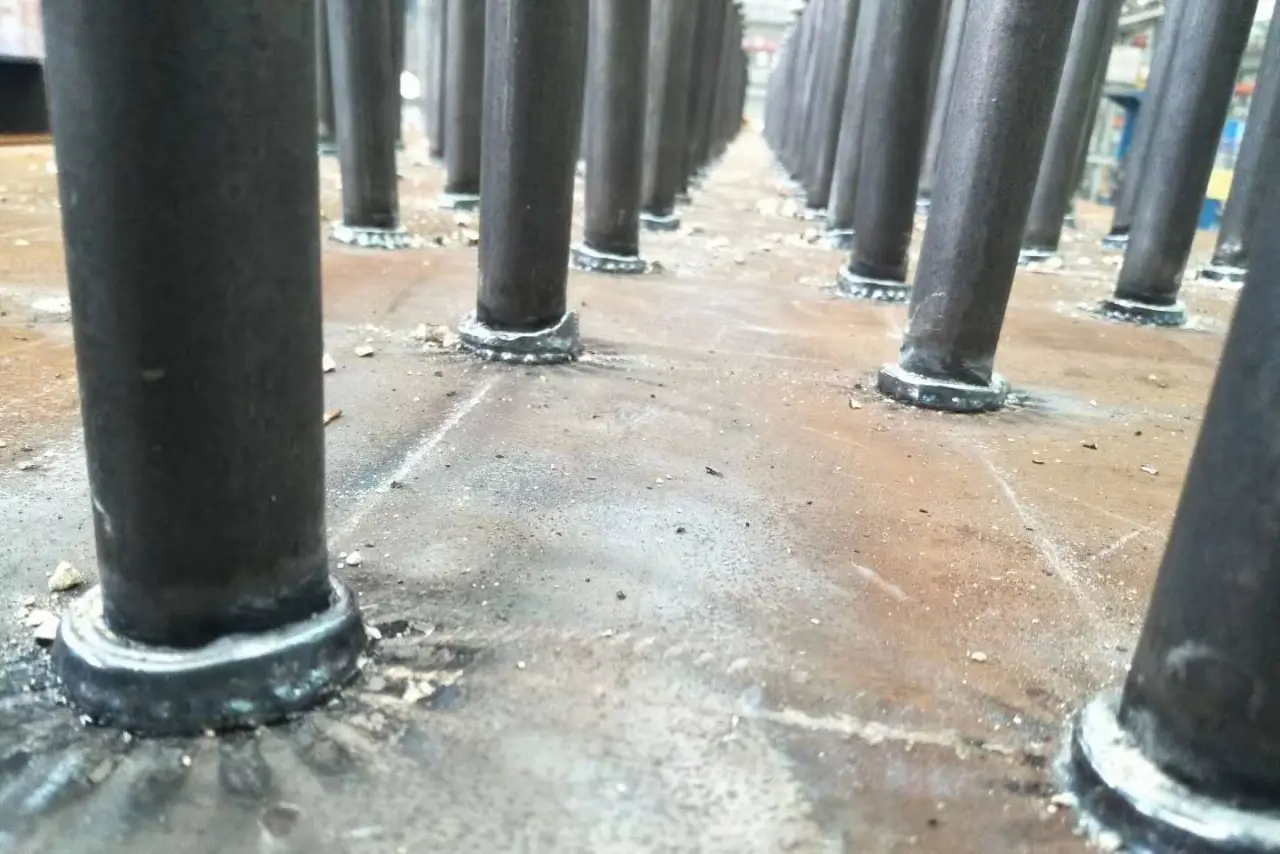
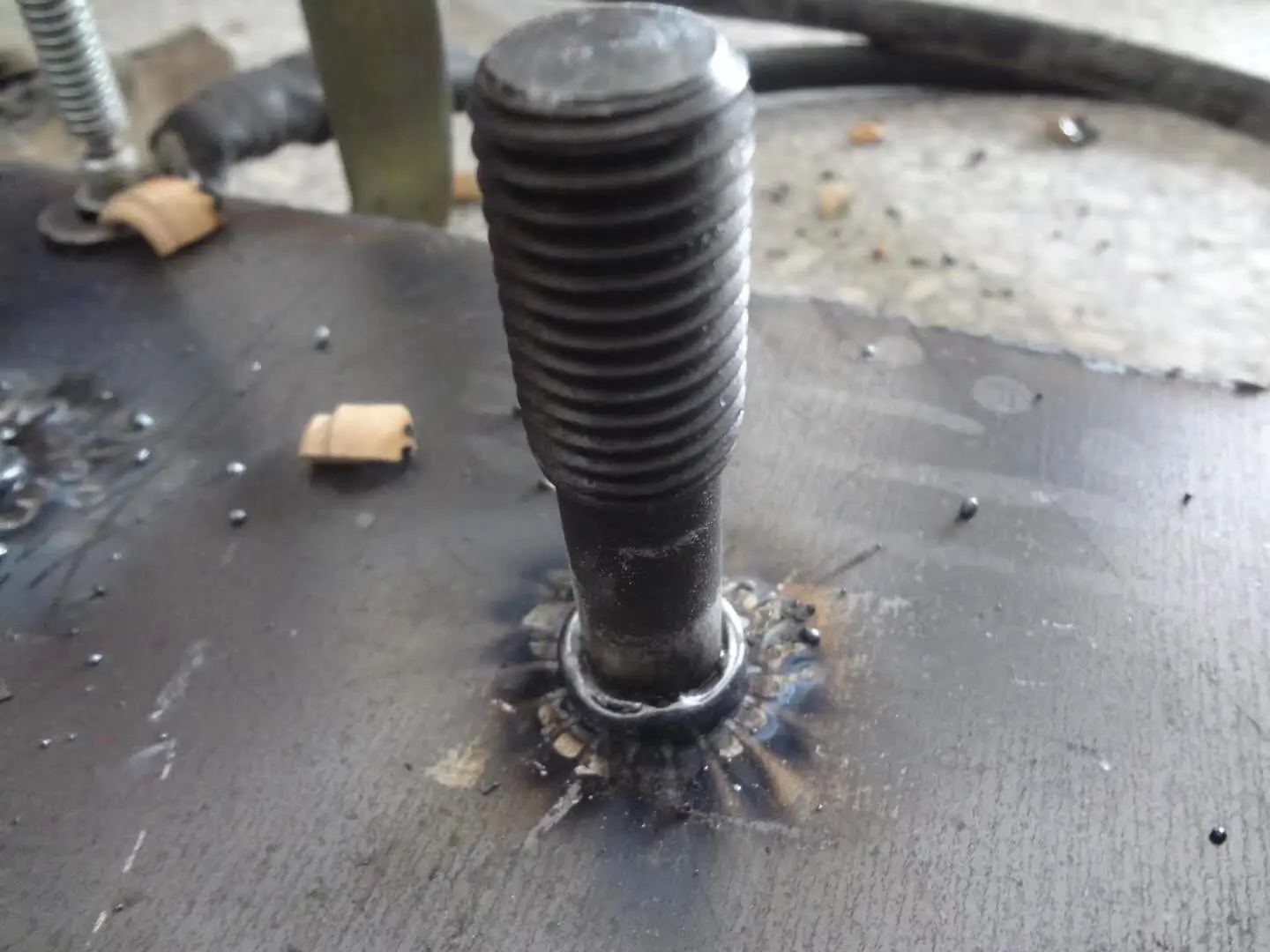
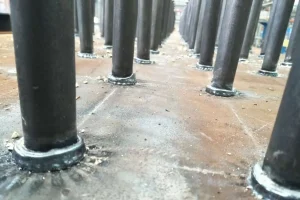
When the arc ignites, the ceramic ferrule acts as a precise mold for the superheated molten pool. You might be wondering how this physically affects the final shape of your connection. It prevents the liquid metal from flowing uncontrollably, ensuring a uniform collar forms around the stud base.
- Prevents liquid metal runoff
- Ensures 360-degree fillet
- Maintains stud perpendicularity
Do they act as a protective shield?
Ceramic ferrules block atmospheric contaminants like oxygen and nitrogen from entering the critical weld pool. But that’s not all; this shielding is vital because air exposure causes immediate oxidation and brittleness. They effectively reduce the need for external shielding gases in many standard structural applications.
- Blocks atmospheric nitrogen
- Prevents immediate oxidation
- Reduces gas equipment needs
Why is heat concentration important?
The ferrule confines the intense heat within the weld zone, preventing rapid dissipation into the surrounding air. This thermal insulation ensures deep penetration into the parent material for a solid bond. Here represents a critical factor: proper heat retention allows for a slower cooling rate, reducing the risk of cracking.
- Confines arc heat
- Ensures deep penetration
- Slows cooling rate
Key Takeaway
Summary: Ceramic ferrules act as a mold, shield, and insulator, ensuring the molten metal forms a strong, uniform, and contaminant-free connection.
| Function | Primary Benefit | Result |
|---|---|---|
| Mold | Contains molten steel | Uniform 360° fillet |
| Shield | Blocks oxygen/nitrogen | Pore-free internal structure |
| Insulator | Retains arc heat | Deeper parent metal penetration |
| Stabilizer | Centers the arc | Consistent burn-off length |
The table above illustrates how the multi-functional nature of the ferrule directly translates to structural integrity.
How do ceramic ferrules ensure weld quality?
Can they prevent porosity defects?
Porosity is the enemy of structural strength, often caused by trapped gas bubbles within the cooling metal. Here is the truth: A properly seated ferrule allows gases to vent through scalloped vents while blocking outside air. This dual action eliminates the pockets that weaken the weld’s internal structure.
- Vents harmful internal gases
- Blocks atmospheric air entry
- Densifies the weld metal
Do they guarantee consistent results?
Manual welding often suffers from operator variability, but ferrules standardize the physical outcome. The ferrule dictates the exact shape and volume of the weld collar every single time. Why does this matter? It means you get identical results across thousands of studs on a massive deck floor.
- Standardizes fillet shape
- Eliminates operator variance
- Ensures repeatable volume
How do they affect mechanical strength?
By ensuring proper fusion and fillet shape, ferrules maximize the load-bearing area of the connection. A full, clean fillet distributes stress evenly from the stud to the base metal. You need to know this is critical for passing rigorous tensile and shear tests required in construction.
- Maximizes load area
- Distributes stress evenly
- Passes tensile tests
Key Takeaway
Summary: Ferrules eliminate human error and environmental variables, providing the consistency required to pass ISO and ASTM quality inspections.
| Quality Metric | With Ferrule | Without Ferrule |
|---|---|---|
| Fillet Shape | Uniform & Concentric | Irregular & Flat |
| Internal Structure | Dense & Solid | Porous & Brittle |
| Repeatability | High (99%+) | Low (Operator dependent) |
| Inspection Pass Rate | Excellent | Poor |
Data indicates that using matched ferrules reduces weld rejection rates by over 85% in structural applications.
Why are ceramic ferrules vital for safety?
Do they reduce dangerous spatter?
Welding arcs are violent, often ejecting molten metal droplets at high speeds toward the operator. Picture this: The ferrule acts as a containment wall, keeping hot metal inside the weld zone. This significantly reduces the risk of burns to the operator and fire hazards nearby.
- Contains molten spray
- Reduces fire risk
- Keeps workspace clean
Can they block harmful UV radiation?
The arc in stud welding generates intense UV light that can severely damage eyesight. While PPE is mandatory, the ferrule shrouds the arc source at the base. Better yet, this containment minimizes “arc flash” exposure to other workers on the site.
- Shrouds arc source
- Protects nearby workers
- Complements standard PPE
How do they simplify cleanup?
Because spatter is contained, there is less metal adhering to the surrounding workpiece. This reduces the labor hours needed for grinding and cleaning after the weld. You will find that cleaner welds mean faster project turnover for your team.
- Less grinding required
- Cleaner base metal
- Faster project turnover
Key Takeaway
Summary: Beyond quality, ferrules are a critical safety barrier, protecting your workforce from burns and UV exposure while keeping the job site cleaner.
| Safety Factor | Benefit | Workplace Impact |
|---|---|---|
| Spatter Control | Blocks hot metal ejection | Reduced burn injuries |
| UV Containment | Shrouds the arc base | Lower “arc eye” risk |
| Fire Prevention | Contains sparks locally | Safer near flammables |
| Cleanliness | Minimizes messy residue | Less hazardous dust cleanup |
Implementing ferrules significantly lowers on-site injury risks associated with molten metal projection.
Do ceramic ferrules affect arc stability?
What is arc blow in welding?
Arc blow occurs when magnetic fields deflect the arc, causing uneven heating and fusion. You have seen it before: The arc wanders, resulting in incomplete fusion on one side of the stud. Ferrules help mechanically center the arc energy, counteracting minor magnetic interference.
- Prevents arc wandering
- Counteracts magnetic pull
- Ensures even fusion
How do they concentrate energy?
The ceramic material is an electrical insulator and does not conduct the current. This forces the electrical arc to maintain a direct path between the stud and workpiece. Here is the kicker: This focus ensures maximum energy transfer for efficient melting.
- Focuses electrical path
- Insulates surrounding area
- Maximizes penetration depth
Do they work in all positions?
Yes, ferrules are crucial when welding in vertical or overhead positions. They physically hold the molten metal in place against gravity until it solidifies. believe it or not, without them, overhead stud welding would be virtually impossible.
- Supports vertical welds
- Enables overhead welding
- Resists gravity flow
Key Takeaway
Summary: Ferrules stabilize the electrical arc and mechanically support the molten pool, enabling successful welds even in difficult positions or magnetic environments.
| Feature | Function | Benefit |
|---|---|---|
| Insulation | Prevents current leakage | Focused arc energy |
| Physical Barrier | Centers the arc | Resists magnetic arc blow |
| Molten Support | Holds liquid metal | Enables overhead welding |
| Geometry | Defines arc length | Consistent burn-off |
Arc stability is directly linked to the mechanical confinement provided by the ceramic geometry.
Which industries rely on ceramic ferrules?
Why is construction the biggest user?
Composite floor decks and steel beams require millions of shear connectors annually. Think about it: Every high-rise relies on these studs for structural stability. Ferrules are mandatory here to meet strict building codes and seismic standards.
- Shear connector fixation
- Seismic compliance
- High-rise stability
How does shipbuilding utilize them?
Shipyards use ferrules for securing insulation pins and cable hangers on steel bulkheads. The humid, salty environment makes the shielding property of ferrules essential. It gets better: They ensure watertight integrity by preventing burn-through on thinner plates.
- Insulation securing
- Deck timber fixing
- Watertight integrity
Are they used in heavy machinery?
Yes, for attaching wear plates and hydraulic components to heavy equipment. These applications demand high-strength bonds that can withstand extreme vibration. Rest assured, ZOCMachinery supplies robust ferrules specifically for these high-stress industrial environments.
- Wear plate attachment
- Vibration resistance
- High-stress bonding
Key Takeaway
Summary: From skyscrapers to cargo ships, any industry requiring heavy-duty structural fastening relies on the consistency provided by ceramic ferrules.
| Industry | Application | Key Requirement |
|---|---|---|
| Construction | Bridge & Buildings | Shear strength & Code compliance |
| Shipbuilding | Decks & Bulkheads | Corrosion resistance & Seal |
| Heavy Machinery | Wear components | Vibration & Impact resistance |
| Power Generation | Boiler tubes | Thermal cycling durability |
Different industries require specific ferrule compositions, yet all rely on them for structural certification.
How do ceramic ferrules compare to gas?
Is gas shielding a viable alternative?
Gas shielding like Argon creates a clean weld but lacks mechanical containment. Here is the catch: Gas cannot shape the fillet or hold molten metal in overhead positions. Gas is typically reserved for specific short-cycle applications or automated robot welding.
- Lacks fillet shaping
- Fails in overhead
- Good for short-cycle
Which method is more cost-effective?
Gas requires expensive cylinders, regulators, and hoses that are hard to transport. Ceramic ferrules are cheap, lightweight, and easy to ship to remote sites. Bottom line: For field work, ferrules are significantly cheaper and logistically easier.
- No heavy tanks
- Lower equipment cost
- Easier logistics
When should you choose ferrules?
Choose ferrules for structural steel, large diameter studs over 10mm, and outdoor sites. Wind can blow shielding gas away, but it cannot move a ceramic ferrule. This is critical: This makes ferrules the only reliable choice for outdoor construction projects.
- Large diameter studs
- Windy outdoor sites
- Structural steel
Key Takeaway
Summary: While gas has its place, ceramic ferrules are superior for heavy-duty, outdoor, and structural applications where fillet shape and wind resistance are key.
| Feature | Ceramic Ferrules | Shielding Gas |
|---|---|---|
| Wind Resistance | High (Unaffected) | Low ( blows away) |
| Fillet Shaping | Yes (Molded) | No (Natural flow) |
| Overhead Use | Excellent | Poor |
| Cost | Low (Consumable) | High (Tank rental/refill) |
For field construction sites, the logistical simplicity of ferrules outweighs the clean finish of gas shielding.
What are the logistics of using ferrules?
Are they difficult to transport?
Ferrules are lightweight but fragile, requiring proper packaging to prevent breakage. Listen to this: ZOCMachinery ensures robust packaging to survive shipping to Africa or South America. We guarantee they arrive intact, ready for immediate use on your site.
- Lightweight items
- Robust packaging needed
- Global shipping ready
How should you store them?
Ceramics are porous and can absorb moisture from the air if left exposed. Warning: Wet ferrules can cause steam explosions or porosity in the weld. Always keep them in sealed bags and store them in a dry, climate-controlled area.
- Keep strictly dry
- Avoid crushing
- Rotate stock
Is waste management an issue?
Ferrules are single-use items and must be broken off after the weld cools. This creates debris that needs to be swept up, but it is chemically inert. Ideally, most contractors view this minor cleanup as a fair trade-off for weld quality.
- Single-use waste
- Chemically inert
- Easy sweep-up
Key Takeaway
Summary: Proper storage is critical to prevent moisture damage. While they create waste, the logistical ease of ferrules outweighs the cleanup requirements.
| Logistic Factor | Requirement | ZOC Solution |
|---|---|---|
| Packaging | Shock-proof boxes | Reinforced export cartons |
| Storage | Dry, low humidity | Moisture-barrier bags |
| Transport | Handle with care | Palletized secure shipping |
| Disposal | Construction waste | Inert material classification |
Moisture control in storage is the single most important factor for preventing ferrule-induced weld defects.
How do you select the right ceramic ferrules?
Does size really matter?
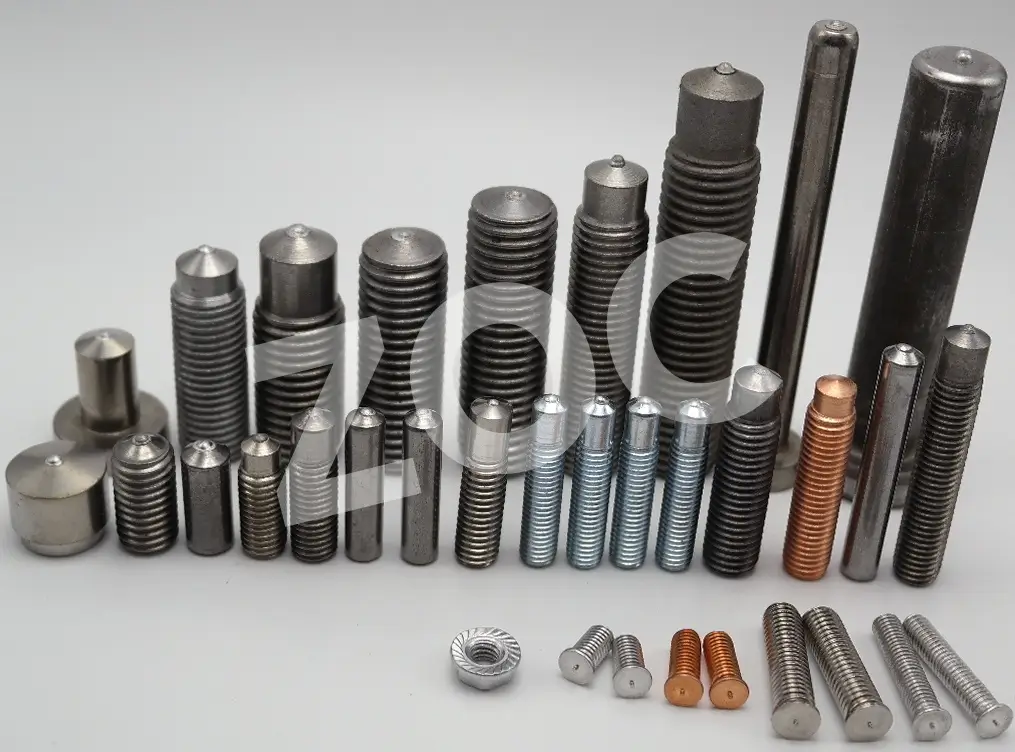
The ferrule must match the stud diameter and type exactly, such as threaded vs shear connector. Don’t make this mistake: Using a mismatch causes flash-out or binding during the plunge. The internal geometry is engineered for specific burn-off lengths and fillet sizes.
- Match stud diameter
- Check internal geometry
- Verify burn-off length
What about different tooth configurations?
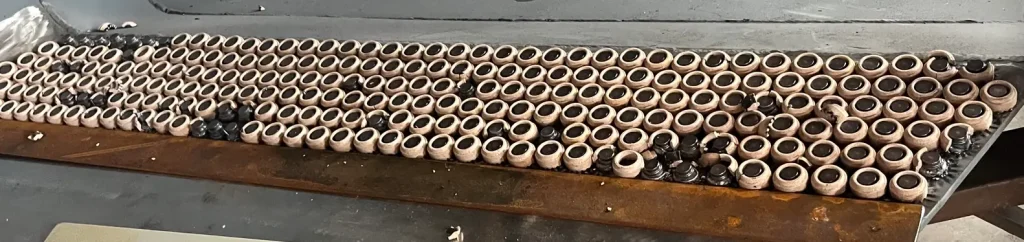
Standard ferrules have teeth or vents to allow gas to escape on flat surfaces. However, welding through metal deck requires special “through-deck” ferrules. These are wider and designed to burn through the galvanized sheet without defects.
- Standard flat vents
- Through-deck width
- Galvanized capability
Why buy from the machine manufacturer?
Buying ferrules from your machine supplier ensures perfect compatibility. ZOCMachinery provides matched sets of studs and ferrules to guarantee performance. Here is the deal: Mismatched consumables are the leading cause of equipment jamming.
- Guaranteed fit
- Matched tolerances
- Reduced jamming
Key Takeaway
Summary: Always match the ferrule to the stud type and base material. Using matched consumables from a single source prevents compatibility headaches.
| Ferrule Type | Application | Key Feature |
|---|---|---|
| Flat (Standard) | Direct on steel beam | Fine gas vents |
| Through-Deck | Galvanized decking | Wider teeth for zinc burn-off |
| Inside Angle | Corners/Angles | Asymmetric shape |
| Vertical | Wall welding | Trap design for gravity |
Selecting the wrong ferrule geometry is the primary cause of “flash-out” and incomplete fusion.
What defects occur without ceramic ferrules?
Will the weld act weak?
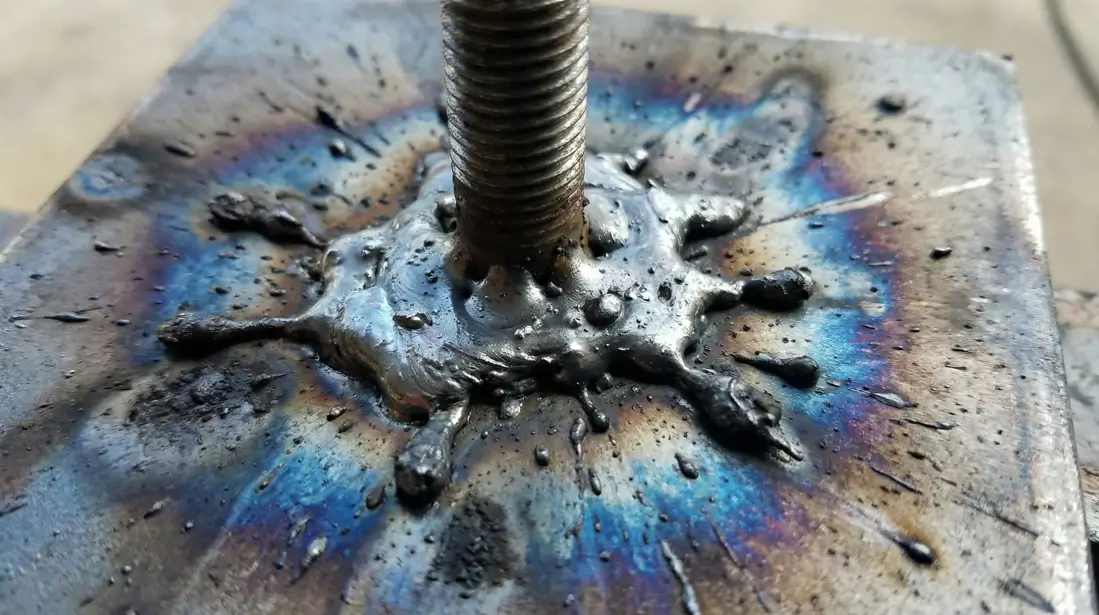
Without a ferrule, the molten metal spreads thin, creating a “pancake” weld with no throat depth. It gets worse: This flat weld has significantly lower shear strength. Such welds will likely fail inspection and require costly gouging and re-welding.
- No throat depth
- Low shear strength
- Inspection failure
Is oxidation inevitable?
Without the shield, oxygen reacts with the hot steel instantly. This results in a brittle, porous interface filled with slag inclusions. Trust me, you do not want to explain weld failures to a structural engineer.
- High porosity
- Slag inclusions
- Brittle fracture
Can you damage the equipment?
Uncontained spatter can accumulate on the gun’s chuck and footpiece. This leads to electrical shorts and frequent replacement of expensive spare parts. You should know that using ferrules prolongs the life of your welding gun consumables.
- Equipment shorts
- Chuck damage
- Increased maintenance
Key Takeaway
Summary: Welding without ferrules in drawn arc processes leads to structural failure, oxidation, and equipment damage. It is simply not an option for professional results.
| Defect Type | Cause | Consequence |
|---|---|---|
| Pancake Weld | No containment | Failed shear test |
| Porosity | Oxygen exposure | Internal weakness |
| Arc Blow | Magnetic drift | One-sided fusion |
| Gun Damage | Spatter buildup | Short circuits |
The cost of repairing a single failed weld often exceeds the cost of a thousand ceramic ferrules.
How does ZOCMachinery support your needs?
Do we offer factory-direct pricing?
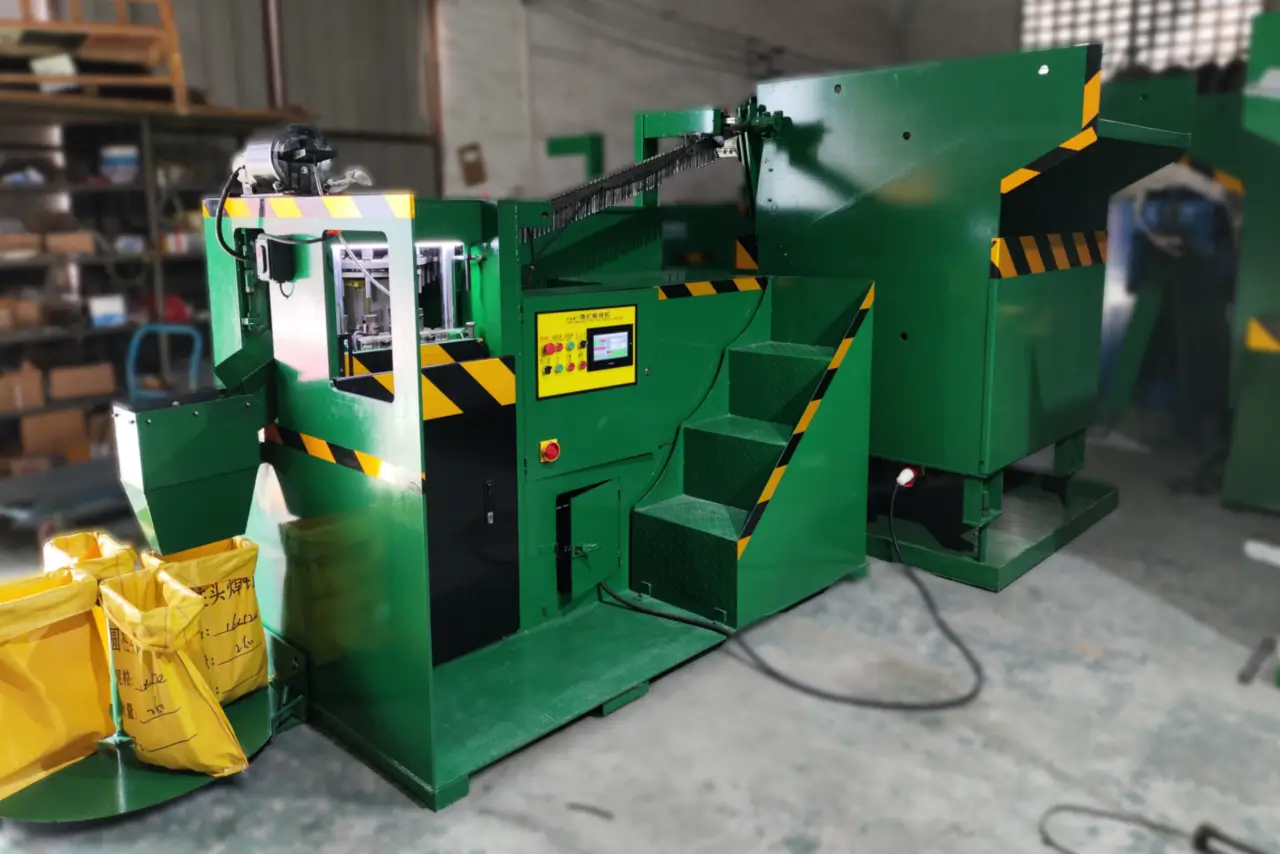
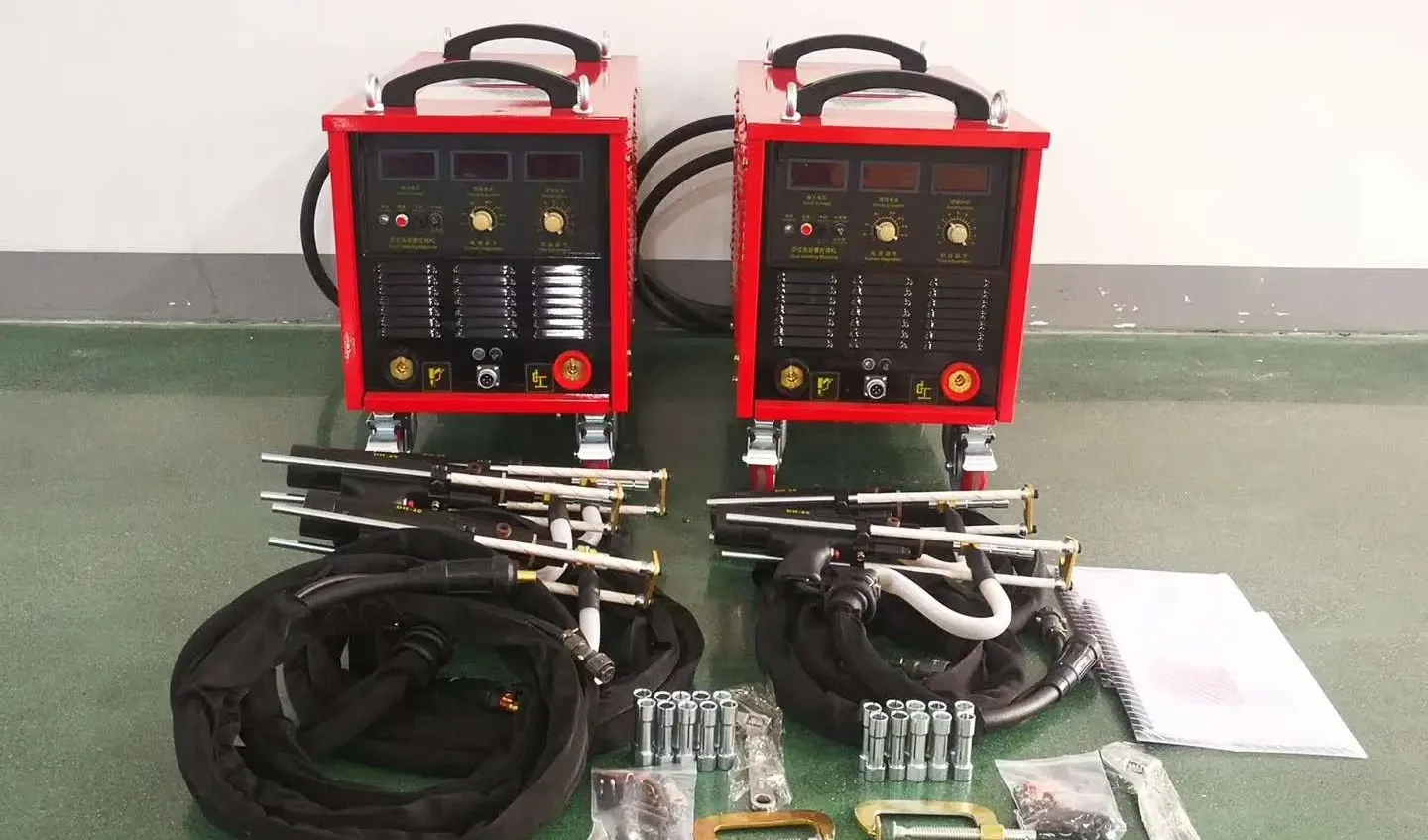
We manufacture both machines and consumables, cutting out the middleman. What this means for you: You get premium quality at prices 15-20% lower than local suppliers. This competitive edge is vital for contractors in price-sensitive markets like Africa.
- No middleman
- 15-20% savings
- Volume discounts
How do we ensure quality?
Our ferrules undergo rigorous thermal shock and dimensional testing. We ensure they can withstand the extreme heat of high-amperage welding without cracking. Rest assured, our products meet global standards for ISO and ASTM projects.
- Thermal shock testing
- ISO compliance
- High-amp durability
Can we deliver globally fast?
We understand that a shortage of ferrules can stop a whole construction site. With our robust supply chain, we ship to the Middle East and South America rapidly. Best of all, we provide technical support via WhatsApp to solve on-site issues instantly.
- Rapid global logistics
- WhatsApp support
- No site stoppages
Key Takeaway
Summary: ZOCMachinery is your one-stop partner, providing durable ceramic ferrules and expert support to keep your projects running on time and on budget.
| ZOC Advantage | Details | Customer Benefit |
|---|---|---|
| Price | Factory Direct | 15-20% Cost Reduction |
| Quality | ISO Certified | No Site Rejections |
| Speed | Global Logistics | 48Hr Shipping Options |
| Support | 24/7 Technical | Instant Problem Solving |
Partnering with a factory-direct supplier eliminates the risk of counterfeit or substandard consumables.
Conclusion
Ceramic ferrules are not just accessories; they are the guardians of weld quality. They control the molten metal, shield against defects, and ensure every connection meets rigorous safety standards. At ZOCMachinery, we don’t just sell parts; we sell peace of mind. With factory-direct pricing, global logistics, and ISO-certified quality, we empower you to build with confidence.
Ready to secure your project’s success? Stop overpaying for consumables. Contact ZOCMachinery today for a quote on premium stud welding systems and ceramic ferrules—delivered straight from the factory to your site.
Empowering global industry with reliable welding innovation.
FAQ
Q1: Can I reuse a ceramic ferrule for multiple welds?
No, you cannot. Ceramic ferrules are designed as single-use consumables because they experience significant thermal shock and must be physically broken off to inspect the weld fillet properly.
Q2: How do I know if my ferrules are damp?
If you hear a “pop” or see excessive porosity in the weld, they might be wet. Damp ceramics release steam into the arc; always store them in a dry, sealed container to prevent this defect.
Q3: What is the best way to remove the ferrule after welding?
Wait until the weld metal has solidified and turned from red to black. Then, simply tap the ferrule with a small hammer or chipping tool to shatter the brittle ceramic ring.
Q4: Can I weld without a ferrule if I use shielding gas?
It depends on the specific process. While gas shielding works for short-cycle welding on thin sheets, heavy-duty drawn arc welding on structural steel requires ferrules to shape the fillet and contain the large molten pool.
Q5: How do I choose the correct ferrule size?
You must match the ferrule strictly to the stud diameter and application, such as flat versus through-deck. Refer to the stud manufacturer’s datasheet or contact ZOCMachinery’s support team to ensure perfect compatibility.