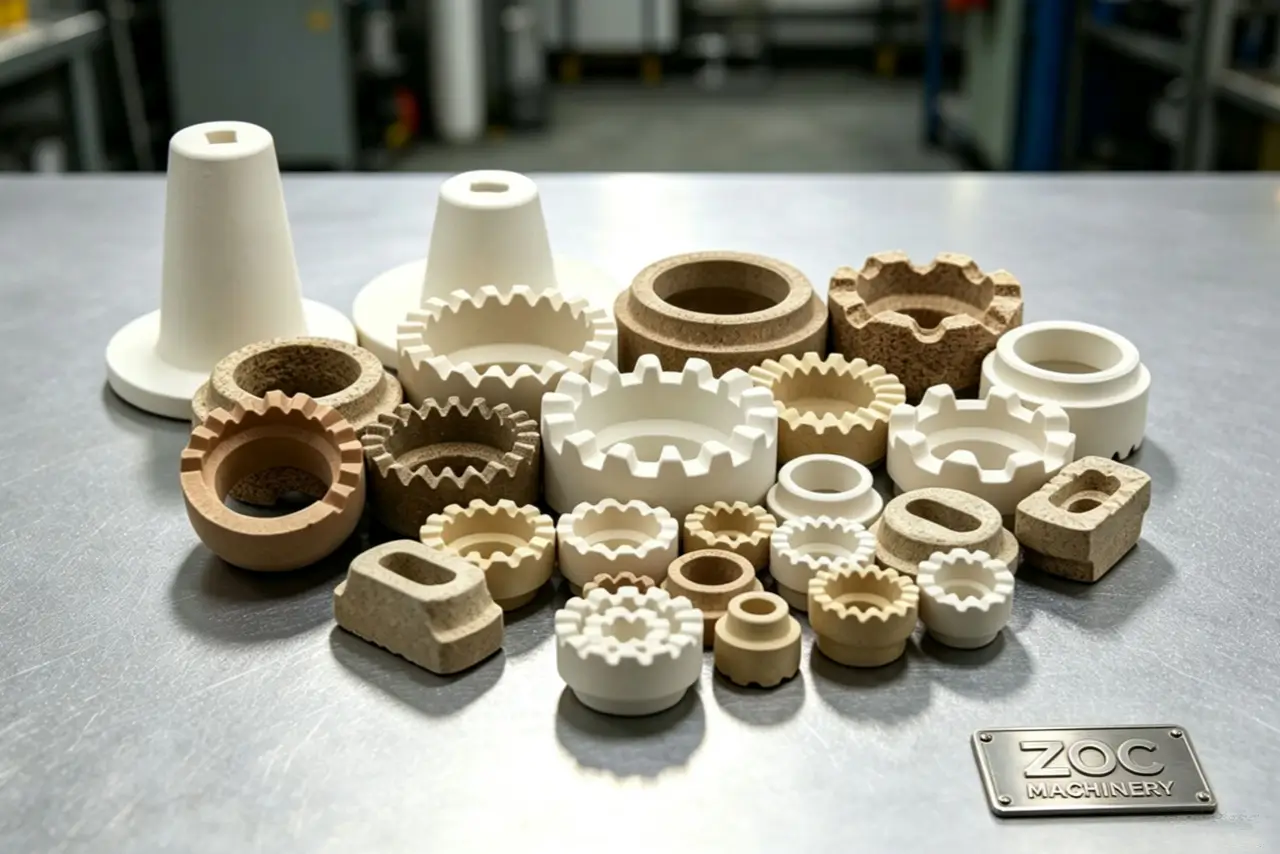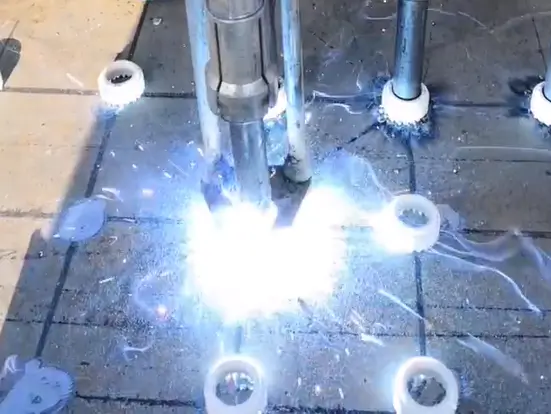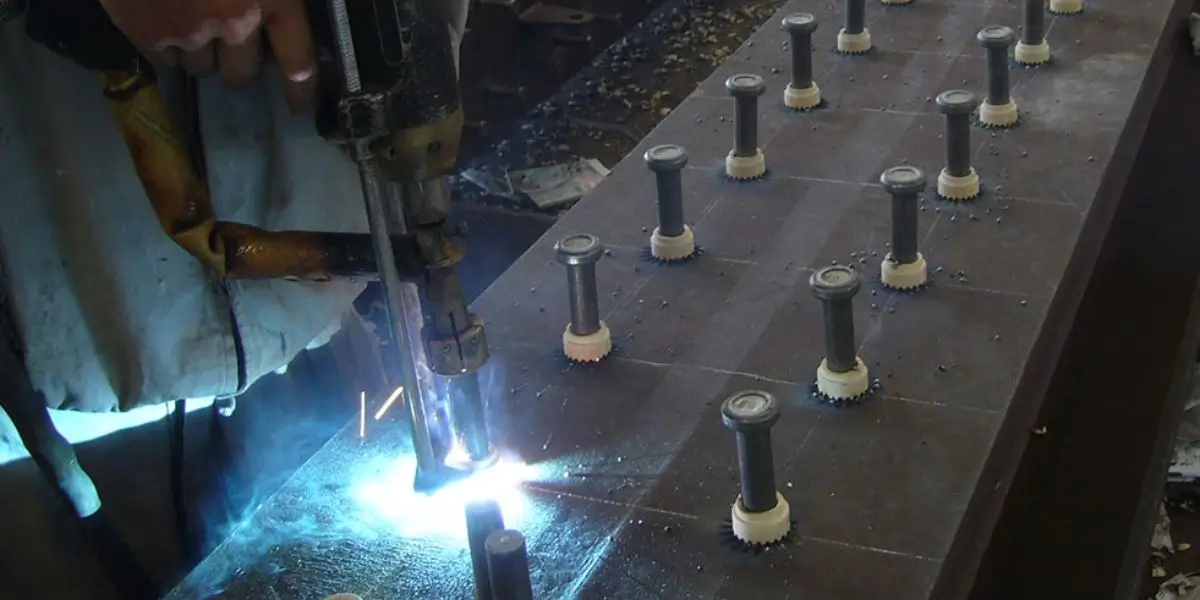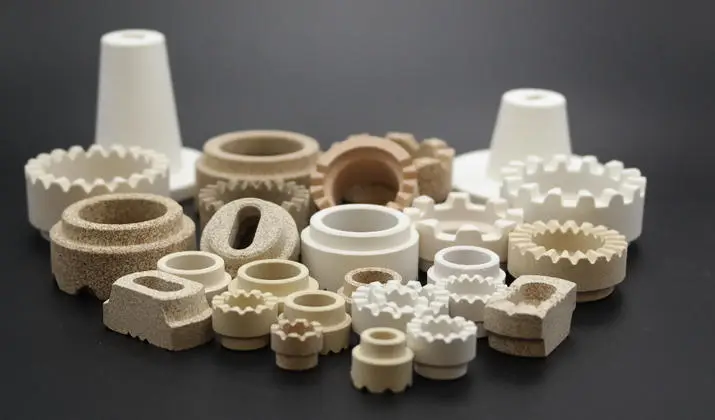
The right portable stud welders for remote construction are the ones that can weld the specified stud on the actual base metal with the power, access, and working conditions available on site. Portability matters, but it comes after process capacity and a qualified weld. At ZOC Machinery, we recommend starting with the stud drawing and site power plan, then checking the gun, cables, consumables, and inspection requirements as one system.
What makes portable stud welders practical on remote sites?
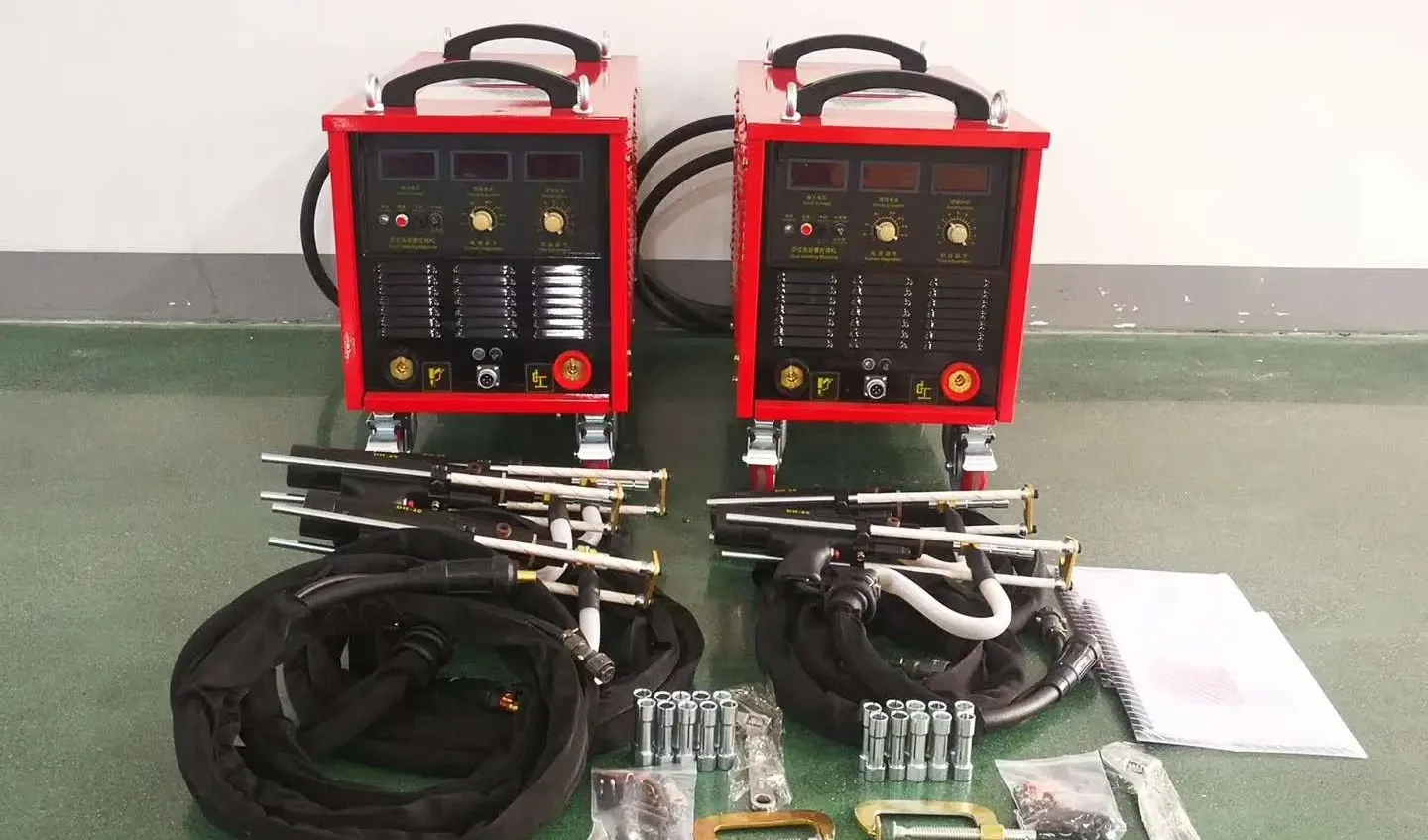
A bridge deck, roof frame, and workshop floor create different handling problems. Measure the route from unloading point to weld location before comparing machine weights. Include the power source, gun, leads, ferrules or gas supply, and a safe way to move them. A smaller unit is useful only if its rated output and duty cycle cover the work.
Plan the move, not just the machine
- Check the machine and accessory weights against lifting and platform limits.
- Estimate the cable route and how often the power source must be repositioned.
- Provide protection from weather, dust, impacts, and site traffic as required by the equipment manual.
- Confirm the stud size, material, and number of welds expected per shift.
A cart may suit a level deck; a lift plan may be needed for an upper level. Neither setup time nor transport method has a universal number.
| Site question | What to check | Why |
|---|---|---|
| How far is the work area? | Route for machine, leads, and consumables | Handling time and safety |
| How much access is available? | Platform, openings, and gun clearance | Placement and alignment |
| Can the unit sustain the work? | Rated output and duty cycle | Production without overheating |
Where on-site stud welding saves steps
On-site stud welders can attach studs from the working side without drilling a through-hole in some applications. That may reduce drilling, deburring, and access to the reverse face. The actual time saving depends on surface preparation, positioning, ferrule handling, inspection, and repair work. A short arc cycle is only one part of the installation time.
Compare the full work sequence
For a fair comparison with bolting, list every step from layout to accepted connection. Include consumables and the effect of access restrictions. A trial area with the real studs and plate gives a better productivity estimate than a generic per-stud time claim.
| Work step | Mechanical fastening may require | Stud welding may require |
|---|---|---|
| Preparation | Marking and drilling setup | Surface and return-path preparation |
| Attachment | Hole, fastener, and tightening | Stud placement and weld cycle |
| Verification | Fit and torque checks | Visual and specified weld tests |
Choose a CD unit for suitable thin sheet
Capacitor-discharge (CD) welding uses a short discharge and a stud with an ignition tip. It is often considered for thin sheet, enclosures, and panels where heat input and reverse-side appearance matter. It does not guarantee a mark-free back face. Test the exact sheet grade, thickness, finish, stud, and CD setup before approving a visible part.
What a site trial should answer
- Does the weld meet the specified mechanical test?
- Is distortion or reverse-side marking acceptable?
- Can the available site power run the selected CD unit?
- Will the operator have clear access to position the gun squarely?
The CD versus drawn-arc comparison helps separate thin-sheet work from heavier structural applications.
| Sheet condition | Decision to make | Evidence |
|---|---|---|
| Thin or visible sheet | CD process and stud size | Trial weld and finish check |
| Coated panel | Weld-area preparation | Qualified procedure |
| Mixed materials | Stud and base-metal compatibility | Supplier data and test |
Select drawn-arc equipment for structural studs
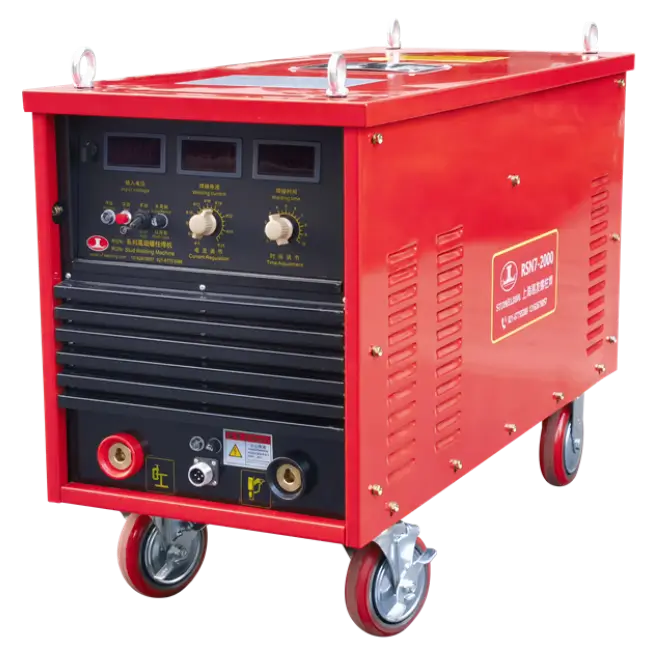
Bridge and steel-frame work may call for larger headed shear connectors and a drawn-arc procedure. Match the power source and gun to the required stud diameter, base metal, ferrule or shielding method, and production rate. The structural drawing and governing code decide the connector and acceptance criteria; a machine’s maximum diameter is not a promise that every joint in that range will pass.
Check the whole welding package
Ask for the rated stud range, duty cycle, input supply, compatible gun and cables, and recommended consumables. Then make trial welds on the actual deck or plate arrangement. Our arc stud welding process guide explains the welding sequence and inspection points.
| Application detail | Equipment check | Project check |
|---|---|---|
| Shear connector | Stud and ferrule compatibility | Structural drawing |
| Deck-through welding | Approved gun and procedure | Deck and coating detail |
| High daily volume | Rated duty cycle and cooling | Production and inspection plan |
Does a compact inverter have enough capacity?
An inverter can make a power source easier to move, but size alone does not tell you what it can weld. Compare rated welding current, duty cycle, stud range, input supply, cable allowance, and service support for the exact model. A compact machine used continuously at its limit may be a worse field choice than a larger one with the required reserve.
Compare model data, not categories
The steel-structure stud welder buying guide covers the capacity checks for site work. Ask the supplier to confirm the intended stud and cable configuration in writing.
| Specification | Why it matters | How to verify |
|---|---|---|
| Rated stud range | Process compatibility | Model data and trial weld |
| Duty cycle | Sustained output | Manufacturer rating |
| Input requirements | Site or generator match | Nameplate and manual |
| Transport weight | Safe movement | Complete setup weight |
Use single-sided access where it helps
Stud welding can place a fixing point on a box section or enclosed plate without reaching the back face. This is useful for some industrial repairs, machinery frames, and steelwork. It does not by itself make a tank or vessel watertight, nor does it remove the need to check the base metal for distortion and the weld for fitness in service.
Look at the connection behind the access problem
Confirm that the stud can carry the planned load and that the surface can be prepared and inspected from the available side. For pressure or sealed equipment, follow the applicable design and test requirements before treating a welded attachment as acceptable.
| Method | Access consideration | Further check |
|---|---|---|
| Through-bolt | May require reverse-face access | Hole and tightening requirements |
| Welded stud | Work can occur from one face | Weld procedure and inspection |
| Sealed vessel attachment | Access may be limited | Pressure-boundary review and test |
Match field power to the welder
A generator or temporary supply has to meet the selected welder’s input voltage, phase, frequency, and operating demand. Check the manufacturer’s generator guidance, including any starting or peak requirements, rather than using a generic kVA chart. Long or undersized supply leads can create voltage drop; long welding cables also need to be within the machine’s approved arrangement.
Before the first weld
- Compare the power source nameplate and manual with the actual supply.
- Confirm protective devices, grounding, connectors, and cable sizes with the site electrician.
- Run a trial weld at the farthest planned cable position.
- Monitor the supply and welder for faults during the trial.
If the supply is marginal, reduce the problem at the source: use a suitable generator, shorten or resize the cable run where permitted, or select a machine with input requirements the site can meet.
| Power item | Question to ask | Reference |
|---|---|---|
| Voltage and phase | Does the site supply match? | Welder nameplate |
| Generator capacity | Can it support the specified cycle? | Manufacturer guidance |
| Cable length and size | Is voltage drop within limits? | Manual and electrician |
| Trial at work location | Does the weld pass? | Qualified procedure |
Control the safety risks on site
Stud welding still produces arc radiation, hot metal, fumes, sparks, and electrical hazards. A ferrule may contain some molten metal, but it does not replace eye protection, screens, ventilation, or fire controls. Wet or exposed conditions require particular attention to the electrical equipment rating and the site hot-work procedure. Stop work when the setup cannot be kept safe and dry as required.
Assess the actual location
Check nearby workers, combustible materials, coatings, airflow, confined spaces, and the route of cables across the work area. Choose protective equipment and controls under the site hazard assessment. Do not assume welding is inherently safer than drilling; the two methods have different hazards.
| Hazard | Stud-welding control | Site question |
|---|---|---|
| Arc radiation | Appropriate eye and skin protection | Are bystanders shielded? |
| Fumes and coatings | Ventilation and material review | What is on the plate? |
| Hot work | Fire controls and housekeeping | What can ignite nearby? |
| Electrical exposure | Sound, dry equipment and supply | Is the setup rated for conditions? |
Compare project cost per accepted stud
A machine quote is only one part of the cost. Count studs, ferrules or gas, power, handling, preparation, access equipment, inspection, repairs, and downtime. Do the same for a mechanical-fastener option. Claims that one method saves a fixed percentage of labor ignore stud size, location, and the quality plan.
Use a small field trial to price the work
Record labor and consumables for a representative batch, including rejected welds and rework. The stud welding machine price guide helps separate purchase price from operating cost.
| Cost item | What to include | Why |
|---|---|---|
| Equipment | Welder, gun, generator, leads | Capital and rental cost |
| Consumables | Studs, ferrules or gas | Cost per attempt |
| Labor and access | Setup, movement, welding | Site productivity |
| Quality | Inspection, failures, repairs | Cost per accepted stud |
Maintain stud welders between site moves
Inspect the welding gun, chuck, cables, connectors, return clamp, and cooling paths before they cause intermittent faults. Follow the manual for cleaning and maintenance; opening a power source or blowing compressed air into it may require trained service personnel. Protect equipment during transport and store consumables as their supplier specifies.
A short pre-shift check
- Look for damaged insulation, loose connectors, and bent gun parts.
- Confirm the stud holder and ferrule holder fit the work.
- Keep ventilation openings clear without bypassing guards.
- Make the procedure-required trial weld after a move or setup change.
For service intervals and troubleshooting, see the stud welder maintenance guide.
| Component | Field check | Action if defective |
|---|---|---|
| Gun and chuck | Fit, movement, and wear | Repair or replace |
| Welding and return cables | Insulation and connection | Remove from service until fixed |
| Cooling openings | Obstruction or contamination | Clean per manual |
| Consumables | Correct type and condition | Replace damaged stock |
Frequently asked questions
Can I weld on paint or rust?
Follow the qualified surface-preparation procedure. Coatings, heavy rust, oil, and moisture can interfere with the weld, but the correct preparation depends on the process and coating rather than a universal “grind everything” rule.
Which welder should a small contractor buy first?
Start with the jobs you already have. CD equipment may suit thin sheet and small studs; drawn-arc or short-cycle equipment may be needed for other connections. The short-cycle stud welding guide explains the short-cycle option.
How do I know a site weld is strong enough?
Inspect and test trial welds to the job procedure. The angle and sample frequency for a bend test are not universal. Our stud welding parameter guide explains how setup and testing work together.
Can I weld outdoors in rain?
Do not expose personnel or equipment to wet conditions outside their rating. Follow the site electrical and hot-work rules and the machine manual. Shelter or postpone the work if you cannot maintain the required conditions.
What is the largest stud a portable machine can weld?
That depends on the model, process, gun, duty cycle, material, and input supply. Use the manufacturer’s rated range and confirm the exact application with trial welds.
Choose for the job in front of you
A site-ready stud welder has to match the stud, material, power supply, cable route, and inspection plan. Share those details with the supplier before comparing machine weight or headline amperage. If you are selecting equipment for a bridge deck, steel frame, or remote repair, contact us with the stud drawing, base-metal grade, planned weld count, and available site power.