Stud welding is a core process in structural steel fabrication. It enables continuous metallurgical bonding of heavy-duty fasteners to parent metals. Unlike traditional mechanical fastening, it requires no hole drilling, completely preserving the structural cross-section.
In heavy industrial design, choosing the right structural fastening is critical. The right choice prevents fatigue failure and costly, unscheduled downtime.
However, laboratory specs rarely match field reality. In the field, structural integrity relies on fighting real-world variables: sudden generator voltage drops, surface oxidation, and severe wind interference.
This technical guide reviews modern stud welding systems through the lens of structural compliance. We analyze equipment selection matrices, onsite defect mitigation, and procurement economics required to meet strict AWS D1.1 and ISO 13918 standards.
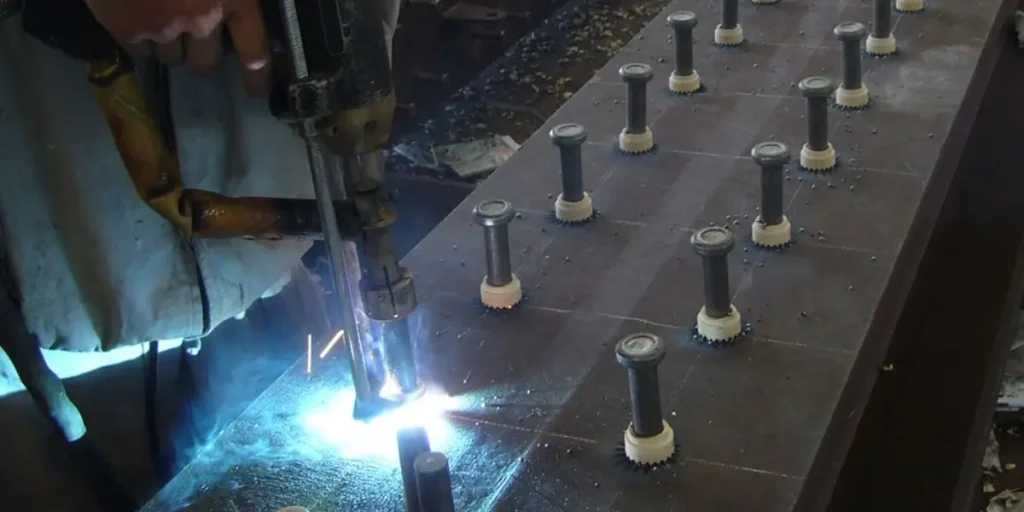
The Ultimate Comparison: Stud Welding vs. Bolting vs. Riveting
When selecting a fastening system for high-stress structural joints, engineers and procurement managers must balance long-term joint integrity against total installation cost and labor bottlenecks.
| Engineering & Cost Metric | Stud Welding System (Drawn Arc/CD) | Traditional Thru-Bolting | Structural Riveting |
| Structural Integrity | Parent metal remains uncompromised; zero cross-section reduction. | Requires hole drilling; reduces effective load-bearing cross-section by 10–15%. | Requires perforation; introduces localized cold-working stress concentration. |
| Hermetic Sealing & Corrosion | 360° full-fusion weld fillet eliminates moisture ingress. | Thread clearances allow moisture seepage, risking galvanic corrosion. | Interface gaps are highly susceptible to crevice corrosion under cyclic exposure. |
| Vibration & Fatigue Life | Metallurgical bond eliminates rotational loosening under dynamic stress. | Susceptible to backing off; requires secondary locking hardware or retorqueing. | Retains shear strength but prone to rivet hole elongation under seismic harmonics. |
| Labor Speed & Throughput | High-speed cycles; typically 20–40 studs per minute per operator. | Multi-step layout: drilling, alignment, manual bolting, and torque verification. | Multi-step layout: hole punching, alignment, rivet pre-heating, and pneumatic driving. |
| Procurement Economics | Higher initial machine investment; near-zero long-term labor cost. | Low initial hardware cost; extremely high manual labor hours during installation. | High specialized tooling cost; extensive skilled labor requirements. |
Main Battlefield (40% Weight): Stud Welding Uses in Steel Construction & Structural Infrastructure
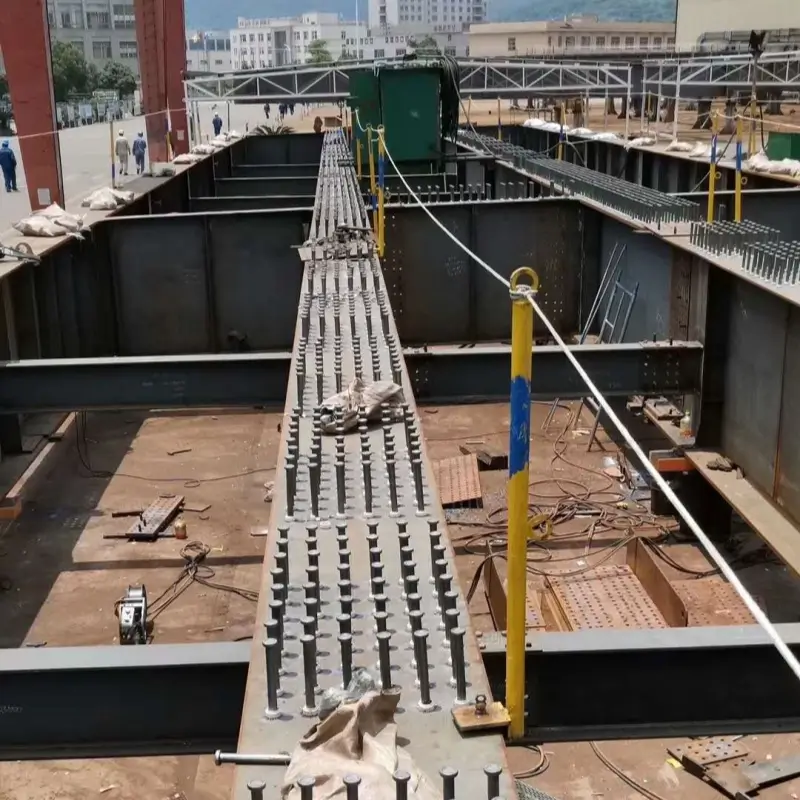
The civil construction sector represents the highest volume deployment of heavy-duty drawn arc stud welding globally. Joint reliability in these field environments is heavily audited and must strictly comply with AWS D1.1 (Structural Welding Code—Steel) specifications.
High-Rise Steel Structures & Composite Beam Action
In modern commercial steel erection, composite design makes steel and concrete work as a single team. To achieve this, horizontal shear forces must transfer smoothly between the structural steel girder and the concrete floor slab.
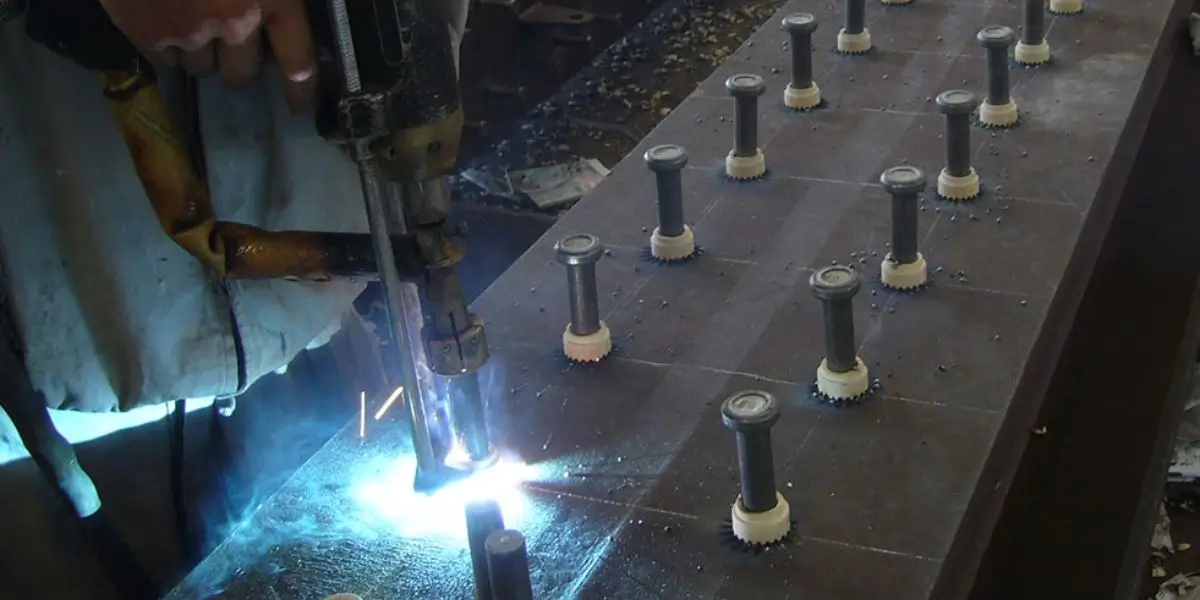
- The Mechanism of Composite Action: As an established shear stud supplier, we engineer headed shear connectors to act as internal mechanical anchors. When welded through corrugated metal decking sheets (thru-deck welding), these studs lock the cured concrete slab to the steel framework. This forces the concrete and steel to deflect as a single high-strength composite unit, maximizing the load capacity of thinner beam sections.
- Seismic Drift Resistance: Under intense seismic loading, building frames undergo extreme lateral drift. Standard building codes mandate that the weld zone must possess high ductility. Heavy drawn arc systems create a full-penetration fusion zone. This allows shear connectors to bend under intense, multi-directional earthquake forces without snapping. By undergoing plastic deformation instead of brittle breaking, the joints absorb seismic energy and keep the structure standing.
Bridge Deck Integrity & Fatigue Life Optimization
Civil bridge construction subjects fastening interfaces to relentless, high-frequency dynamic stress cycles caused by heavy commercial traffic.
- Dynamic Stress Distribution:Traditional bolts localize massive stress within a tight friction-grip zone. Over decades of dynamic loading, this localized pressure inevitably triggers structural fatigue cracks around the girder hole profile.Conversely, an arc-welded shear connector completely eliminates these high-stress pockets. It distributes shear forces uniformly across the flat girder flange surface, significantly extending the fatigue lifespan of the entire infrastructure.
- Corrosion Isolation on Bridge Girders: Infrastructure exposed to marine environments or road salt runoff is highly susceptible to rust. Because stud welding creates a homogenous metal-to-metal bond without mechanical gaps, it eliminates the microscopic fluid paths where crevice corrosion typically degrades bolted bridges.
Standard Field Parameters for Drawn Arc Fastening
Achieving code-compliant root fusion requires specific parameter adjustments based on the fastener cross-section.
| Stud Diameter (mm) | Base Material Profile | Recommended Current (A) | Actual Weld Time (ms) | Minimum Yield Strength (MPa) |
| 16 | Mild Steel / ASTM A36 | 1200A (± 50A variance) | 450 | ≥ 350 |
| 19 | Mild Steel / ASTM A36 | 1500A (± 50A variance) | 650 | ≥ 350 |
| 22 | High-Strength Structural Steel | 1800A (± 75A variance) | 850 | ≥ 350 |
Real-World Engineering Notes: Field Conditions & Variables
In the field, achieving laboratory-grade welds is impossible without actively mitigating site-specific environmental “noise”:
- Field Generator Fluctuations: Portable diesel generators on construction sites frequently suffer transient voltage drops when heavy machinery cycles on. A sudden drop of over ± 10% during the weld cycle will cause an incomplete lift, resulting in a cold weld with low penetration. Operators must utilize a power source equipped with internal phase-stabilizing transformers to absorb these fluctuations.
- The Galvanized Zinc Variable: During thru-deck welding, the arc must fully volatilize the galvanized coating to reach the underlying beam. Zinc profiles exceeding 275g/m² pose a severe risk; the dense zinc gas becomes trapped in the fast-freezing weld pool, causing critical internal porosity. Regulating this requires extending the weld cycle by 50–100ms combined with specialized venting ferrules to successfully evacuate the pressurized vapors before solidification.
- Ambient Air & Wind Distortions: High winds on open skyscraper job sites disrupt the lifting arc path—a phenomenon known as magnetic arc blow. Wind speeds exceeding 8km/h will shear the shielding gas or blow the arc to one side, resulting in asymmetrical fillets. Contractors must deploy physical wind shields around the operator station to maintain arc stability.
Procurement & Decision Section (20% Weight): Selecting the Right Stud Welding Machine
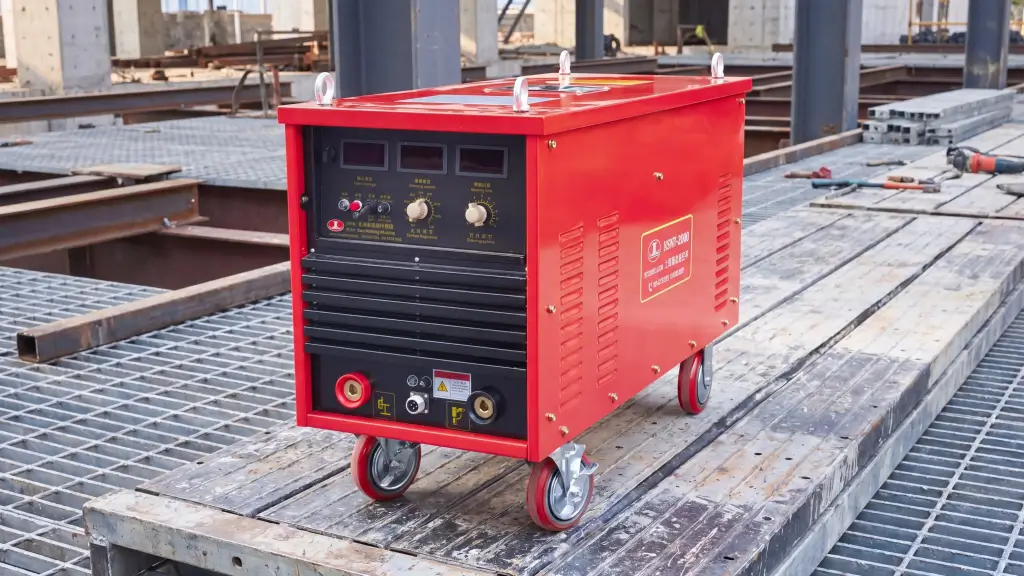
For procurement managers and factory owners, equipment procurement requires balancing capital expenditure with matching machine capability to the exact production environment.
CD vs. ARC: System Architecture and Cost Logic
Capacitor Discharge (CD) Systems (Low-Thickness Optimization)
Optimized for thin gauge sheet metals (0.5mm to 3mm) using fasteners from M3 to M8. These units store energy in internal capacitor banks and discharge it over a hyper-short cycle of 1 to 3ms.
- Capital Cost Profile: Typically represents a lower initial capital expenditure.
- Operational Limit: Limited exclusively to small-diameter studs; cannot fuse heavy structural connectors.
- When to Buy: Choose this system for HVAC duct fabrication, electrical control panel production, or aluminum trim mounting where preventing reverse-side paint burning or sheet warpage is a hard requirement.
Drawn Arc Systems (Heavy-Duty Industrial Production)
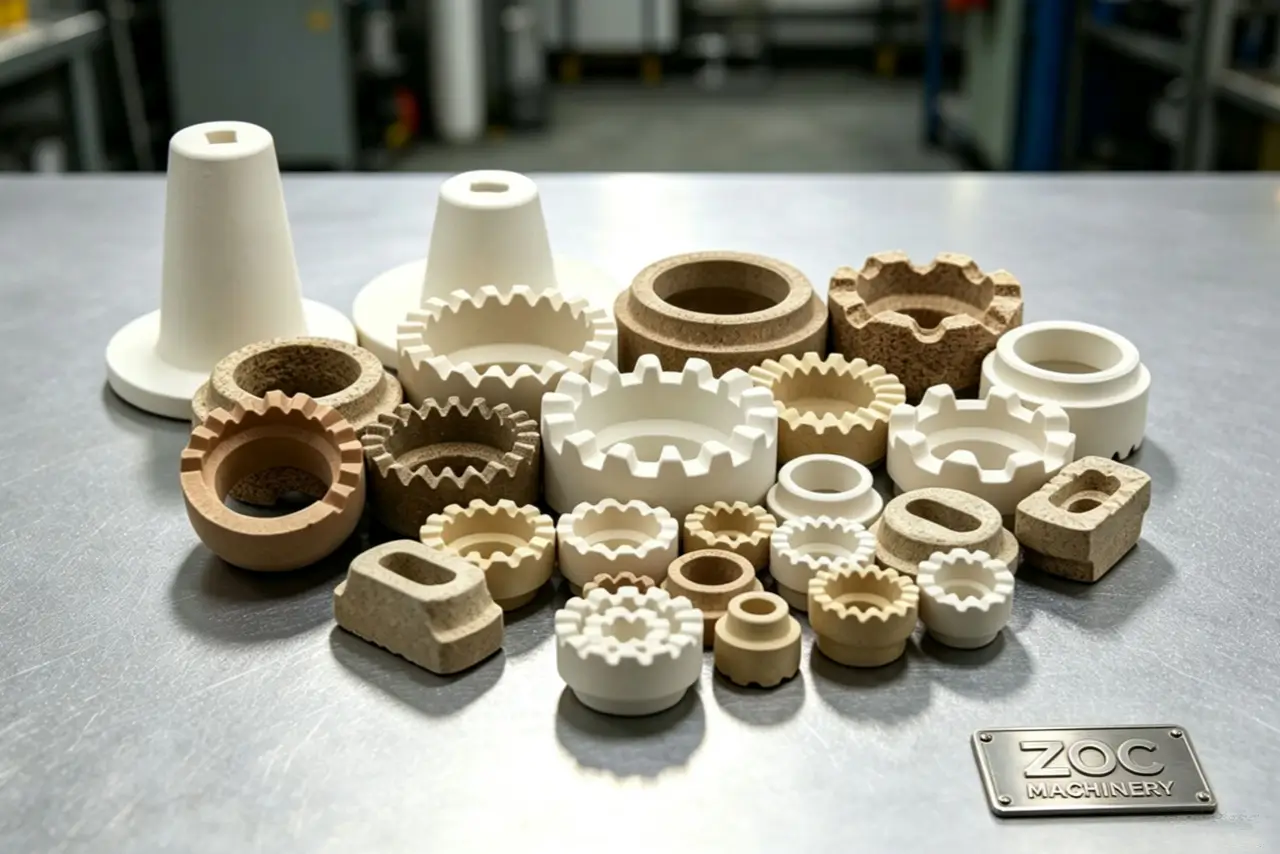
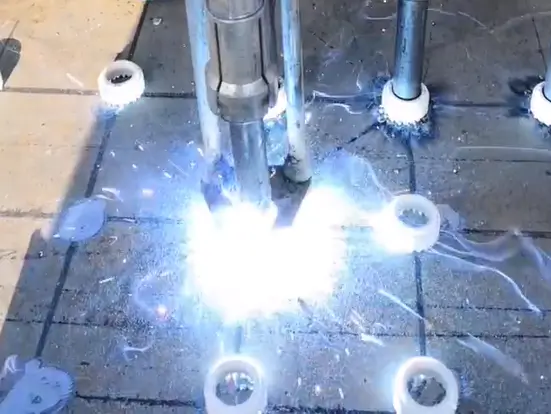
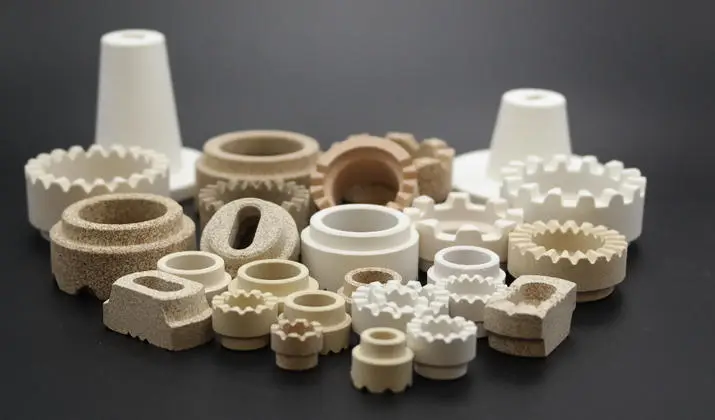
Engineered for structural steel plates exceeding 3mm in thickness using fasteners from 10mm up to 25mm in diameter. The machine draws a sustained high-amperage current from a 3-phase power supply, initiating a controlled lift and mechanical plunge contained by a ceramic ferrule.
- Capital Cost Profile: Higher initial machine investment due to heavy industrial internal transformers and heavy-duty stud welding gun selection criteria.
- Operational Limit: Causes localized thermal input (Heat-Affected Zone), which can warp sheet metal under 2mm.
- When to Buy: Mandated for structural steel erection, heavy equipment assembly, infrastructure bridges, and high-temperature refractory anchoring.
Industrial Procurement Selection Matrix
| Target Fastener Size / Type | Base Metal Thickness | System Topology Selection | Machine Price Range | Long-Term Consumable Cost |
| M3 to M8 Insulation Pins | 0.5mm – 2.0mm | Capacitor Discharge (CD) | Budget-Friendly / Entry Level | Low (No ferrules or gas required) |
| M6 to M12 Threaded Studs | 2.0mm – 6.0mm | Short-Cycle Drawn Arc | Mid-Range Investment | Moderate (Optional gas shielding) |
| 16mm to 25mm Shear Studs | Over 8.0mm | Heavy-Duty Drawn Arc (RSN7) | Premium Industrial Capital | Higher (Requires single-use ceramic ferrules) |
Procurement Insight: While a lower entry-level stud welding machine price may look attractive, buying an undersized CD unit for industrial M10 applications will cause continuous internal board overheating, leading to component failure and expensive line downtime.
Defect Mitigation (20% Weight): Failure Modes in Field Operations
In real-world fabrication, structural joint failures are rarely caused by a defective machine; instead, they stem from parameter misalignment, poor surface preparation, or operator fatigue.
Lack of Fusion / Cold Welding
- Field Diagnosis: The completed weld fillet collar is incomplete, asymmetrical, or fails to form a full 360-degree ring around the base of the stud. The stud will snap clean off at the base plate line when subjected to minor impact.
- Engineering Root Causes: Amperage output is set too low for the stud cross-section, or the gun’s plunge damping mechanism is restricted, preventing the stud from fully dropping into the molten pool before solidifying.
- Corrective Action: Increase the output current by 50–100A, check for primary line voltage sag, and manually verify that the gun lifting spindle moves smoothly without internal friction.
Weld Blowout (Arc Blow Defect)
- Field Diagnosis: A violent expulsion of molten metal occurs on one side of the stud during the cycle, leaving a hollow, porous crater on the opposite side and an structurally deficient joint profile.
- Engineering Root Causes: High DC current paths generate strong magnetic fields in the base steel. If the ground clamp is placed unevenly or the weld is executed near a plate corner, the magnetic path becomes unbalanced, pulling the electric arc violently to one side.
- Corrective Action: Split the return current path by utilizing a dual-ground cable configuration clamped to opposite sides of the workpiece, balancing the magnetic field directly beneath the stud gun location.
Surface Contamination Porosity
- Field Diagnosis: The weld fillet collar has a “spongy” appearance riddled with microscopic pinholes, and the joint exhibits low pull-out strength during standard quality control testing.
- Engineering Root Causes: Failure to remove surface impurities. Mill scale, heavy rust, moisture, surface primer, or lubricating oils volatilize under the intense heat of the arc, trapping hydrogen or carbon monoxide gas within the fast-freezing weld pool.
- Corrective Action: Mandate strict mechanical surface preparation using an electric angle grinder to expose bright, bare metal across a 50mm radius from the intended weld center point.
Secondary Industrial Sectors and Applications Overview (20% Weight)
While civil infrastructure forms the primary deployment zone for heavy drawn arc hardware, specialized configurations of stud welding systems solve distinct engineering challenges across alternative manufacturing fields.
Industrial Boiler Tubes & Power Generation
Power plant utility boilers utilize thousands of internal heat-resistant pins to secure heavy refractory insulation linings to vertical boiler wall tubes.
- Thermal Limitations: These insulation pins (typically manufactured from high-nickel or high-chromium alloys like Stainless Steel 310 or Inconel 601) must withstand constant thermal expansion and contraction cycles up to 1250℃ without debonding.
- HAZ Control: Because boiler tubes operate under extreme internal fluid pressures, the stud welding process must tightly regulate energy input to minimize the heat-affected zone (HAZ), preventing localized embrittlement and subsequent pressure leaks in SA210 carbon steel or alloy steel tubes.
Shipbuilding Bulkheads & Marine Engineering
Maritime outfitting requires the attachment of extensive cabling networks, fluid piping, and acoustic insulation panels directly to the ship’s interior bulkheads and hull structure.
- Preservation of Watertight Integrity: By utilizing the capacitor discharge stud welding method, shipyard operators can weld aluminum or stainless steel pins to structural plates without piercing the bulkhead. This maintains the watertight integrity of the vessel and protects exterior marine coatings from reverse-side burn marks.
Chemical Tank Linings & Containment Vessels
Chemical processing equipment and pharmaceutical vats require highly secure anchoring for protective thermoplastic or stainless steel cladding linings.
- Porosity Control: Drilled holes represent a primary failure point for corrosive industrial acids. Gas-shielded stud welding applications (utilizing pure Argon or Argon/Helium mixes) ensure pore-free, uniform 360-degree weld fillets, preventing aggressive chemical agents from seeping behind the lining and corroding the carbon steel containment shell.
Automotive Assemblies & Aerospace System Layouts
High-volume vehicle production and precision aerospace routing utilize automated equipment configurations to optimize structural payload margins.
- Automotive Robotics: Automated pneumatic feed systems are integrated with multi-axis robotic arms to deliver up to 60 structural studs per minute on thin car chassis and door inner skins (0.6mm to 1.5mm).
- Aerospace Weight Optimization: Precision capacitor discharge stud welding eliminates heavy secondary riveting brackets and mechanical nuts on titanium and aluminum fuselage panels, streamlining avionic grounding and wire harness routing without causing thermal warping.
Food Grade Equipment & Sanitary Machinery
Hygienic manufacturing equipment must comply with strict FDA guidelines regarding surface topology to ensure food safety.
- Eradication of Bacterial Trapping Crevices: Traditional thru-bolts introduce exposed threads and blind pockets that are highly difficult to sanitize during standard clean-in-place (CIP) washdowns. Welding threaded fasteners exclusively to the exterior vessel walls keeps the interior product-contact surfaces mirror-polished, eliminating zones where pathogens can multiply.
Search-Driven Technical Reference (FAQ)
Can stud welding replace traditional structural bolts?
Yes. Stud welding completely replaces traditional bolts in applications where the fastener bears loads against a single base plate—such as concrete shear connectors or heavy mounting brackets.By upgrading to a stud welding system, you eliminate the massive labor bottlenecks of hole drilling and tapping. More importantly, because you never pierce the steel, you preserve 100% of the structural beam’s load-bearing cross-section. However, it cannot replace thru-bolts in applications requiring clamping forces across two separate loose plates.
What is the real-world stud welding cost per stud?
The comprehensive cost per stud depends heavily on the production volume and technology used. For manual drawn arc applications on steel structures, the cost of a standard 19mm shear stud along with its single-use ceramic ferrule typically ranges from $0.40 to $0.80 USD in materials. When accounting for labor savings—where a single operator can install up to 1,500 studs per shift—the total lifecycle installation cost is up to 70% cheaper than drilling, tapping, and installing mechanical anchor bolts.
Which stud welding machine is best for heavy steel structures?
For high-volume structural steel structure projects deploying 16mm to 22mm headed shear connectors, a heavy-duty transformer-rectifier unit like the ZOC RSN7 Series Drawn Arc Stud Welder is required. These systems deliver the massive, sustained current outputs (up to 2500A) necessary to establish deep root penetration on thick structural beams, and their internal electronic regulators prevent arc failures when drawing power from remote job site generators.
How strong is a standard shear stud weld joint?
When executed with correct parameters on clean base metal, an arc-welded shear stud joint is stronger than the fastener itself. Under destructive hydraulic tensile pull testing, failure typically occurs exclusively within the threaded shank or shaft of the steel stud, while the 360-degree fused weld base remains completely bonded to the parent plate without any structural separation or cracking.
Conclusion: Engineering a Resilient Manufacturing Foundation
Selecting the correct fastening technology is the definitive factor in mitigating structural shear failure, reducing thermal distortion, and optimizing assembly cycle times in industrial production. By substituting traditional drilled holes and mechanical bolts with advanced drawn arc and rapid capacitor discharge systems, engineering teams eradicate the primary vulnerabilities that compromise long-term joint life.
At ZOC Machinery, we operate as a dedicated direct-from-factory manufacturer and global shear stud supplier, engineering and supplying rugged, high-efficiency industrial fastening equipment designed to handle demanding manufacturing environments while adhering to international structural codes. All equipment configurations, structural studs, and consumables are packaged securely and shipped as standardized 1 Package units or custom-tailored freight arrays according to your project’s technical specifications.
To optimize your production line’s structural capabilities and secure code-compliant, full-penetration joints on every production cycle,contact us today to consult directly with our application engineering specialists.