Ceramic ferrules sit around the stud during many drawn arc welds. They contain the molten metal, shape the weld collar, and help shield the arc from surrounding air. A ferrule cannot rescue a poor setup, though. Its size and shape have to match the stud and the surface, and the gun still needs the correct settings.
This guide covers where the ferrule goes, what to check before striking an arc, and what the finished weld can tell you. For the sequence of the drawn arc process, see our process guide.
What are ceramic ferrules in stud welding?
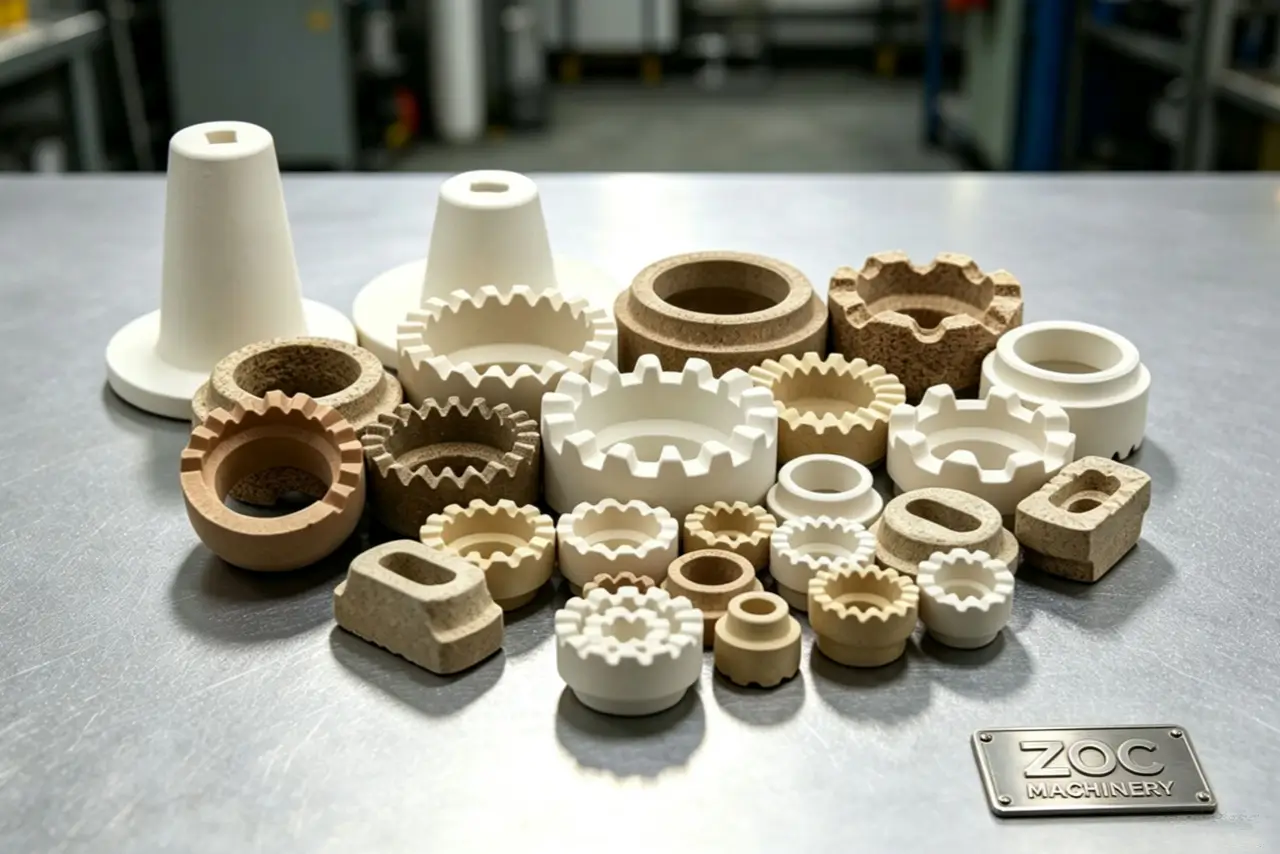
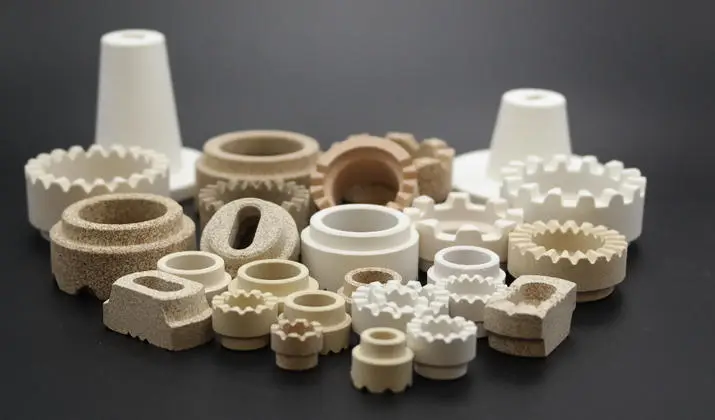
A ceramic ferrule is a single-use refractory ring that sits on the workpiece around a weld stud. During a ferrule-shielded drawn arc weld, it forms a small chamber at the stud base. The ring keeps much of the liquid metal near the joint and gives the emerging weld collar its shape.
Ferrules come in different bore sizes and base shapes. A ring that looks close enough on the bench may leave a gap on a curved or uneven surface. Check the stud and ferrule as a matched pair before setting up a production run.
| Feature | What to check |
|---|---|
| Material | Intact, dry refractory ceramic |
| Fit | Specified for the stud profile and diameter |
| Base | Seats on the actual workpiece geometry |
| Use | One weld only; remove after solidification |
Why use a ferrule for drawn arc stud welding?
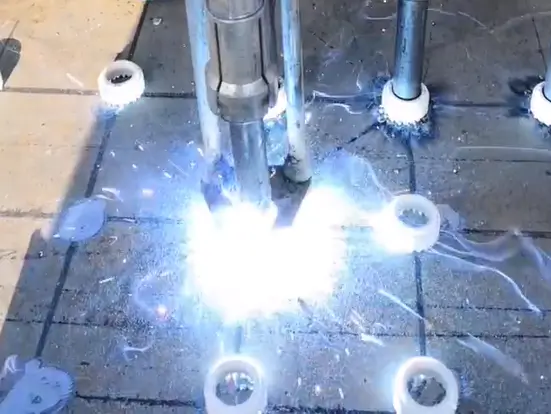
In drawn arc welding, the gun lifts the stud, an arc melts the stud tip and base metal, and the gun plunges the stud into the molten pool. A ferrule helps contain that pool during the cycle and limits direct exposure to the surrounding atmosphere. Its vents provide an exit path for gases while the metal solidifies.
The ferrule is one part of the setup. Welding current, time, lift, plunge, surface preparation and return-lead position also affect the result. A gas-shielded drawn arc procedure may use a gas nozzle instead of a ceramic ferrule.
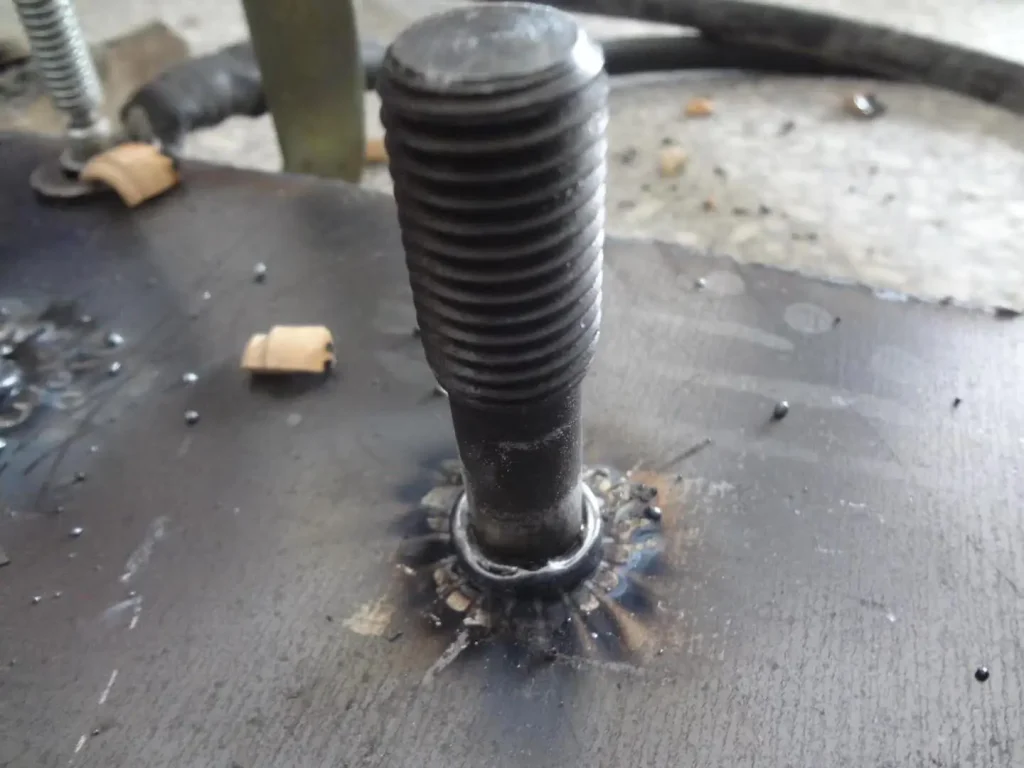
| Stage | What the ferrule does |
|---|---|
| Before the arc | Seats around the stud at the workpiece |
| Arc and melting | Helps shield and contain the weld area |
| Plunge | Provides a cavity for the displaced molten metal |
| After solidification | Is broken away to expose the weld collar |
How does ferrule fit affect weld integrity?
A well-matched ferrule helps keep molten metal around the stud base. If the ring sits unevenly or its bore is wrong, metal can escape on one side and leave an irregular collar. Check the seating surface, ferrule grip and stud alignment before changing the settings on the stud welding machine .
The vents at the base are intentional. Do not block them with scale, debris or a makeshift seal. They allow gases to escape during the weld, but venting alone does not prevent porosity. If a test weld fails, examine the complete procedure and material condition rather than blaming the ferrule first.
| Observed condition | First check |
|---|---|
| Metal escaping at one edge | Ferrule base fit, damage and gun angle |
| Uneven collar | Stud centering, surface contact and plunge |
| Repeated internal defects | Surface condition, parameters and qualified procedure |
What should the finished weld collar look like?
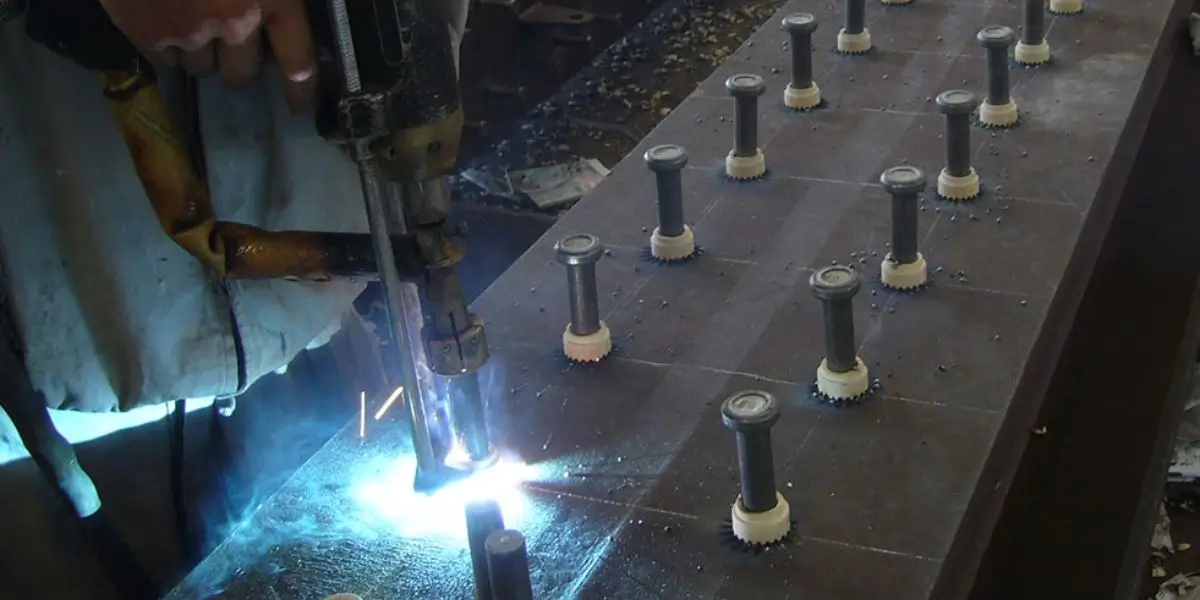
A ferrule shapes the excess metal into a collar around the stud. After the ceramic is removed, look for a reasonably continuous collar, obvious asymmetry, cracks and areas where metal has run out of the ferrule. A tidy collar makes inspection easier, but appearance by itself does not prove full fusion or load capacity.
Use the visual checks and any bend or other tests required by the job’s welding procedure. Our guide to stud welding quality checks explains why inspection has to go beyond the surface.
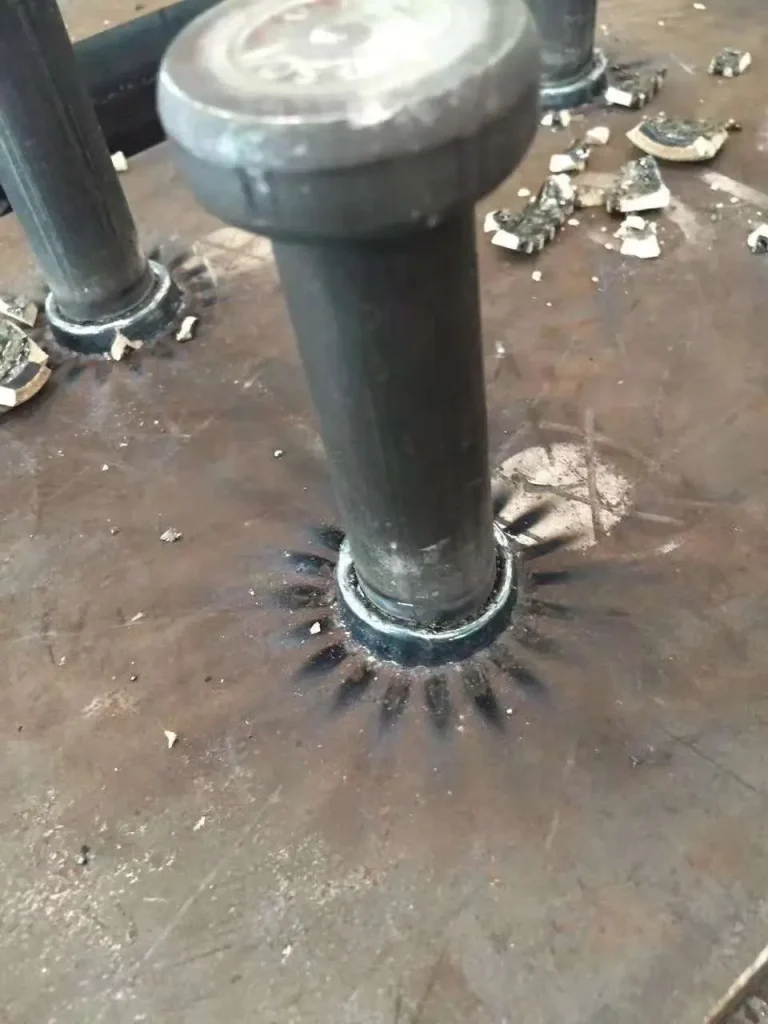
| Visual cue | What it may indicate |
|---|---|
| Continuous collar | Metal was contained around the stud base |
| One-sided collar | Check ferrule seating, alignment and arc behavior |
| Visible crack or missing metal | Set aside for assessment under the job procedure |
Do all stud welding processes need ceramic ferrules?
No. Capacitor Discharge (CD) welding usually runs without a ceramic ferrule. short-cycle processes may use gas shielding or another setup, depending on the equipment and procedure. Drawn arc welding can be carried out with a ferrule or shielding gas; the correct choice comes from the stud size, workpiece and qualified procedure.
If you are choosing between processes for a new job, compare the material, thickness, stud dimensions and access before ordering consumables. The arc stud welding process guide gives a broader process overview.
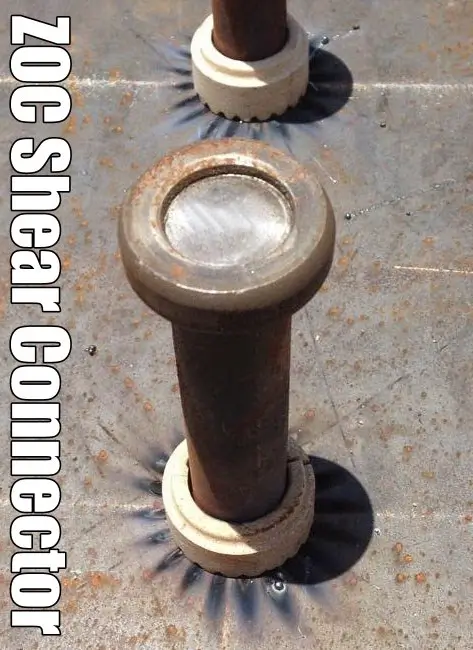

| Process | Typical protection choice |
|---|---|
| Drawn arc | Ceramic ferrule or shielding gas, as specified |
| Capacitor discharge | Generally no ceramic ferrule |
| Short cycle | Depends on equipment and procedure |
How do you choose the right ferrule?
Start with the stud drawing and the supplier’s matching ferrule designation. Then check the ferrule bore, collar cavity, vent pattern and contact surface against the actual job. Our stud welding consumables range includes ferrules for different stud profiles; the ceramic ferrule selection guide covers the matching questions in more detail.
For shear connectors on flat plate, use the ferrule specified for that connector. On a curved surface or near a corner, ask for a suitable base shape rather than forcing a flat ferrule to sit flush. Make a trial weld with the intended stud, ferrule, gun and base material before committing to a large batch.
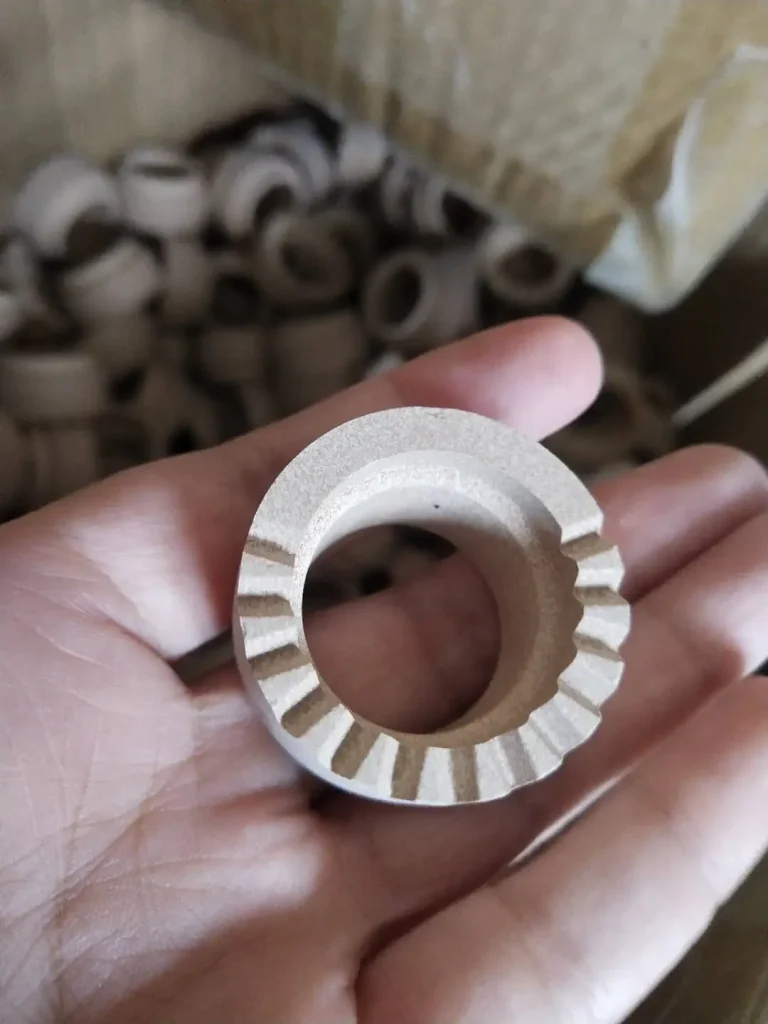
| Application detail | Selection question |
|---|---|
| Stud profile and size | Is this ferrule designated for that stud? |
| Workpiece surface | Does the base seat evenly without a gap? |
| Gun and grip | Will the ferrule stay centered without being crushed? |
| Weld procedure | Has this combination been trialed and accepted? |
How should you handle ferrules on site?
Keep ferrules dry and protected from knocks. Inspect each one as it goes into the stud welding gun ; discard rings with cracks, chipped seating faces or blocked vents. Check that the ferrule grip holds it square to the workpiece and that the stud can move as the gun plunges.
After the weld has solidified, remove the spent ferrule using the method in your site procedure and inspect the exposed collar. Wear the required eye and hand protection; broken ceramic can leave sharp fragments. Do not reuse a ferrule that has already seen an arc.
| Before welding | After welding |
|---|---|
| Confirm dry, intact ferrule | Allow the weld to solidify |
| Check grip and seating | Remove the spent ceramic safely |
| Keep vents clear | Inspect the exposed weld collar |
Which materials can be welded with a ceramic ferrule?
Ferrule-shielded drawn arc welding is commonly used for steel studs on steel workpieces, including structural applications. Stainless steel can also be used with a suitable stud, ferrule and procedure. Material grade, thickness and coating condition still govern preparation and parameters.
Do not assume that a ferrule qualified for steel is suitable for aluminum or another alloy. Aluminum applications often call for a different shielding arrangement and process controls. Confirm the material combination with the equipment and stud supplier, then qualify the weld for the job.
| Material situation | What to establish |
|---|---|
| Carbon steel studs on steel | Matched stud, ferrule and qualified settings |
| Stainless steel | Compatible studs, clean surface and procedure |
| Aluminum or other alloys | Supplier-approved process and shielding choice |
Can ferrules help reduce welding defects?
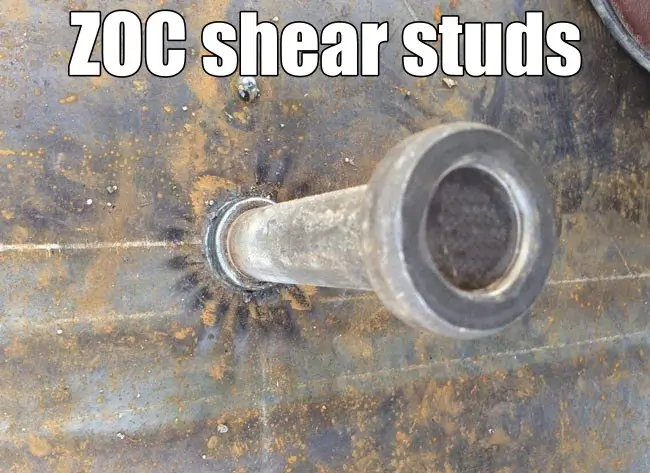
A sound ferrule can reduce metal escape and make the collar more consistent. It cannot correct poor electrical contact, a dirty workpiece, incorrect lift or a misplaced return lead. Magnetic arc blow is driven by magnetic fields; a ceramic wall is not a remedy for it.
If one side of the weld repeatedly looks different, check the return-lead arrangement and gun alignment as well as the ferrule. Our stud welding troubleshooting guide covers other faults that can produce similar symptoms.
| Problem | Check before replacing the ferrule |
|---|---|
| One-sided weld | Return path, gun angle and ferrule seating |
| Weak or incomplete weld | Procedure settings, surface prep and test results |
| Metal leakage | Cracks, base shape and workpiece contact |
How should you source ceramic ferrules?
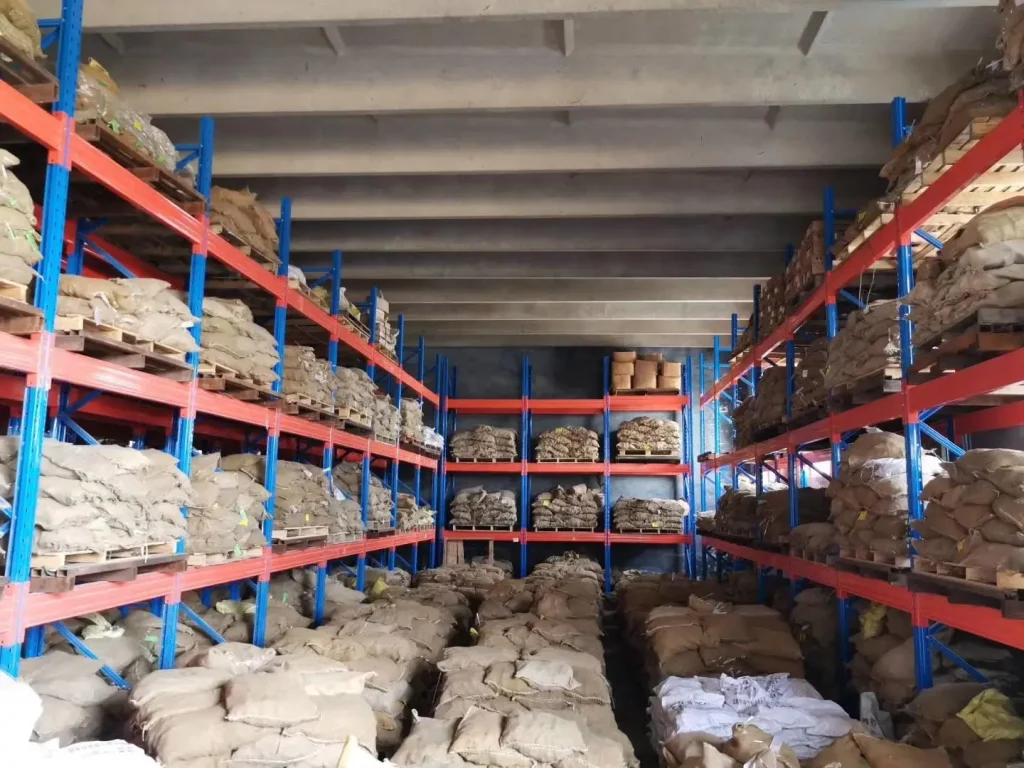
For repeat production, ask a supplier for the ferrule designation, drawing and compatible stud sizes. We explain our manufacturing and supply background on About Us . A sample batch should be checked for fit, damage and consistent seating before a bulk order is released.
Plan quantity from the number of welds plus a sensible allowance for trial welds and breakage. Keep batches identifiable and dry in storage. A low unit price is less useful if inconsistent ferrules interrupt the welding crew or force rework.
| Supplier check | Useful evidence |
|---|---|
| Dimensions | Drawing and sample fit against the specified stud |
| Consistency | Samples from the intended production batch |
| Packaging | Protection against moisture and breakage |
| Supply | Batch identification and reliable replenishment |
Before the next production run
Put the actual stud, ferrule, gun and base material together for a trial weld. Check ferrule seating before welding, then remove the ceramic and inspect the collar. Use the tests required by the approved procedure before treating the setup as ready for production.
If you need help matching a ferrule to a stud drawing or an unusual workpiece, contact us today with the dimensions, material and application. Those details are more useful than a photo of a ferrule alone.
FAQ
Can I reuse a ceramic ferrule?
No. It is a single-use part. Remove and discard it after the weld has solidified.
How do I know whether the ferrule is the right size?
Match the ferrule designation to the stud profile and drawing, then check that it seats on the workpiece and fits the gun grip. A loose or pinched fit deserves a trial weld and supplier check.
Can I make a drawn arc weld without a ferrule?
Only if the equipment and qualified procedure specify another suitable method, such as shielding gas. Do not omit a ferrule from a ferrule-based procedure to keep a job moving.
What is the best way to store ferrules?
Keep them in dry, protected packaging and avoid handling that chips the seating edge. Check local storage and conditioning instructions from the supplier.