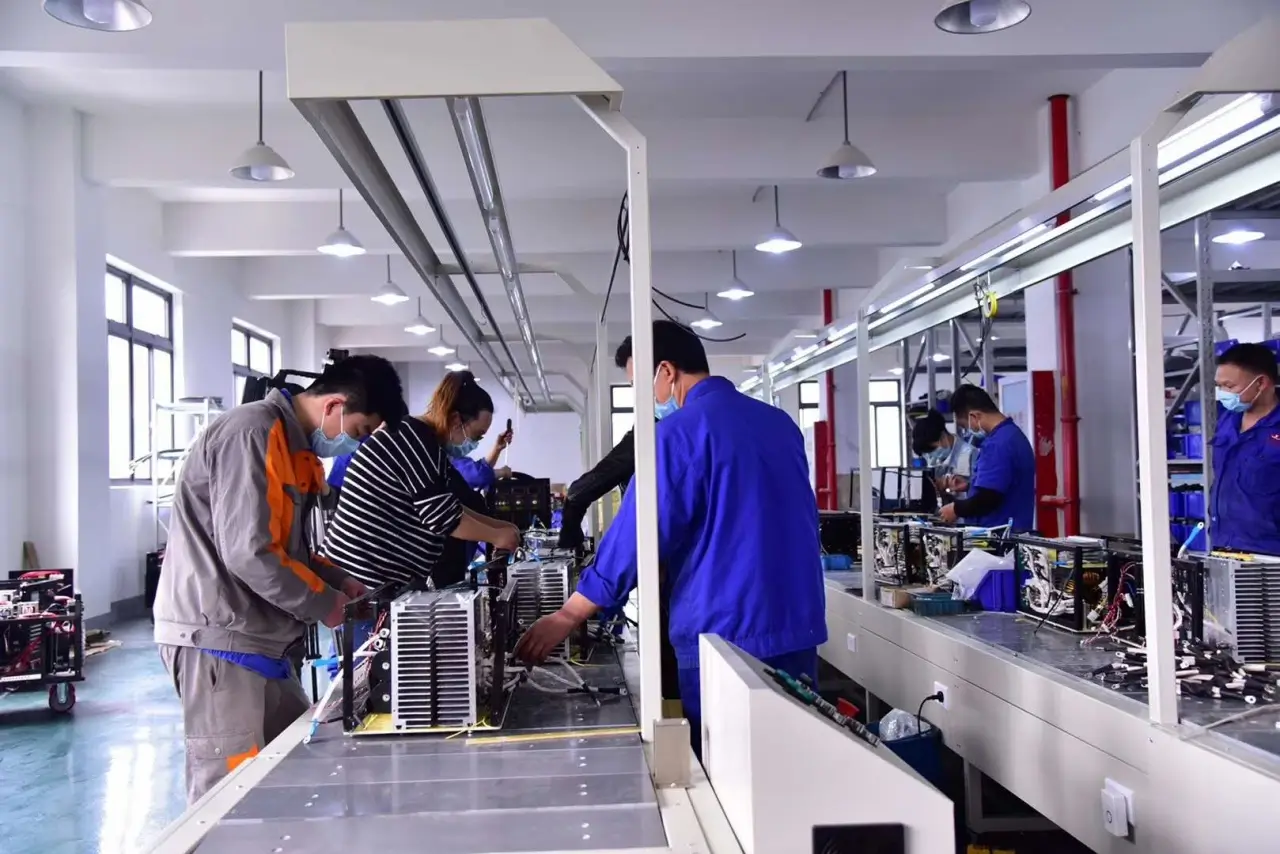
Choosing a stud welding machine manufacturer takes more than comparing the price on a quotation. A buyer needs to know which process fits the work, who builds and tests the machine, what evidence supports its ratings, and how service will work after delivery. Use these ten checks to compare suppliers on the same terms before placing an order.
Check a Stud Welding Machine Manufacturer’s Engineering Support

Start with the work the machine must do. A supplier should be able to discuss stud size, base material, production volume, power supply, gun access, and inspection requirements. Ask who will answer technical questions and who is responsible for assembly, testing, and service. A company name or factory photo does not settle those questions.
Can an Engineer Explain Your Welding Setup?
Send the supplier your stud and base-metal details. Ask an engineer to explain the proposed process, machine rating, gun, and consumables. If the setup needs adjustment, find out who can make it and how a sample weld will be evaluated.
Ask for:
- An engineer who can explain the proposed stud range, output rating, and gun setup.
- A machine recommendation based on your stud, base metal, and production rate.
- A clear route for technical questions before and after delivery.
Keep the engineer’s written recommendation with the quotation. It gives your operators a starting setup and gives both sides a record of what was specified.
What Will the Complete Setup Cost?
Compare the delivered cost of a working setup, not the machine price alone. Include guns, cables, consumables, spare parts, shipping, commissioning, and the likely time to obtain service. Our stud welding machine price guide lists the cost items worth checking.
Put these costs on the quotation:
- Machine, gun, cable, chuck, and consumables included in the quoted price.
- Warranty claim steps and the party responsible for approving repairs.
- Prices and lead times for likely replacement parts.
A lower purchase price may still be the better choice, but only after you know what the quote includes and how quickly a failed board or gun can be replaced.
Ask each supplier for a written equipment list, warranty terms, spare-parts prices, and service response process.
The table below separates the questions to ask from assumptions about a supplier’s business label.
| Supplier Model | Price Question | Technical Contact | Responsibility to Confirm |
|---|---|---|---|
| Factory or Integrator | What is included in the quote? | Who specifies and tests the setup? | Who handles warranty and parts? |
| Distributor or Agent | What fees and services are included? | How do engineers respond? | Who owns the contract and service? |
Judge the answers and evidence. A factory can use distributors, and a capable supplier can work closely with a factory; either model needs clear responsibility for your order. See our supplier versus manufacturer comparison for questions about those roles.
Verify Who Builds and Tests the Machine

Verify where your machine will be assembled and tested, and who controls the work. A site visit or live video walk-through can show the equipment, people, test station, and finished units. Ask to see the model you intend to buy rather than relying on a general factory tour.
What Can You Confirm During a Factory Visit?
Factory size alone says little about process control. Look for a clear assembly flow, identified inspection steps, test equipment, and records that connect a finished machine to its test results.
During the visit, check:
- The assembly and test area for the model you plan to buy.
- The equipment used for electrical checks and sample welds.
- Records connecting a finished unit to its inspection and test results.
If the supplier uses partner factories, ask which facility will build your unit and who will handle a quality or delivery problem. Record the answer in the purchase documents.
Which Business and Quality Records Matter?
Review the legal entity named on the contract, invoice, warranty, and any quality certificate. The names and addresses should make sense together. A certificate is useful only when its scope and issuing body can be checked.
Request copies of:
- The legal entity named on the contract and warranty.
- Relevant quality certificates, including their scope, address, and issuing body.
- Export and shipping documents for the entity responsible for delivery.
These documents help identify who is responsible for the machine. They do not replace a sample weld or evidence that the specified unit passed its tests.
The contract, test report, warranty, and production facility should all point to the equipment you are buying.
Use this short checklist during a factory visit or remote audit.
| Verification Point | Evidence to Request | Question to Resolve |
|---|---|---|
| Legal Entity | Contract, invoice, warranty details | Which company is responsible? |
| Production Site | Live visit or video of the quoted model | Where is it assembled and tested? |
| Quality Records | Certificates and unit test reports | Do scope and serial number match? |
If a claim cannot be verified, record it as an open question rather than assuming the answer is either good or bad.
Match the Product Range to Your Studs and Work
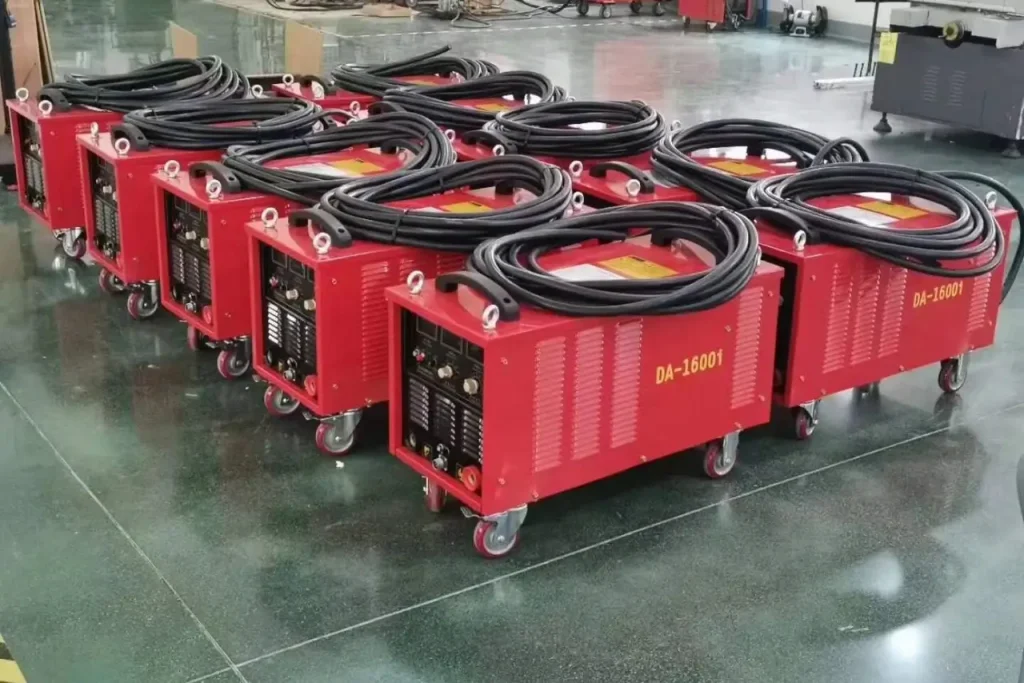
A broad catalog is useful only when it covers your application. Ask the supplier which drawn arc, short-cycle, or capacitor discharge process suits your stud and base metal. Then check whether the proposed machine, gun, cable, chuck, and consumables work as a set.
Which Welding Process Fits the Application?
Drawn arc and capacitor discharge equipment serve different combinations of stud size, material, and surface thickness. A supplier should explain the limits of each proposed setup and show sample welds on material close to yours. Avoid choosing a process from a single thickness threshold.
Compare the options:
- For structural work, discuss drawn arc stud welding machine systems and the matching gun and consumables.
- For suitable thin-sheet applications, compare a capacitor discharge stud welding machine with your material and stud size.
- Ask for a sample weld before committing to either process.
If you need more than one process, ask how the supplier will support both. A catalog that includes stud welding machine is useful when the machine recommendation is tied to your actual studs, production rate, and inspection plan.
Will the Gun and Consumables Work Together?
The gun and consumables matter as much as the power source. Confirm the chuck, ferrule holder where applicable, cable length, gun access, and replacement parts before signing off on a machine.
Check the full setup:
- A stud welding guns that fits the welding position and access around the joint.
- The ferrules, chucks, and cables specified for the selected setup.
- Part numbers and a spare-parts route for studs and wear items.
Parts from different suppliers can work together, but their dimensions and electrical ratings need checking. Ask for part numbers and test the combination instead of assuming that a shared product name guarantees fit.
Put the machine, gun, cable, stud, and consumable part numbers on one approved list.
The table gives a starting point for process discussions; the final choice belongs in a tested welding procedure.
| Process | Application to Discuss | Sample-Weld Check | Tooling to Confirm |
|---|---|---|---|
| Drawn Arc | Studs and joints needing this process | Stud, base metal, and inspection result | Gun, cable, chuck, ferrule where used |
| Capacitor Discharge | Suitable thin-sheet and small-stud work | Surface and backside condition | Gun, chuck, and compatible studs |
Ask the supplier to state the usable stud range, power requirements, and compatible tooling for the exact model quoted.
Define Any OEM or Automation Changes

Some orders need a different supply voltage, gun, cable length, control interface, or enclosure. Describe the operating conditions first, then ask what the supplier can change, who will approve the design, and how the modified unit will be tested.
What Electrical or Layout Changes Are Needed?
For an electrical change, give the supplier the actual site supply and connector requirements. A voltage printed in a brochure is not enough to confirm that the machine will work with your installation.
Include in the request:
- Your site’s voltage, phase, frequency, and available current.
- Space, access, cable length, and environmental conditions.
- Connector, control, and interface details for the modified unit.
Get a revised drawing or specification before production. Ask whether the change affects output rating, lead time, warranty, or spare-parts compatibility.
How Will an Automated Setup Be Tested?
Automation can reduce manual handling in a repeatable production job, but it needs more than a welding head mounted on a robot. The supplier should explain stud feeding, positioning, control signals, fault handling, and how the cell will be tested.
For an automated line, ask about:
- How the welding head will mount and position the stud.
- How studs will feed and how feed faults will be detected.
- Which PLC signals start, confirm, or stop each weld cycle.
Request a cycle-time estimate based on your stud pattern and a trial with representative parts. A claim about hourly output without those conditions is hard to use for production planning.
Before work starts, agree on the changed specification, acceptance test, delivery date, and support responsibility.
This table helps separate a standard configuration from work that needs engineering and validation.
| Configuration | What Changes | What to Specify | Acceptance Evidence |
|---|---|---|---|
| Automated Cell | Feed, head, controls, and safety | Part pattern and cycle target | Trial run and fault checks |
| Modified Unit | Power, enclosure, or connectors | Site supply and operating conditions | Revised drawing and test report |
| Standard Unit | Stock machine and compatible gun | Stud range and production rate | Model data and sample weld |
Ask for a quoted lead time for your configuration; generic lead-time ranges do not bind a supplier to your order.
Ask for Quality-Control Evidence
Quality control should be visible in records for the actual model and serial number you buy. Ask for electrical safety checks, output testing, and sample weld results that match the intended application. A management-system certificate alone cannot show how an individual machine performed.
Which Tests Does the Power Source Pass?
Ask which electrical tests the supplier performs, under which standard, and at what settings. The test report should state the result and identify the unit. Do not assume that one test voltage or duty-cycle figure applies to every model.
Request evidence of:
- Electrical safety test method and report for the specified model.
- Output test at the current and duty cycle claimed in the quotation.
- Sample weld records showing settings and inspection results.
Compare the stated duty cycle with the current and ambient conditions used for the rating. This matters more than an unsupported promise that the machine can run at full output all day.
How Are Sample Welds Checked?
A sample weld on your stud and base metal gives you evidence that the proposed setup can make the required joint. Record the parameters, inspect the welds, and perform the mechanical tests specified by the applicable procedure.
For sample welding, request:
- Visual and mechanical tests required by the welding procedure.
- Stud and base-metal details recorded with each sample.
- Results and acceptance criteria supplied with the test pieces.
Keep the test results with the machine specification. If the weld fails, ask what changed before accepting another sample.
Request serial-numbered machine test records and sample-weld evidence tied to your application.
The table lists evidence to ask for; test methods and acceptance limits depend on the model and project requirements.
| Quality Step | Record to Request | Unit or Sample Identified | What to Check |
|---|---|---|---|
| Electrical Safety | Applicable test method and result | Machine serial number | Test limits and pass result |
| Output Rating | Current and duty-cycle test | Machine model and conditions | Rating matches your work |
| Sample Weld | Settings and inspection results | Stud and base material | Procedure’s acceptance criteria |
Review the records before shipment rather than discovering missing information after the machine reaches the site.
Check Training, Documents, and Spare Parts
Support starts with documents your operators can use and parts your maintenance team can obtain. Ask for the manual, parameter guidance, wiring information, warranty terms, spare-parts list, and a named route for technical questions. Confirm the language and format before delivery.
Can Operators Use the Supplied Guidance?
Operators need a repeatable way to set the gun and machine for each approved stud and base material. Training should cover setup, trial welds, inspection, and what to do when a weld or machine alarm is outside the expected range.
Request:
- An English manual for the exact machine and gun version.
- Setup guidance for the stud sizes and processes you will use.
- Training on trial welds, inspection, and common fault checks.
Have the people who will use the machine review those materials before acceptance. A manual that omits your gun or control version will be less useful on site.
How Will You Get Service in the Field?
Ask what your technicians may service locally, what requires supplier approval, and how quickly critical parts can be shipped. Our stud welding machine maintenance guide gives a starting list of routine checks.
Confirm access to:
- Electrical diagrams appropriate for authorized local service.
- Error-code and troubleshooting information for the control version.
- A named contact for problems that local technicians cannot resolve.
Put response times, parts availability, and warranty exclusions in writing. A promise of support is difficult to act on when a machine stops during a shift.
Review the manual, service route, and spare-parts list before the machine ships.
Use this table to compare the support package offered with each quotation.
| Support Item | What to Request | How It Helps | Buyer Check |
|---|---|---|---|
| Operator Guidance | Manual and setup data | Repeatable machine setup | Matches delivered version |
| Service Information | Fault guide and authorized diagrams | Faster diagnosis | Local service scope is clear |
| Wear and Spare Parts | Part numbers and lead times | Maintenance planning | Stock commitment is written |
Ask for sample documents and part numbers, not just a statement that support is available.
Compare Supply Chain and Delivery Terms

Country of origin does not establish machine quality. If you are sourcing from China, compare the same specifications, tests, delivery terms, and service commitments you would require elsewhere. Our guide to importing stud welding machines from China covers the procurement steps in more detail.
Where Do Critical Components Come From?
A supplier with access to nearby component and fabrication partners may be able to respond quickly to design changes or parts needs. Ask which components are made in-house, which are purchased, and how substitutes are approved.
Ask how the supply chain works:
- The source and specification of critical purchased components.
- How substitutions are approved and recorded.
- Prices and delivery dates for the complete quoted setup.
A shorter sourcing path can help with lead time, but ask for the promised production schedule and parts plan for your order. Do not assume that a regional cluster guarantees a lower final cost.
What Can the Factory Show You?
Evaluate the production and test process at the facility that will build your model. Ask to see assembly instructions, inspection points, electrical test records, and sample welds. Automation may help repeatability, but the evidence is in the finished units and records.
During a remote or in-person review:
- Assembly and test steps for the model being offered.
- Certificates relevant to the product and destination market, with scope verified.
- Shipment records or references for comparable equipment, where available.
Compare the same acceptance criteria across suppliers. This makes a cost and quality comparison more useful than broad claims about one country or factory type.
Confirm component traceability, production responsibility, acceptance tests, and delivery terms for the quoted machine.
Use this table to turn location and supply-chain claims into questions you can verify.
| Supply Factor | Evidence to Ask For | Purchase Decision |
|---|---|---|
| Components | Approved bill of materials and substitutions | Are critical parts traceable? |
| Production | Assembly and test records | Can the quoted site build the unit? |
| Delivery | Confirmed schedule and shipping terms | Does the landed plan fit your project? |
The total landed cost and support plan will tell you more than the factory’s country alone.
Follow the Machine Through the Factory
A factory audit should follow the path of your machine: incoming components, assembly, electrical test, sample welding, final inspection, and packing. Ask to see records for the quoted model and speak with the people responsible for testing it.
What Happens in Assembly and Testing?
For major electrical components, compare the bill of materials with the drawings and the delivered unit. Ask how the supplier records component substitutions and checks them before assembly.
At assembly and test stations, look for:
- Component assembly: Compare key parts with the approved bill of materials.
- Electronics handling: Check controls for sensitive boards and components.
- Weld test station: Ask to see settings, sample parts, and recorded results.
A live test is useful when its current, duration, machine model, and result are recorded. A demonstration without those details is harder to compare with the performance you need.
How Are Finished Units and Spares Managed?
Ask how completed units are tested before shipment and how failures are handled. The test duration should follow the manufacturer’s procedure for that model, rather than a universal number of hours.
Check the records and stores:
- Final test: Review the procedure and the report for a completed unit.
- Finished units: Check identification, packing, and shipment preparation.
- Spare parts: Confirm stock and replenishment time for critical items.
A tidy warehouse is useful, but it does not prove financial strength or parts availability. Ask which boards, guns, and cables are stocked and what replenishment time the supplier commits to.
Follow one machine from assembly through testing and packing, then compare its records with the quoted specification.
The table lists areas worth checking during a visit or live video audit.
| Factory Area | What to Review | Question if Evidence Is Missing |
|---|---|---|
| Electrical Assembly | Parts, drawings, and handling controls | How are substitutions checked? |
| Test Station | Procedure and model-specific results | How are failed units handled? |
| Finished Units | Identification, packing, and spare parts | Can the shipped unit be traced? |
Record any missing evidence as an action for the supplier before order approval.
Compare Manufacturers With One Scorecard
Use one scorecard for every stud welding machine manufacturer on your shortlist. The ten criteria below cover application fit, production responsibility, testing, documents, delivery, and service. Give each criterion a weight that reflects your project rather than copying someone else’s pass mark.
How Should You Score the Evidence?
A scorecard helps your team compare evidence consistently. Mark a claim as unverified when the supplier has not supplied the drawing, test record, or contract term needed to assess it.
Score the evidence you receive:
- Which criteria have written evidence and which remain unverified.
- Whether the machine meets application and safety requirements.
- How price, delivery, and service compare across suppliers.
Discuss large gaps with the supplier before averaging scores. A missing safety or application requirement should not be offset by a low price.
Which Risks Need a Separate Decision?
Include both technical and commercial risks. A machine can pass a sample weld and still be a poor purchase if critical spares take months to arrive or the warranty route is unclear.
Ask the procurement and welding teams to review:
- Engineering response and any required customization.
- Component traceability, output testing, and sample-weld evidence.
- Warranty process, response time, and spare-parts lead time.
Keep the completed scorecard with the quotation and acceptance records. It makes later questions about the decision easier to answer.
A promise without a document, sample, or named owner should remain unverified on the scorecard.
Use these ten criteria as a worksheet; set the acceptance threshold for your own application.
| Point | Criterion | Evidence to Collect | Your Decision |
|---|---|---|---|
| 1 | Application fit | Stud and base-metal review | Pass, gap, or unverified |
| 2 | Process choice | Drawn arc or CD rationale | Pass, gap, or unverified |
| 3 | Complete setup | Machine and tooling part list | Pass, gap, or unverified |
| 4 | Electrical suitability | Site supply and model data | Pass, gap, or unverified |
| 5 | Production responsibility | Named site and contract entity | Pass, gap, or unverified |
| 6 | Unit testing | Serial-numbered test report | Pass, gap, or unverified |
| 7 | Sample welding | Settings and inspection results | Pass, gap, or unverified |
| 8 | Documents and training | Manual and training plan | Pass, gap, or unverified |
| 9 | Delivery and warranty | Written dates and terms | Pass, gap, or unverified |
| 10 | Spare parts and service | Part list and response route | Pass, gap, or unverified |
If a criterion is critical, make it a purchase condition rather than letting an average score hide the gap.
Ask Specific Questions Before Ordering
A useful supplier interview asks for evidence, not reassurance. Share your stud, base metal, production rate, site power, and inspection requirements, then ask the supplier to explain and test the proposed setup. Vague answers are a reason for follow-up, not proof of a particular business model.
Can the Supplier Run a Trial With Your Materials?
Request weld trials on representative studs and base metal before committing to a large order. Agree on the sample preparation, machine settings, inspection method, and who receives the test pieces and records.
Agree on the trial conditions:
- Your stud, base metal, and surface condition.
- The settings and inspection method for the trial.
- Who will retain the test pieces and written results.
A trial helps you see the weld and the operator workflow. It does not prove long-term reliability, so review electrical tests, duty-cycle ratings, and service arrangements as well.
What Does the Duty-Cycle Rating Mean?
Ask for the output-current and duty-cycle rating at stated ambient conditions. Then compare those figures with your shift pattern, cable length, stud size, and available site power.
Ask the supplier to state:
- “At what output current and ambient temperature is the duty cycle rated?”
- “What happens when the machine reaches its thermal limit?”
- “What enclosure rating does this exact model have, and where is it documented?”
If the machine has thermal protection or an enclosure rating, request the model-specific documentation. Do not assume that every industrial unit has the same rating or can deliver maximum current continuously.
A useful answer includes a model number, test method, operating limit, and person responsible for support.
This table turns broad sales claims into questions you can send with the RFQ.
| Question for the Supplier | Evidence It Should Produce | Why Ask |
|---|---|---|
| Can you weld our stud to our material? | Trial settings, parts, and inspection results | Checks application fit |
| How is this model’s duty cycle rated? | Current, ambient condition, and test method | Checks usable output |
| Who handles a failure after delivery? | Warranty route and spare-parts lead time | Checks service responsibility |
Keep written answers with the final specification so they can be checked during acceptance.
Before You Place an Order
Choosing a stud welding machine manufacturer means connecting the welding application to a tested machine, compatible tooling, documented ratings, and a workable support plan. Resolve any critical gap before signing the order.
If you are comparing stud welding equipment for a construction or manufacturing project, contact us with the stud sizes, base material, production target, site power, and required tests. We can discuss a suitable setup and the evidence you need before ordering.
FAQ
Can I Use a Drawn Arc Machine for Thin Sheet Metal?
Usually not for thin sheet. Drawn arc and capacitor discharge processes have different weld times and application ranges. Choose from the stud, material, thickness, and required weld, then confirm the result with samples rather than a single thickness rule.
How Do I Choose Between Drawn Arc and Capacitor Discharge?
Ask the supplier to compare both processes for your stud diameter, base material, surface requirements, and production rate. Trial welds on representative material will show which setup meets your inspection criteria.
How Can I Check Whether a Machine Is Industrial Grade?
Request the model’s rated output and duty cycle, electrical test record, compatible tooling list, and sample weld results. Check that the documents identify the unit you will receive and the conditions under which it was tested.
Will the Machine Run on Single-Phase Workshop Power?
Check the nameplate and installation manual for the exact model. Some compact systems use single-phase power, while higher-output machines may require three-phase supply. Confirm voltage, current, protection, and connectors with your electrician before ordering.
Do Operators Need Training for Automated Equipment?
Yes. Operators need training in safe setup, parameter selection, sample welding, inspection, and routine maintenance. Automated systems also need instruction on feeding, controls, fault handling, and the limits of local service.