The stud welding process is a high-speed arc welding method used to permanently join a metal stud to a base material without drilling, tapping, or additional filler metal. Its short welding cycle, high productivity, and strong mechanical performance make it a widely adopted solution in structural steel fabrication, bridge construction, shipbuilding, and industrial manufacturing.
Consistent weld quality depends on selecting the correct welding parameters, including current, weld time, polarity, lift height, plunge depth, and grounding. Improper settings can result in incomplete fusion, excessive spatter, arc blow, or reduced mechanical strength. This guide explains the complete stud welding process and provides practical recommendations for selecting parameters, preventing common welding defects, and achieving reliable, code-compliant welds.
How Does Drawn Arc Work in the Stud Welding Process?
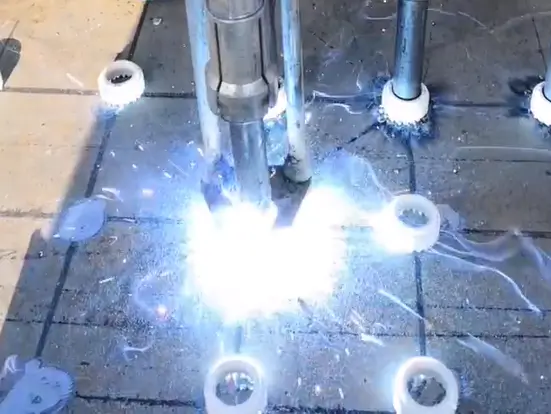
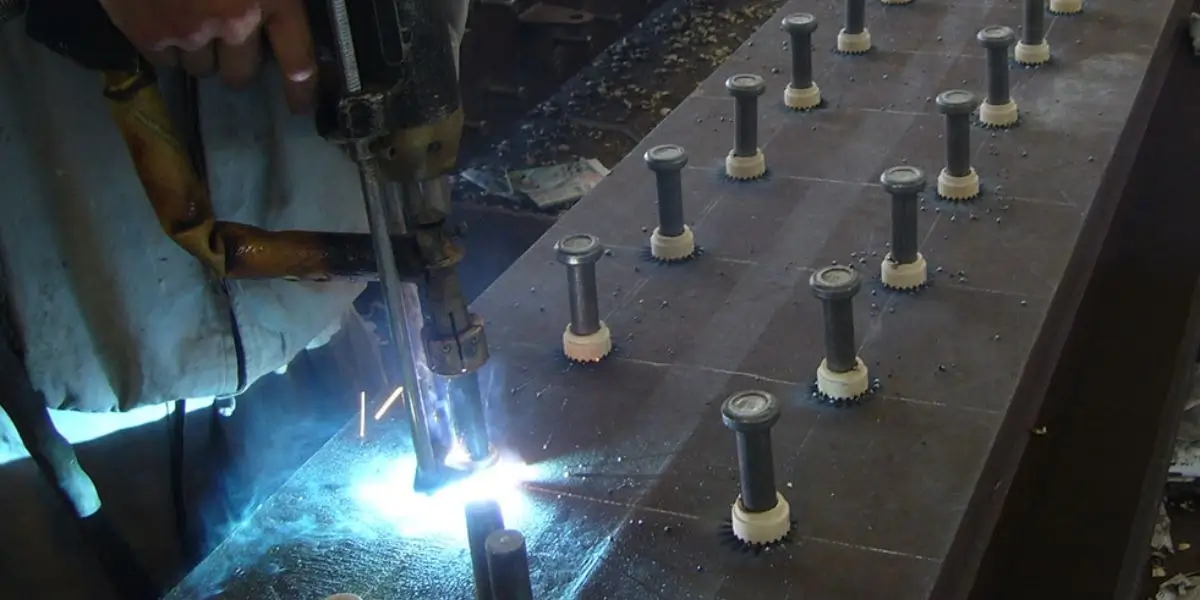
Drawn arc operates by establishing a controlled electric arc between the stud face and the workpiece, creating a local molten pool before plunging the stud under spring tension. This rapid thermal joining method completely eliminates the need for drilling, tapping, or back-welding, which dramatically increases shop throughput. In heavy industrial environments, this rapid cycle speed enables fabricators to complete complex structural attachments in milliseconds. The resulting connection achieves full-section fusion that easily handles intense fatigue loads.
The Mechanics of Arc Ignition
In stud welding systems equipped with a pilot arc, ignition begins with a low-current arc that helps establish stable arc initiation and improves ignition reliability, particularly on lightly oxidized surfaces. Once the pilot arc is established, the main welding current rapidly melts both the stud tip and the base material to form the molten weld pool. This two-stage ignition process helps maintain arc stability, promotes consistent heat input, and reduces the risk of incomplete fusion caused by unstable arc starts.
The Role of the Ferrule and Plunge
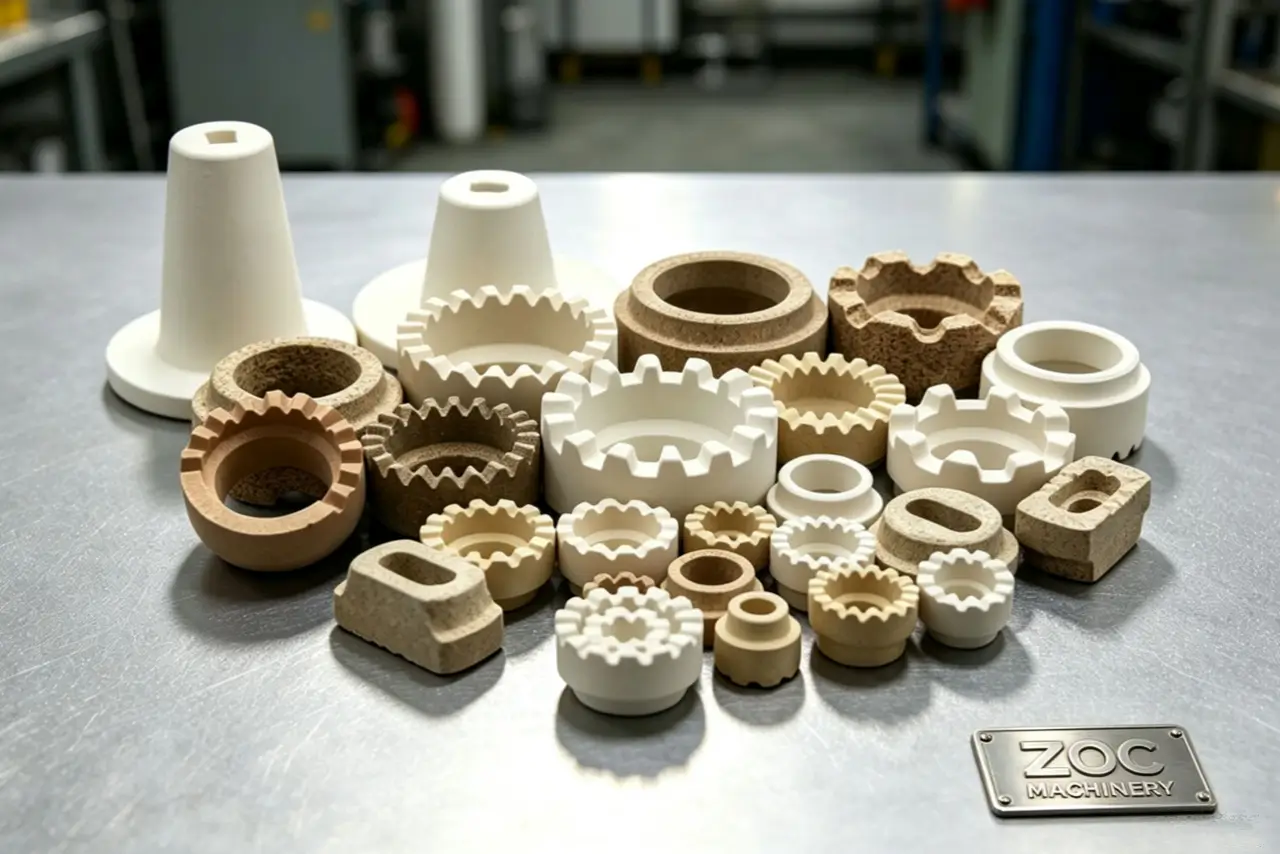
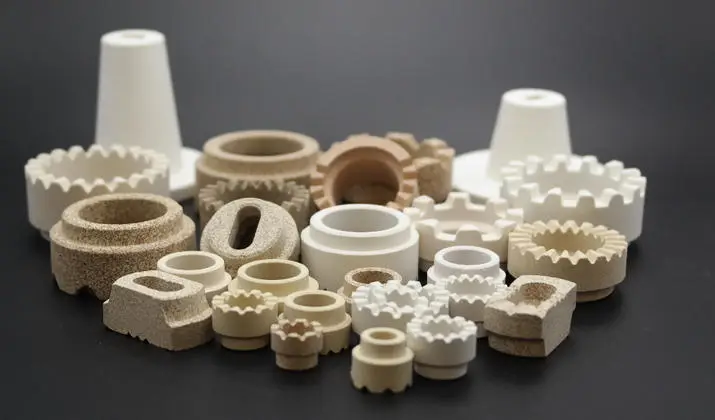
The ceramic ferrule acts as a localized chamber that concentrates the arc, shields the molten pool, and molds the extruded fillet. As the weld timer expires, the gun’s internal spring plunges the stud back into the molten base metal. This sudden kinetic force displaces surface contaminants, ensuring complete metallurgical fusion across the entire joint. Correct spring pressure is essential to prevent internal void formation during solidification.
The physical execution of the drawn arc method relies on a precise sequence of electrical and mechanical stages.
| Stage | Action | Critical Factor | High-Value Outcome |
|---|---|---|---|
| Phase 1 | Pilot Arc Ignition | Gap continuity | Cleaned surface |
| Phase 2 | Main Welding Arc | Current & Time | Molten Pool creation |
| Phase 3 | Stud Plunge | Spring Force | Uniform Fusion Zone |
Analyzing this sequence reveals that minor mechanical timing delays directly degrade the uniformity of the final weld collar.
Understanding these core mechanical steps makes it easier to select the ideal electrical settings.
Which Polarity and Current Best Suit the Stud Welding Process?
Selecting the correct polarity depends on matching your material composition and base thickness to the desired thermal distribution. Most heavy-duty drawn arc applications require specific electrode configurations to balance heat input across the joint. If you configure this incorrectly, you will suffer from shallow penetration or excessive stud melt-off. This choice represents a crucial first step in welding design.
Direct Current Electrode Negative
Direct Current Electrode Negative (DCEN) is the most commonly used polarity for drawn arc stud welding on carbon steel applications. In many systems, it directs a greater proportion of the arc heat into the base material, helping achieve consistent fusion and adequate penetration. This makes it well suited for structural steel fabrication and other heavy-duty applications. Because polarity recommendations may vary depending on the power source, stud material, and welding procedure specification (WPS), operators should always follow the equipment manufacturer’s instructions.
Key Takeaway: Use DCEN for thick structural steel to maximize the fusion zone depth without premature stud melt-off.
Direct Current Electrode Positive
Direct Current Electrode Positive (DCEP) directs more heat toward the stud and is commonly used in certain applications where enhanced surface cleaning or specific material characteristics are required, such as some aluminum welding procedures. Because polarity requirements vary with equipment design and welding specifications, the recommended setting should always follow the manufacturer’s guidance and the approved WPS.
Matching the electrical polarity to the physical metallurgy of your workpiece is essential for reliable results.
| Configuration | Primary Heat Zone | Penetration Profile | Ideal Materials |
|---|---|---|---|
| DCEN (Straight) | Workpiece / Plate | Deep and narrow | Structural Carbon Steel |
| DCEP (Reverse) | Stud Tip / Fastener | Shallow and clean | Aluminum Alloys |
This polarity division highlights how managing thermal distribution prevents localized overheating of the fastener.
Once the electrical polarity is locked in, you must configure the physical mechanics of the welding gun.
How Do Gun Adjustments Affect the Stud Welding Process?
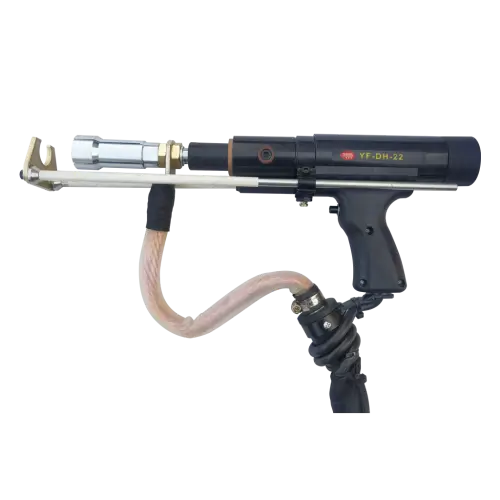
Gun adjustments control the mechanical variables of lift height and plunge depth, which directly determine the electrical arc length. Precision calibration of these physical tolerances ensures your equipment supports the electrical parameters set on your power source. Ignoring these mechanical settings will yield inconsistent welds even with a perfectly calibrated power supply. Therefore, mechanical alignment is just as critical as electrical calibration.
Calibrating the Lift Height
Lift height establishes the physical gap between the stud tip and workpiece, directly controlling arc stability and voltage. An excessive lift height creates a long, erratic arc that wanders and allows atmospheric gases to contaminate the weld. Conversely, an insufficient lift limits the thermal energy generated, risking cold-lap defects in the fusion zone. Adjusting this parameter with precision spacers prevents voltage fluctuations.
Key Takeaway: Measure lift height with precision calipers to keep the arc length within tight engineering tolerances.
Setting the Plunge Depth
Plunge depth controls how far the stud protrudes past the ceramic ferrule, dictating the final force of the mechanical plunge. Proper plunge forces the stud fully into the molten pool, extruding contaminants and filling the ferrule cavity. Insufficient plunge results in internal voids, while excessive plunge causes excessive weld spatter. Calibrating both lift and plunge in tandem ensures stable arc voltage and perfect fillet geometry.
Optimal gun dimensions ensure the mechanical limits align perfectly with your target electrical outputs.
| Stud Size Range | Target Lift Height | Target Plunge Depth | Typical Application |
|---|---|---|---|
| M3-M8 | 1.2-1.6 mm | 1.5-2.0 mm | Thin sheet and light fabrication |
| M10-M16 | 1.6-2.0 mm | 2.0-3.0 mm | General structural fabrication |
| M18-M25 | 2.0-4.0 mm | 3.0-4.5 mm | Heavy structural steel fabrication |
The values shown are typical starting points. Actual lift height and plunge depth should be adjusted according to the welding gun design, stud diameter, material, and the equipment manufacturer’s recommendations.
With the mechanical gun limits defined, we must balance the thermodynamic inputs of heat and cycle time.
How Do Heat and Time Align in the Stud Welding Process?
Heat input and weld time must be balanced precisely to form a sound metallurgical joint without degrading the base material. These primary parameters act in unison to establish the exact thermal energy input required for your stud diameter. Adjusting one variable without recalibrating the others will inevitably disrupt the thermal equilibrium of the weld pool. This balance is especially critical when dealing with heat-sensitive alloys.
Controlling Total Heat Input
Total heat input is primarily governed by the welding amperage, which determines the depth of the fusion zone. High current levels increase the size of the molten pool rapidly but also expand the Heat-Affected Zone (HAZ). Managing this thermal energy prevents grain growth and maintains the mechanical properties of high-strength alloys. The target amperage must always be matched to the cross-sectional area of the stud.
Optimizing the Millisecond Weld Time
Weld time regulates the duration of the arc, directly influencing penetration depth and base metal dilution. Short cycles minimize the HAZ and are ideal for preventing distortion in thin-gauge materials. Longer cycles are necessary for larger diameters to ensure the base metal is sufficiently liquefied. Maintaining a strict balance between high current and short time settings minimizes thermal distortion.
Balancing time and current settings is crucial to achieving structural joint integrity.
| Fastener Thread | Amperage Setting | Cycle Time | Thermal Energy Input |
|---|---|---|---|
| M6 Threaded | 450 A | 150 ms | Low-to-Medium |
| M10 Threaded | 650 A | 250 ms | Medium |
| M16 Threaded | 1000 A | 550 ms | High |
This relationship emphasizes how shorter times paired with high currents maintain a localized, high-density fusion zone.
This delicate thermodynamic balance relies heavily on matching settings to the exact diameter of the fastener.
How Do You Match Stud Diameters in the Stud Welding Process?
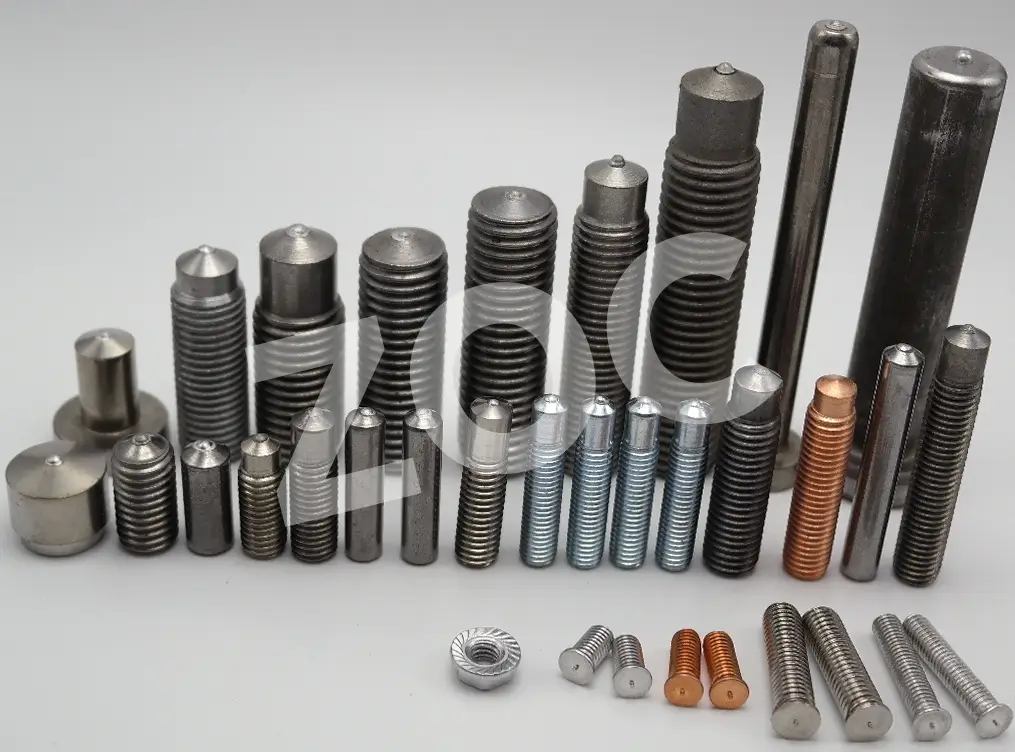
Matching the stud diameter to appropriate electrical and mechanical settings is the foundation of structural weld design. Larger fasteners require a massive surge in current density to liquefy their wider cross-sectional areas. Neglecting this correlation results in inadequate penetration and rapid structural failure under shear loads. Therefore, selecting the correct diameter-to-parameter ratio is a non-negotiable step.
The Physics of Stud Cross-Sections
The surface area of the stud face dictates the minimum amperage required to establish an even molten pool. As the diameter increases, the electrical resistance of the joint decreases, requiring higher current to maintain the arc. This necessitates heavy-duty power sources capable of delivering up to several thousand amperes instantly. Proper sizing ensures the electrical energy is converted efficiently into weld metal fusion.
Deoxidation with Aluminum Tips
Aluminum flux tips are embedded on the face of steel studs to act as a chemical scavenger during the arc phase. This flux vaporizes instantly, binding with atmospheric oxygen to prevent porosity in the solidifying molten pool. Correct diameter-specific flux quantities ensure a clean fusion zone free of oxide inclusions. Maintaining clean and dry tips is essential to prevent micro-fissure defects.
The physical dimensions of your fastener dictate the baseline electrical demand.
| Fastener Type | Composition | Key Mechanical Feature | Target Application |
|---|---|---|---|
| Threaded Stud | Carbon Steel | Tensile thread engagement | Bracket Mounting |
| Shear Connector | Structural Mild Steel | High shear resistance | Concrete Bridges |
| Unthreaded Pin | Stainless Steel | Corrosion resistance | Industrial Liners |
These parameters demonstrate that volumetric increase in the stud material demands an exponential rise in thermal energy.
To simplify these configurations, operators should consult standardized reference charts before initiating a shift.
What Are the Setup Reference Charts for the Stud Welding Process?
Setup reference charts provide highly accurate starting points for configuring current, timing, and mechanical lift heights. These pre-calculated baselines are derived from extensive metallurgical testing on standard structural steel. Utilizing them drastically cuts down setup times and minimizes initial scrap rates during production. They act as a reliable guide for both novice and experienced welding operators.
Standard Metric Baseline Charts
Metric reference values assist in quickly setting up the digital controllers on modern solid-state power sources. These baselines represent optimized configurations for standard carbon steel studs. Minor manual adjustments may still be required to compensate for cable length voltage drops. Always record your final settings to maintain strict shift quality control standards.
Key Takeaway: Treat reference charts as a launching pad, then fine-tune parameters using physical pre-production test welds.
Adjusting for Heavy-Duty Sizes
Heavy-duty fasteners require substantial lift heights and extended cycle times to ensure a uniform molten pool. When working with diameters over 16 mm, ensuring stable current density is critical. Reference guides help prevent overloading the power supply’s continuous duty cycle. This structured approach protects your equipment from premature thermal shutdown.
Consulting standard parameters ensures your physical equipment operates within its safe design parameters.
| Stud Diameter | Welding Current | Weld Time | Minimum Plate Thickness |
|---|---|---|---|
| 6 mm | 500 A | 180 ms | 2.0 mm |
| 12 mm | 900 A | 400 ms | 4.0 mm |
| 20 mm | 1500 A | 800 ms | 6.5 mm |
This technical baseline confirms that voltage drop compensation is critical when operating at high current thresholds.
Failing to align your machine settings with these certified reference values leads to highly predictable weld defects.
How Do Improper Settings Fail in the Stud Welding Process?
Improper settings inevitably lead to weld defects like cold welds, excessive undercut, and extreme porosity within the joint. When thermal and mechanical forces are out of sync, the metallurgical bond cannot develop. Identifying these failures early prevents catastrophic in-service collapses. Consequently, a rigorous quality control routine must be established on the shop floor.
Analyzing the Cold Weld Defect
Cold welds occur when low amperage or insufficient weld times fail to fully liquefy the fusion zone. This results in a lack of base plate penetration and an incomplete, brittle weld collar. Such joints exhibit high susceptibility to sudden shear failure under minimal load. This failure mode represents a major risk for structural steel assemblies.
Key Takeaway: A weak, non-uniform collar is the clearest indicator of an underpowered weld cycle.
Diagnosing Porosity and Spatter
Porosity in the weld collar is caused by surface contaminants, wet ferrules, or inadequate shielding. Excessive spatter, on the other hand, points to excessive plunge depth or a highly unstable arc. Both issues weaken the cross-sectional integrity of the final joint. Cleaning all surfaces down to bright metal before welding remains the best preventive measure.
Understanding the direct causes of joint failures allows operators to implement targeted corrections.
| Identified Defect | Visual Indicator | Root Cause | Corrective Action |
|---|---|---|---|
| Cold Weld Joint | Cracked, uneven collar | Low amperage/time | Increase control settings |
| Joint Porosity | Bubbly, spongy metal | Wet ferrules/oil | Clean plate, dry ferrules |
| Asymmetric Collar | Fillet heavy on one side | Magnetic Arc Blow | Reposition grounds |
This troubleshooting guide proves that visual inspection is an incredibly accurate diagnostic tool for process quality.
Among all defect causes, magnetic arc deflection remains one of the most frustrating to resolve.
How Do You Stop Arc Blow in the Stud Welding Process?
Stopping arc blow requires establishing a highly symmetrical dual grounding pathway to balance the magnetic fields. High welding currents generate intense magnetic fields that can deflect the electric arc off-center. This deflection results in asymmetrical weld collars and incomplete fusion on the opposite side. If left uncorrected, magnetic deflection will ruin the structural rating of the joint.
Symmetrical Grounding Techniques
Symmetrical grounding utilizes heavy-duty copper or brass grounding clamps placed on opposite sides of the workpiece. This configuration forces the welding current to split evenly, neutralizing the magnetic fields. Keeping the ground leads straight and of equal length further stabilizes the current return. This simple physical layout change dramatically improves overall arc stability.
Key Takeaway: Never clamp grounds over paint, scale, or rust if you want to avoid erratic arc behavior.
Ensuring Clean Electrical Contact
Clean contact surfaces are mandatory to prevent localized electrical resistance and magnetic imbalances. Operators must grind the ground attachment points down to bright, bare metal. This ensures maximum current density and prevents arc wander during high-amperage cycles. Consistent maintenance of ground clamps prevents voltage drops.
Proper electrical grounding configurations are vital to maintaining a stable, centered welding arc.
| Ground Configuration | Clamp Placement | Major Advantage | Recommended Use |
|---|---|---|---|
| Symmetrical Dual | Opposite plate sides | Eliminates arc deflection | Large structural studs |
| Symmetrical Multi | Three-point delta | Maximizes arc stability | Critical structural joints |
| Single Heavy-Duty | Adjacent to weld zone | Rapid simple setup | Small-diameter fasteners |
This electrical analysis indicates that ground symmetry is just as critical as your primary current settings.
With magnetic arc blow neutralized, the next step is verifying the mechanical strength of the joint.
How Do You Verify Joint Quality in the Stud Welding Process?
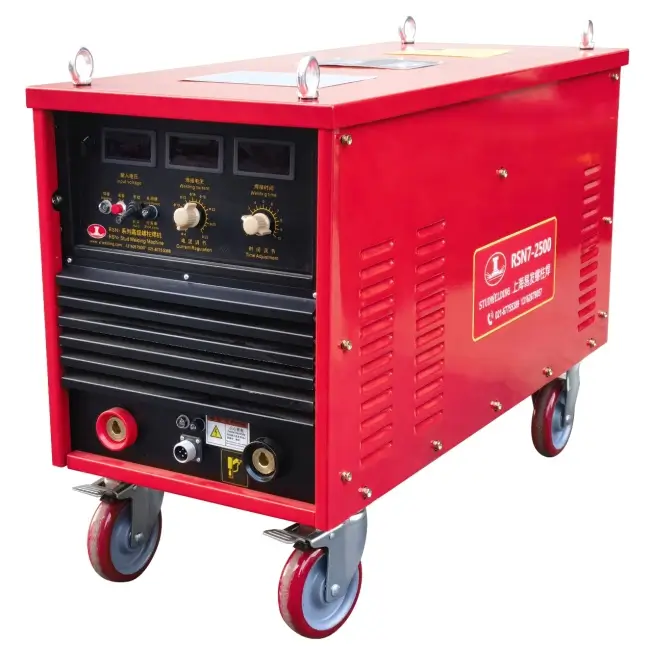
Verifying joint quality involves a combination of visual inspections and standardized physical testing methods. Codes mandate that welded fasteners must meet strict mechanical load capacities to ensure structural integrity. Implementing systematic quality checks guarantees that no defective parts make it to the field. This testing routine is a standard requirement for certified fabricators.
Visual Inspection Standards
Visual inspection focuses on confirming a complete, 360-degree, uniform weld collar around the stud base. The collar should have a smooth, shiny appearance, indicating complete fusion and proper gas containment. Any signs of undercut, cracks, or surface porosity require immediate rejection of the part. This rapid non-destructive check is highly reliable.
Physical Testing and Standards
Physical verification relies on standardized tests like the bend test, conducted in accordance with international codes. Under codes like AWS D1.1 or ISO 14555, studs are bent to a specified angle to prove ductile fusion. The joint must withstand this plastic deformation without showing any signs of cracking in the HAZ. This destructive method proves the ultimate tensile capacity.
Key Takeaway: Always perform pre-production bend tests at the start of every shift to validate your welding parameters.
Adhering to international quality standards ensures your production line remains fully code-compliant.
| Testing Code | Bend Angle | Weld Inspection Criteria | Quality Verification Method |
|---|---|---|---|
| AWS D1.1 | Code-specified angle | No cracking in HAZ | Destructive Bend/Tensile |
| ISO 14555 | Code-specified angle | Perfect 360-degree collar | Visual/Bend testing |
This structural data confirms that complying with recognized codes is the ultimate defense against liability.
Mechanical verification is highly dependent on how settings are adjusted for different metallurgical alloys.
How Do Settings Change by Material in the Stud Welding Process?
Settings must be adapted to accommodate the unique thermal conductivity, melting point, and surface oxide traits of each metal. Standard carbon steel behaves very differently from highly conductive aluminum or corrosion-resistant stainless steel. Failing to adjust parameters for these material variations results in severe weld dilution or burn-through. Therefore, metallurgical awareness is crucial.
Welding Stainless Steel Studs
Stainless steel requires slightly lower current settings and shorter weld times due to its lower thermal conductivity. This prevents excessive heat buildup, which can degrade the material’s corrosion resistance. Ensuring precise timing keeps the Heat-Affected Zone (HAZ) exceptionally narrow. This metallurgical fusion approach guarantees the longevity of the joint.
Welding Aluminum Alloys
Aluminum demands rapid, high-amperage energy inputs to overcome its extremely high thermal conductivity. Using DCEP reverse polarity is critical to chemically clean the tough surface oxide layer. High-purity shielding gas is also required to protect the highly reactive molten pool from contamination. These adjustments ensure the rapid formation of a sound joint.
Adjusting your settings to the specific physics of each alloy ensures consistent metallurgical fusion.
| Metal Base Type | Thermal Conductivity | Polarity Setting | Shielding Method |
|---|---|---|---|
| Carbon Steel | Low-to-Medium | DCEN (Straight) | Ceramic Ferrule |
| Stainless Steel | Low | DCEN (Straight) | Ceramic Ferrule |
| Aluminum Alloy | High | DCEP (Reverse) | Inert Shielding Gas |
This material matrix reveals how alloy chemistry dictates the exact ratio of electrical power to cycle duration.
By understanding these metallurgical dynamics, you can confidently produce high-quality, code-compliant welds.
Conclusion & Call to Action
Mastering the drawn arc stud joining method requires deep technical knowledge, precise equipment calibration, and rigorous adherence to visual quality standards. By systematically tuning your amperage, millisecond weld times, and gun lift dynamics, you resolve the frustrating issues of brittle joints and erratic arc behaviors.
We understand the complex challenges of modern fabrication and are committed to helping you streamline your assembly lines with absolute engineering precision. If you want to optimize your production efficiency, eliminate scrap, and implement flawless structural joining standards, get in touch with our engineering team for a dedicated professional consultation. Together, we can elevate global manufacturing standards and construct robust, enduring infrastructure that stands the test of time.
Frequently Asked Questions (FAQ)
Can I weld stainless steel studs to carbon steel plates?
Yes, you can weld stainless steel studs to carbon steel base plates using correct drawn arc parameters. The resulting joint is highly durable, but you must account for the slight differences in thermal expansion and conductivity between the two alloys to prevent cracking.
What’s the best shielding method for outdoor operations?
Ceramic ferrules are the best and most reliable shielding method for heavy-duty outdoor operations. Unlike shielding gas, which can be easily blown away by wind, ceramic ferrules physically contain the molten pool, shield it from oxygen, and mold the fillet.
How do I know if my lift height setting is too low?
You will recognize a low lift height by a short, spitting arc, heavy spatter, and incomplete weld collar formation. If the lift is insufficient, the arc cannot generate enough heat to fully melt the base metal before the plunge occurs, resulting in a cold joint.
Can I automate the stud welding process completely?
Yes, you can fully automate this process using robotic arms and automatic feed systems. Automation guarantees identical mechanical lift, plunge, and electrical parameters, significantly reduces operator variability and improves process consistency.
What’s the best way to prevent magnetic arc blow?
Symmetrical dual grounding is the best way to eliminate magnetic arc blow. By splitting the return current path evenly across two heavy-duty clamps on opposite sides of the plate, you neutralize the magnetic fields that deflect the arc.