Short cycle and conventional drawn arc stud welding use the same basic sequence: lift the stud, strike an arc and plunge it into the molten metal. The arc time changes what each setup can do. Short cycle is useful when heat input and visible marking on thinner parts matter; a longer drawn arc cycle is usually selected for larger studs and structural work.
Start with the stud diameter, base-metal thickness, material and required load. Then check the available power, gun, shielding method and the weld procedure. A fast arc alone does not guarantee a sound weld on a thin panel, and a longer arc does not automatically make a joint stronger.
The comparison below gives you a way to narrow the options before trial welds. Use the equipment data sheet and the applicable project requirements for the final choice.
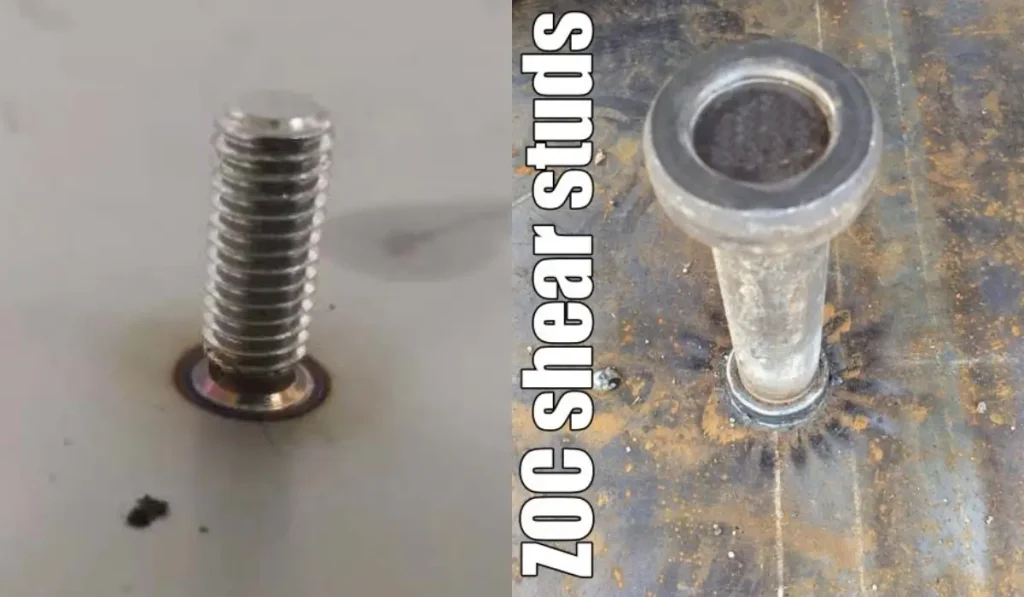
How Short Cycle and Drawn Arc Stud Welding Differ
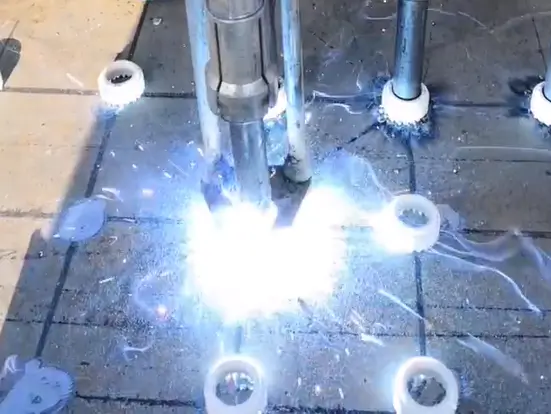
Short cycle is a form of drawn arc stud welding. It uses a shorter main arc than the conventional drawn arc process, so less heat is delivered to the workpiece for a comparable setup. Stud size, current and pool protection still determine the result.
- Short cycle stud welding uses a short main arc, commonly up to about 100 ms; the exact setting depends on the system and stud.
- Drawn arc stud welding uses a longer arc for the stud and base metal to form a larger weld pool.
Short cycle favors a shorter weld cycle and less heat input. Conventional drawn arc gives more time to form a weld pool for larger studs. Neither description replaces a qualified procedure or a test on the actual part.
Short Cycle vs Drawn Arc Stud Welding at a Glance
| Factor | Short Cycle | Conventional Drawn Arc |
|---|---|---|
| Arc time | Short, often up to about 100 ms | Longer; set for the stud and procedure |
| Typical job | Suitable studs on thinner sheet | Larger studs on plate and structural work |
| Heat input | Usually lower for a comparable setup | Usually higher for a comparable setup |
| Fusion area | Smaller, subject to stud and settings | Larger, subject to stud and settings |
| Joint strength | Must meet the specified load in a test | Must meet the specified load in a test |
| Weld-pool protection | None or shielding gas, as specified | Ceramic ferrule or shielding gas, as specified |
| Line output | Measure accepted welds per shift | Measure accepted welds per shift |
Read the table as a process comparison, not a universal setting chart. Weld time, sheet thickness and stud range vary with the power source, stud design and material.
When to Use Short Cycle Stud Welding
Short cycle stud welding is worth testing on sheet-metal assemblies where rear-side marking, distortion and cycle time matter. The base metal still has to support the selected stud and load.
Typical Short-Cycle Applications
- Vehicle brackets and fittings on suitable sheet-metal parts
- Formed sheet-metal assemblies
- Electrical cabinets and enclosures
- Appliance panels and other repeat parts
What to Check Before Choosing Short Cycle
- Can reduce heat input compared with a longer arc setup
- Can limit rear-side marking on a suitable part, subject to a sample test
- May run without a ferrule; shielding gas can be needed for some studs and materials
- Short arc time can help a line when loading and positioning keep pace
Common examples include brackets and fasteners on formed sheet, cabinets and vehicle components. Compare short-cycle stud welding machines with your stud and power requirements, and check access for the gun and the condition of the coated or uncoated surface.
When to Use Drawn Arc Stud Welding
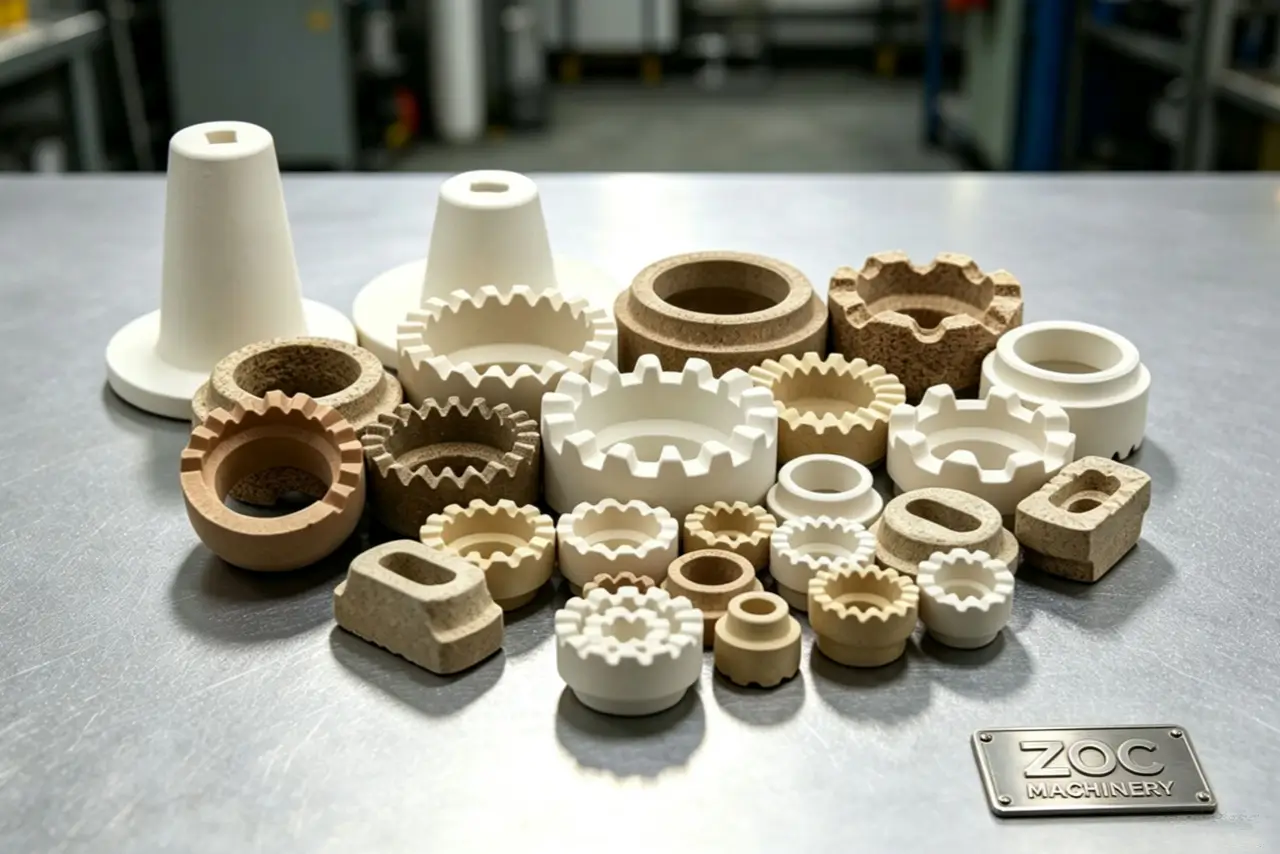
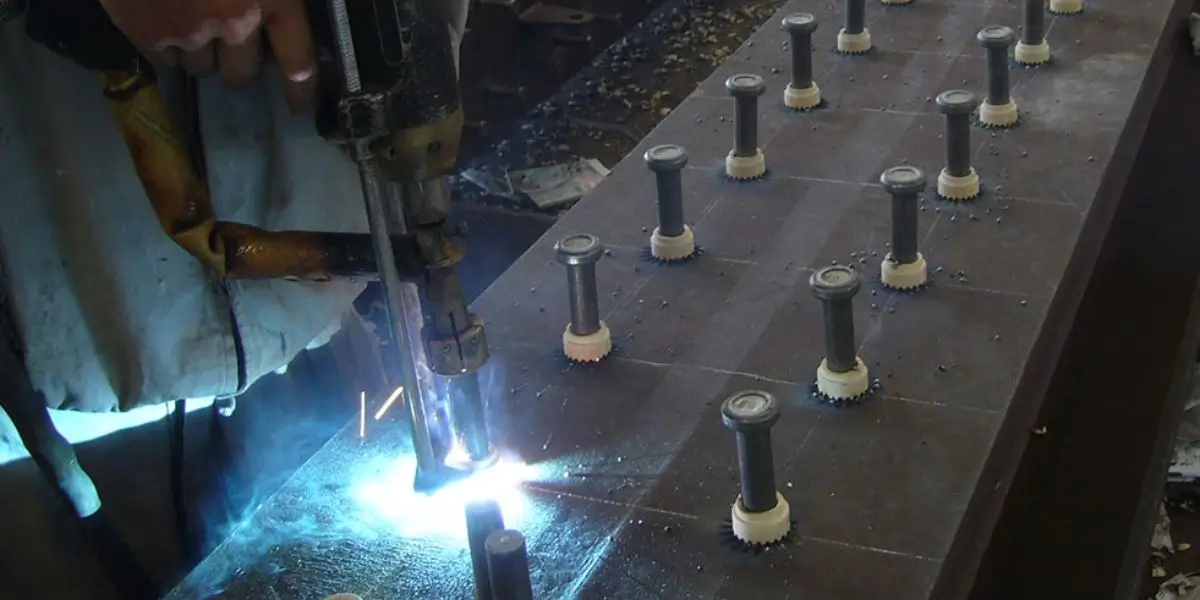
Conventional drawn arc stud welding is commonly used for larger studs on steel plate, including structural shear connectors. It can use a ceramic ferrule or shielding gas, depending on the stud and procedure.
Typical Drawn Arc Applications
- Structural steel and shear connectors
- Bridges and infrastructure projects
- Shipbuilding and heavy plate fabrication
- Machinery frames and heavy equipment
What to Check Before Choosing Drawn Arc
- Supports larger studs when the machine and procedure are rated for them
- Allows use of a ferrule or shielding gas where the procedure specifies it
- Can be qualified for load-bearing connections
The process suits structural and heavy-fabrication jobs when the specified stud, base metal and procedure call for it. Acceptance depends on tested welds, not the process name alone.
Equipment for Drawn Arc Stud Welding
For a larger stud, check the power source and gun as one system. Compare the rated stud range, current, duty cycle, cable length and site supply against your weld schedule. Our guide to stud welding equipment for steel construction covers those buying checks.
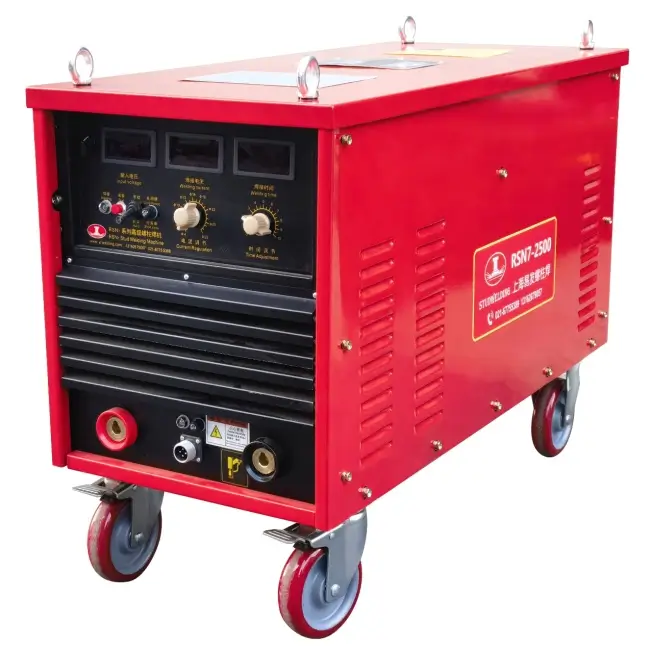
ZOC lists the RSN7-2500 with a 3–28 mm welding range and a 200–2500 A current range. Confirm that your stud type, gun, cable and input supply support the specific size and duty you plan to use.
The published current range describes the machine, not a guarantee that every stud and plate combination will pass inspection. Set current, time, lift and plunge from an approved procedure and verify them with trial welds.
The RSN7-2500 is one option for drawn arc work on larger studs. Ask for a configuration and demonstration using your stud, ferrule or shielding gas, base metal and power supply.
Before ordering, check:
- Current and stud range for the planned weld schedule
- Gun, chuck, cable and return-lead compatibility
- Duty-cycle rating at the required current
- Service parts and a documented trial-weld setup
The right choice depends on the weld schedule and the trial result. Request the equipment configuration in writing, including the gun, leads and consumables.
Heat Input and the Weld Area
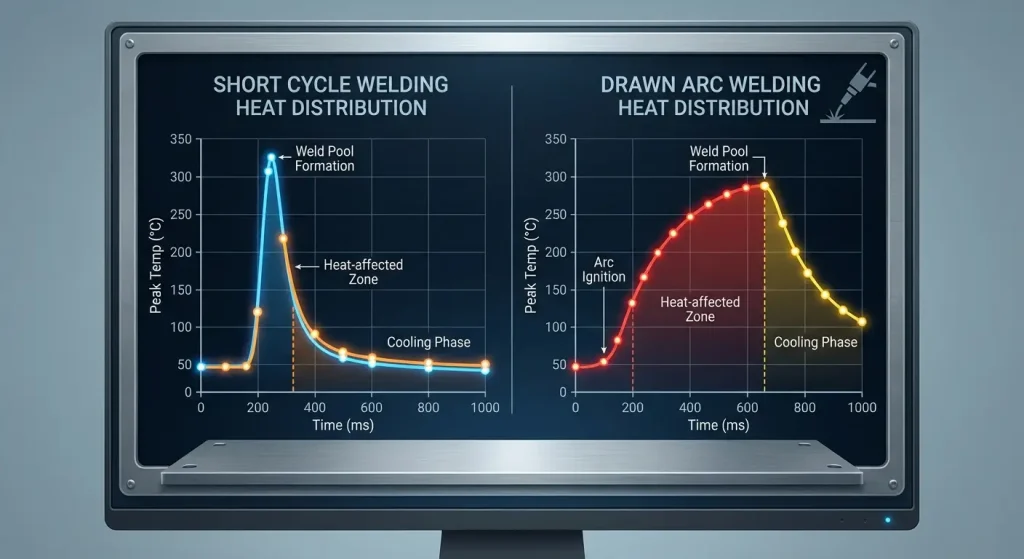
Arc duration changes heat input, but stud diameter, current, surface condition and shielding also affect the fusion zone. A short cycle can reduce marking or distortion on a suitable thin part; it cannot eliminate those effects in every setup.
Short Cycle
- Shorter arc time can limit total heat input for comparable applications
- A smaller fusion zone may reduce visible heat effects
- Rear-side marking still needs to be checked on a sample
Conventional Drawn Arc
- Longer arc time allows a larger molten area for a suitable stud and plate
- Heat-affected area depends on the parameters and base metal
- Ferrule or gas selection affects weld-pool protection
If rear-side appearance matters, weld a sample from the actual sheet and inspect both faces. Adjust the process only within the qualified range for that stud and material.
Match Stud Size to Base-Metal Thickness
| Part and stud combination | First process to evaluate |
|---|---|
| Thin sheet with a small stud | Short cycle, followed by a rear-side and strength check |
| Moderate plate and stud size | Compare both supported setups with trial welds |
| Large structural stud on plate | Conventional drawn arc to the project procedure |
Avoid choosing by a single sheet-thickness cutoff. For the same plate, a small stud and a large stud impose different demands on the weld area. Use the supplier’s supported range and the project procedure, then test the joint.
How to Compare Weld Strength
Neither process has an automatic strength rating. A drawn arc setup can join larger structural studs, while a short-cycle joint can meet its intended load when properly designed and tested.
- Short cycle: choose by a tested joint and its specified load
- Conventional drawn arc: choose by a tested structural procedure where required
For structural work, check the specified stud and weld procedure, then inspect and test production welds as required. The strength of an individual weld cannot be inferred from arc time alone.
Compare Production Speed Beyond Arc Time
| Measure | Short Cycle | Conventional Drawn Arc |
|---|---|---|
| Arc time | Shorter | Longer |
| Accepted output | Measure on the actual line | Measure on the actual site or line |
| Extra handling | Check gas and part positioning | Check ferrules or gas, positioning and inspection |
Short cycle has a shorter arc time, but studs per minute depend on loading, positioning, fixtures, ferrule removal and inspection. Measure accepted welds over a representative shift before comparing output.
Compare Cost per Accepted Weld
For short cycle, include:
- Stud, gun, gas and power-source setup
- Handling and positioning time
- Rejected welds and rework
For conventional drawn arc, include:
- Power source, gun and cable setup
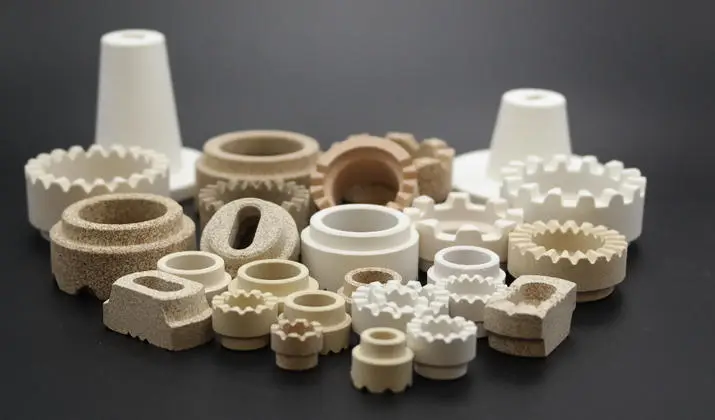
- Ferrules or shielding gas when the procedure calls for them; include inspection and cleanup. See ceramic ferrules in drawn arc welding
Compare cost per accepted weld, including equipment, consumables, labor, rework and inspection. The cheaper quote is not necessarily the cheaper process for the job.
Mistakes to Avoid When Selecting a Process
These choices cause trouble when made without checking the actual stud and base metal:
- Using a long arc on thin sheet without a rear-side sample test
- Specifying short cycle for a large structural stud without qualification
- Comparing arc times while ignoring loading, access and accepted output
How to Choose the Right Stud Welding Process
Consider Short Cycle When
- The stud and plate are within the equipment’s supported range
- Heat input and rear-side appearance have been tested on the part
- The required load is met by the trial weld
Consider Conventional Drawn Arc When
- The stud size and load call for a structural procedure
- The power source, gun and pool protection suit the stud
- The finished weld meets the project’s inspection requirements
Match the process to stud size, material, load, surface condition and access. Ask what shielding is required, confirm equipment ratings, and make trial welds before fixing production settings.
Short Cycle vs Drawn Arc: Common Questions
When should I use short cycle stud welding?
Consider it for suitable studs on thinner parts when lower heat input or a shorter arc cycle helps. Verify rear-side appearance and joint strength on samples.
When should I use conventional drawn arc?
Consider it for larger studs and structural work when the specified procedure and equipment call for a longer arc, ferrule or shielding gas.
Which process is faster?
The short-cycle arc is faster. Complete production speed depends on positioning, loading, inspection and any ferrule or gas handling.
Which process makes a stronger weld?
Neither always wins. Stud size, base metal, procedure and inspection determine whether the joint meets its required load.
Confirm the Choice with a Trial Weld
Send the stud drawing, base-metal grade and thickness, required load, surface condition and target output to the equipment supplier. Request a trial weld and a complete machine, gun and consumables quote.
Our weld quality checks guide lists checks to discuss with your welding team. Record the settings and inspection results from the trial so the production setup can be repeated.
Contact us with your stud and part details if you want ZOC to suggest a short-cycle or drawn arc configuration.