A stud welder joins a metal stud to a workpiece without drilling a hole through it. The power source delivers a controlled burst of energy; the gun holds, lifts or releases the stud and brings it into contact with the molten metal. The exact sequence depends on whether the system uses drawn-arc, short-cycle or capacitor-discharge (CD) welding. If you are choosing a stud welder, start with the stud diameter, base material, access to the joint and the required weld procedure.
What is a stud welder, and where is it used?
A stud welding system consists of a power source, a welding gun, cables and the consumables specified for the process. It attaches threaded studs, pins or shear connectors to a metal surface. Structural steel, fabrication shops, sheet-metal assemblies and equipment makers use different versions of the process because their stud sizes, material thicknesses and production demands differ. For the wider range of methods, see what stud welding is.
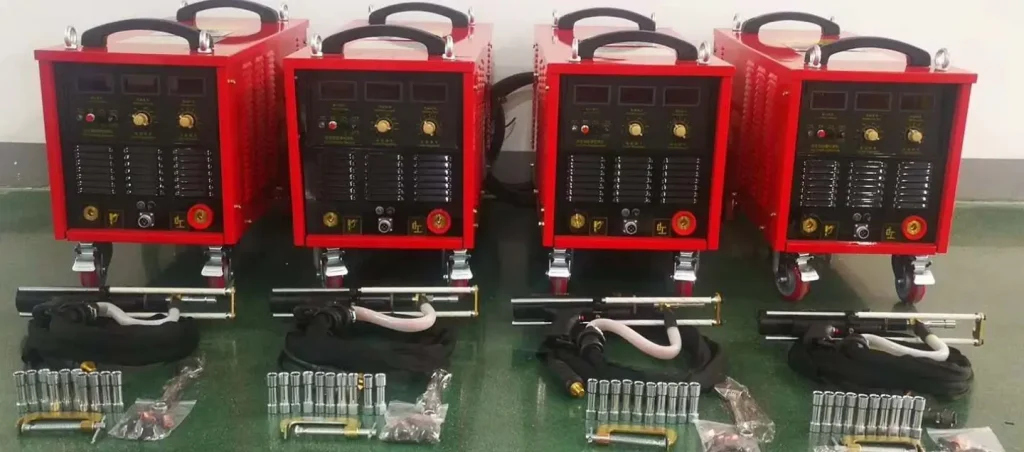
Why use a welded stud instead of a drilled fastener?
A welded stud can leave the reverse side of a plate or panel undisturbed and avoid a drilled hole. That can simplify assembly where rear access is limited. It does not make every joint stronger or faster by default: the base metal, stud, process settings and inspection requirements decide whether the application is suitable.
| Selection question | What to check |
|---|---|
| Access | Can the gun sit square to the surface, and is there room for any ferrule or gas shroud? |
| Joint design | Are the stud size, material and base-metal thickness covered by an approved procedure? |
| Production | Do power, duty cycle and handling suit the required volume? |
How does a stud welder make the joint?
The power source controls electrical output and timing. The gun positions the stud and provides the movement or contact required by the selected method. Current flows through the stud and workpiece; heat melts the joining surfaces, and the stud is pressed or plunged into the weld pool. The metal then solidifies. A sound weld depends on more than the cycle completing: surface condition, alignment, return connection and the qualified settings all matter.
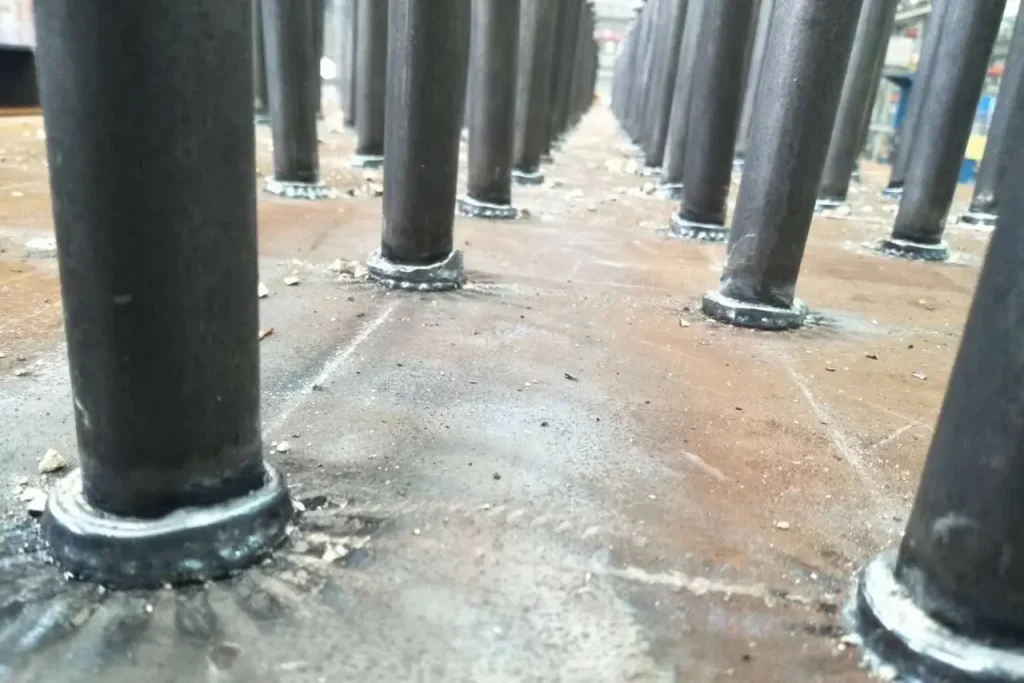
Drawn-arc and short-cycle sequences
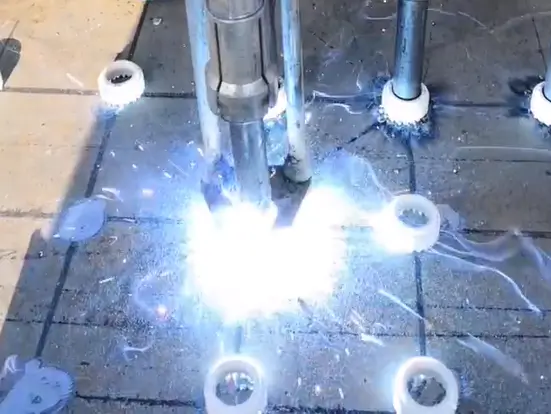
In drawn-arc welding, the gun lifts the stud from the workpiece to strike an arc. After the programmed weld time, the gun plunges the stud into the molten pool. Ferrules or shielding gas may be used according to the process and application. Short-cycle welding follows a related lift-and-plunge sequence with a shorter arc time and different application limits. See the arc stud welding process for the steps in more detail.
How CD stud welding differs
A CD unit stores energy in capacitors and releases it in a short pulse. Contact and gap versions initiate the weld differently, so the drawn-arc lift sequence should not be applied to every CD gun. CD welding is often considered for smaller studs and thin sheet, subject to material and equipment limits. Our capacitor-discharge machines page shows the equipment category.
| Method | How the arc starts | Typical selection consideration |
|---|---|---|
| Drawn arc | The gun lifts the stud to establish an arc. | Larger studs and structural applications with a qualified procedure. |
| Short cycle | A brief lift-and-plunge arc cycle. | Where stud size and base material suit a shorter cycle. |
| Capacitor discharge | A stored-energy pulse, using contact or gap initiation. | Smaller studs and thinner material where the process is appropriate. |
Which stud welding system fits the job?
Start with the job specification, not the enclosure size. Confirm the process, stud diameter range, material pair, power supply, cable length and duty cycle. A portable power source helps when work moves between locations; a fixed workstation can support repeatable positioning and material handling. Neither format guarantees the same output or production rate.
Field work and workshop production
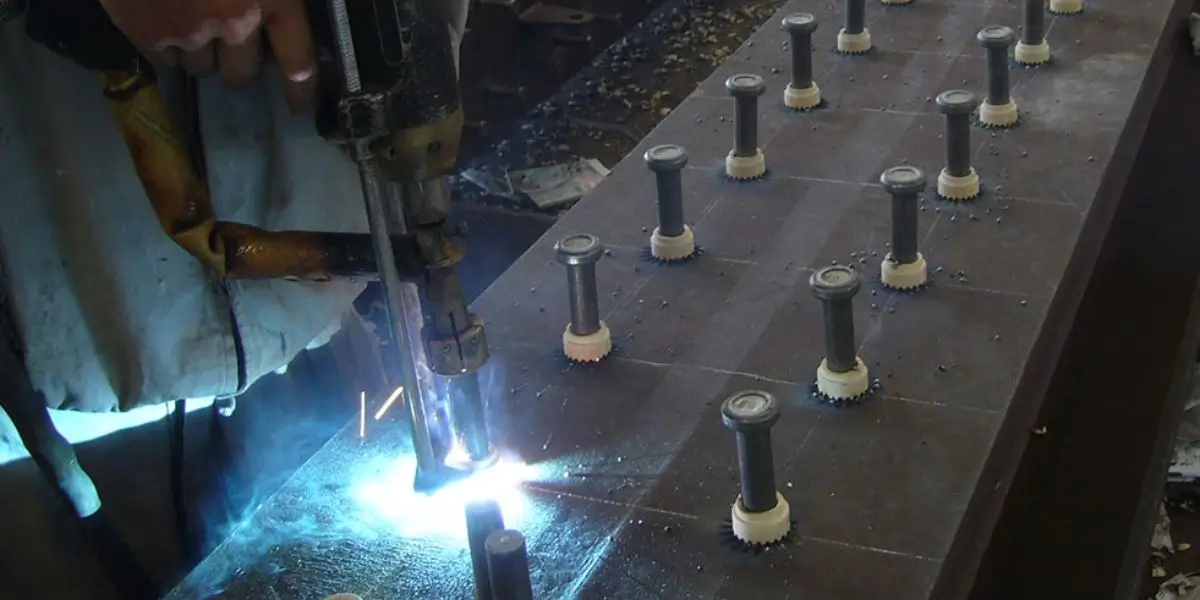
For site work, check supply capacity, weather protection, cable routing and access around each weld. For workshop work, assess fixtures, operator reach, repeatability and how parts move in and out of the station. When welding shear studs, confirm the stud and ferrule specification and the applicable project inspection plan.
| Work setting | Useful checks |
|---|---|
| On site | Available input power, cable length, handling weight, access and environmental controls. |
| In a workshop | Fixture accuracy, throughput, duty cycle, maintenance access and operator ergonomics. |
What do the power source and welding gun do?
The power source supplies the programmed weld energy. The gun holds the stud and controls its position during the cycle. The return cable completes the electrical path through the workpiece. A poor connection, worn chuck or misaligned gun can change the result even when the display shows the expected settings.
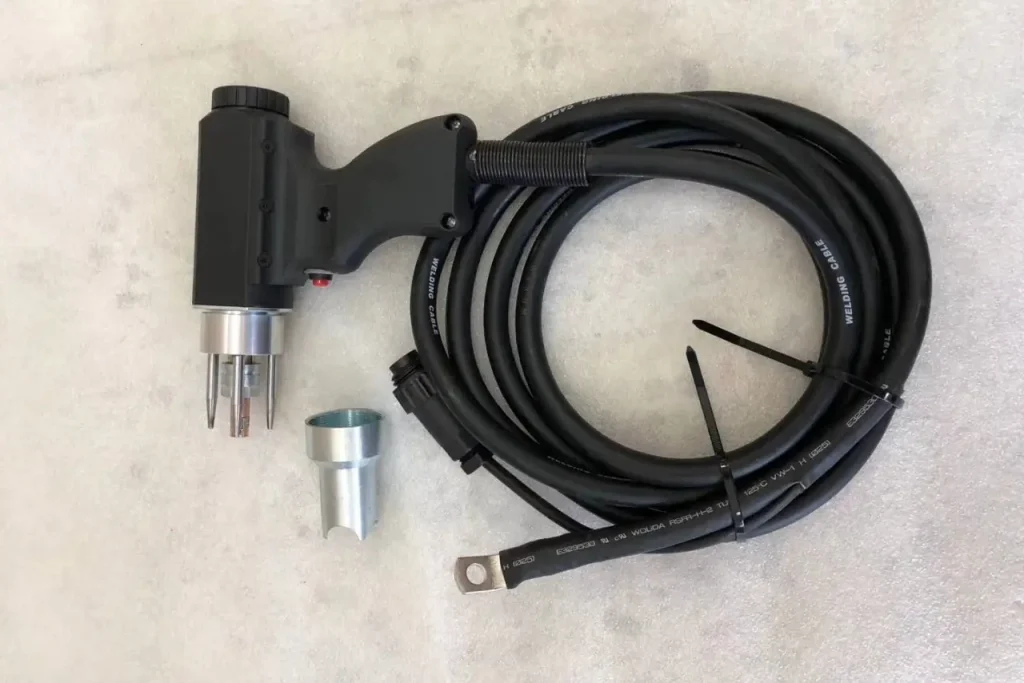
Power source
Depending on the process, settings can include current, weld time, capacitor charge or related control parameters. Match the output range and duty cycle to the stud and production schedule. Follow the machine manual and the approved welding procedure when setting or changing a job.
Gun and accessories
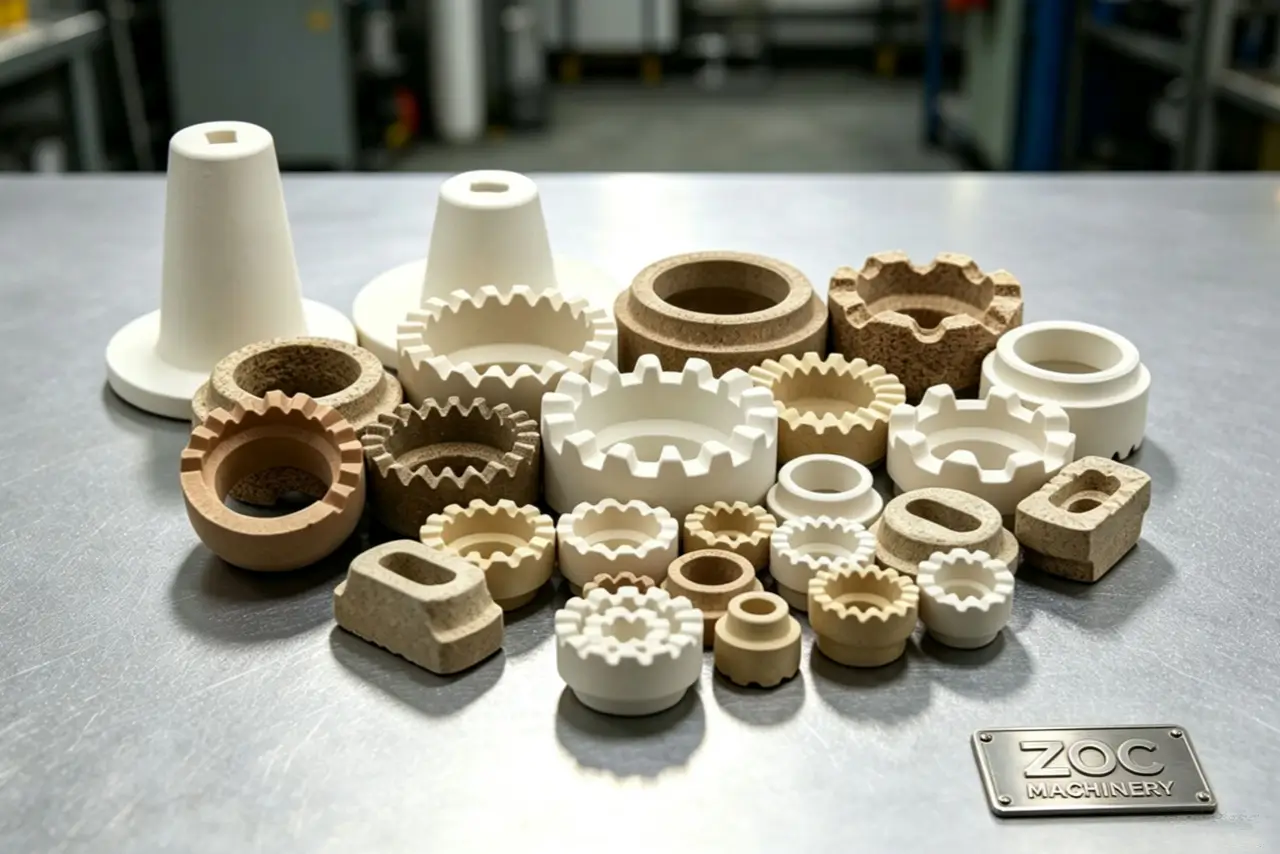
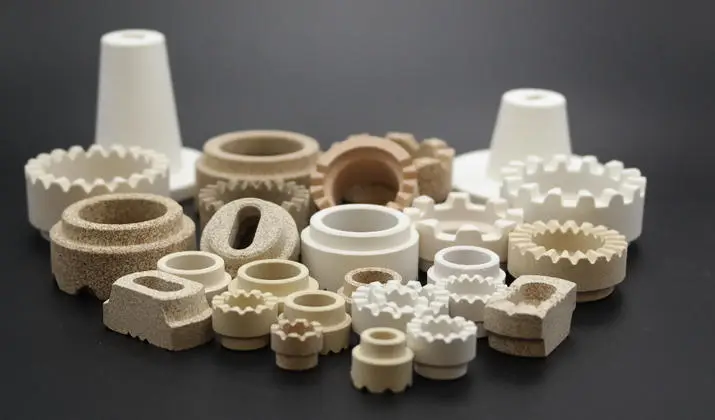
The gun holds the stud in a chuck or collet and places it at the required angle. Its lift, plunge, spring force and stand-off settings depend on the model and process. The stud welding gun guide explains these parts. For drawn-arc work, the specified ceramic ferrule helps contain the molten metal and shield the weld area; the correct size and fit matter.
| Component | Job | Common check |
|---|---|---|
| Power source | Delivers controlled electrical energy. | Settings, input supply and duty cycle. |
| Gun and chuck | Holds and moves or releases the stud. | Grip, alignment, travel and wear. |
| Cables and return clamp | Carry current through the circuit. | Sound insulation and clean, secure connections. |
How do you keep welds consistent?
Treat a change in weld appearance or test results as a reason to check the setup, not merely to turn up the current. Inspect the chuck, gun movement, return connection, cables and consumables at intervals set by the equipment manual and the production environment. Record the settings used for each approved job. Our stud welding machine maintenance guide covers routine equipment checks.
Cleaning and wear
Spatter and dirt can interfere with the chuck or gun movement. Isolate the equipment as instructed before cleaning or replacing parts. Replace a loose or damaged chuck rather than compensating with weld settings. Check cable insulation, connectors and the return clamp for heat damage or poor contact.
| Check | Why it matters |
|---|---|
| Chuck and gun travel | A loose grip or restricted movement changes stud position and plunge. |
| Connections and cables | Resistance, damage or loose clamps can disturb the welding circuit. |
| Ferrules and other consumables | Wrong or damaged parts can affect shielding and weld shape. |
What safety controls does stud welding need?
Stud welding brings arc radiation, hot metal, fumes, electrical energy and fire risk. Set controls for the process, material and work area. Operators need appropriate eye and face protection, gloves and clothing, plus ventilation or fume extraction where the assessment calls for it. Follow the machine manual, site rules and applicable electrical and hot-work procedures.
Before striking an arc
- Check cables, connectors and the return path; remove damaged equipment from service.
- Keep combustibles clear or apply the site hot-work controls.
- Assess coatings and ventilation before welding, especially in enclosed spaces.
- Protect nearby workers from arc exposure and hot spatter.
| Hazard | Control to plan |
|---|---|
| Arc and hot metal | Suitable welding PPE, screens and burn protection. |
| Fumes and coatings | Material assessment and adequate ventilation or extraction. |
| Electric shock and fire | Sound equipment, correct grounding/return setup and hot-work controls. |
What preparation improves weld quality?
Fit the gun squarely, use the specified stud and consumables, and make a secure return connection. Prepare the base surface as the qualified procedure requires. Oil, paint, heavy rust or moisture can interfere with the weld. Some processes permit welding through specified coatings or steel decking, but that needs its own approved procedure and verification; it is not a general shortcut.
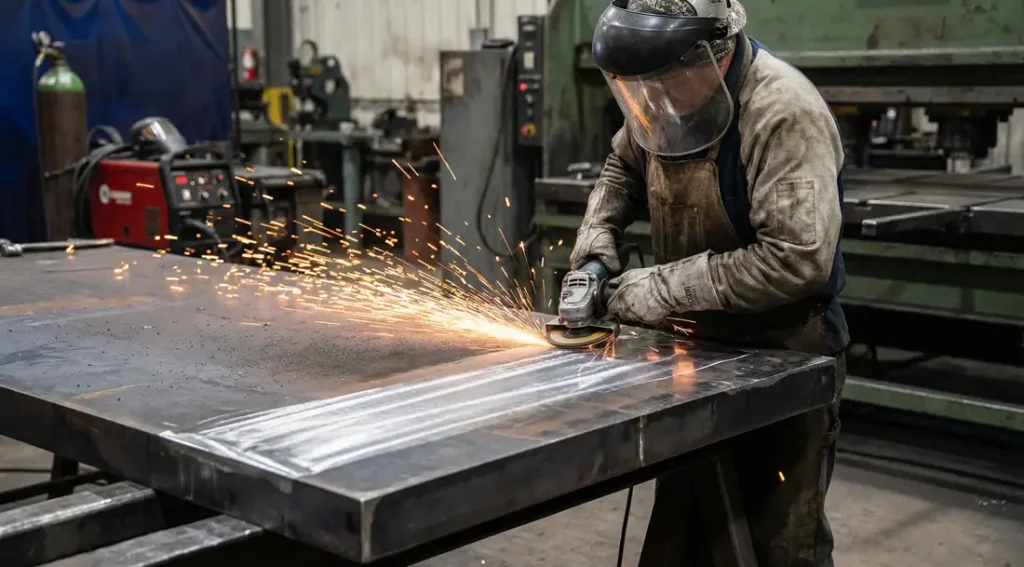
Set up, weld and inspect
Use test welds when starting a job or changing material, studs, settings or equipment. A visually even collar can indicate consistent setup, but appearance alone does not prove fusion or strength. Apply the bend, tensile or other production tests and acceptance criteria required by the governing specification. See what high stud welding quality requires and the related troubleshooting guide if results vary.
| Stage | Action |
|---|---|
| Before welding | Verify material, stud, consumables, setup and approved parameters. |
| During welding | Keep the gun aligned and watch for changes in cycle behavior or weld appearance. |
| After welding | Inspect and test at the frequency and to the criteria in the project procedure. |
Can stud welding lower assembly costs?
It can remove drilling, tapping or rear-side fastening steps when the joint design allows it. The saving depends on stud size, access, setup time, inspection, rework and volume. Compare a complete job cycle and its accepted weld rate with the alternative fastening method. A fast weld cycle is useful only if the finished joints meet the specification.
| Cost factor | Measure on your job |
|---|---|
| Labor | Preparation, welding, inspection and rework time per accepted joint. |
| Consumables | Studs, ferrules or gas, wear parts and scrap. |
| Equipment | Power, setup, maintenance and utilization. |
What can newer controls tell the operator?
Inverter power sources and digital controls can make settings easier to repeat and may record cycle data. The available features vary by model. A display or stored record helps trace the process, but it does not replace qualified procedures or physical inspection. Ask what parameters the machine actually records and how alarms are set before treating the data as quality evidence.
| Feature | Practical use | Limit |
|---|---|---|
| Digital settings | Repeat a specified program. | Wrong settings remain wrong even when repeatable. |
| Cycle records | Review recorded current, time or other available values. | Recorded values alone do not establish weld strength. |
How should you assess a stud welding machine supplier?
Give suppliers the stud range, material, base thickness, production rate, input supply and required standard. Ask for a demonstration on representative workpieces, the gun and consumables included, service documentation and spare-part availability. Request the proposed welding procedure and how acceptance testing will be handled. Those answers are more useful than a generic promise of speed or strength.
| Supplier question | Evidence to request |
|---|---|
| Can it weld the specified joint? | Representative samples and test results under the required procedure. |
| Can operators maintain it? | Manuals, training scope and parts list. |
| What happens after delivery? | Warranty terms, support route and lead times for wear parts. |
Frequently asked questions
Does every stud welder use the same process?
No. Drawn-arc, short-cycle and CD systems use different power delivery and arc initiation. Select the process for the stud, workpiece and required joint.
Can a stud welder work on galvanized steel?
Some applications allow welding through specified coatings or decking under a qualified procedure. Coating thickness, fumes and acceptance testing need to be addressed; do not assume a setup for clean steel will transfer unchanged.
Does a complete weld cycle mean the joint has passed?
No. Inspect and test to the job specification. Visual appearance is one check, not a substitute for the required mechanical tests.
What causes inconsistent stud welds?
Common causes include surface contamination, poor return contact, gun misalignment, worn chucks and settings that do not match the stud or base material. Change one verified cause at a time and retest.
What should a buyer send with an inquiry?
Send the stud drawing and material, base-metal grade and thickness, expected volume, power supply, site conditions and applicable standard. If you have sample parts or an existing procedure, include those too. You can contact us with these details.