Search for stud welding machine manufacturers in China and you will find many product catalogs, but no defensible universal ranking. Compare the exact machine you need: supported stud sizes and process, test evidence, site power, delivery terms and service after arrival. This guide sets out what to ask each candidate so you can choose a supplier on evidence rather than a “top factory” claim.
How to Compare Stud Welding Machine Manufacturers in China
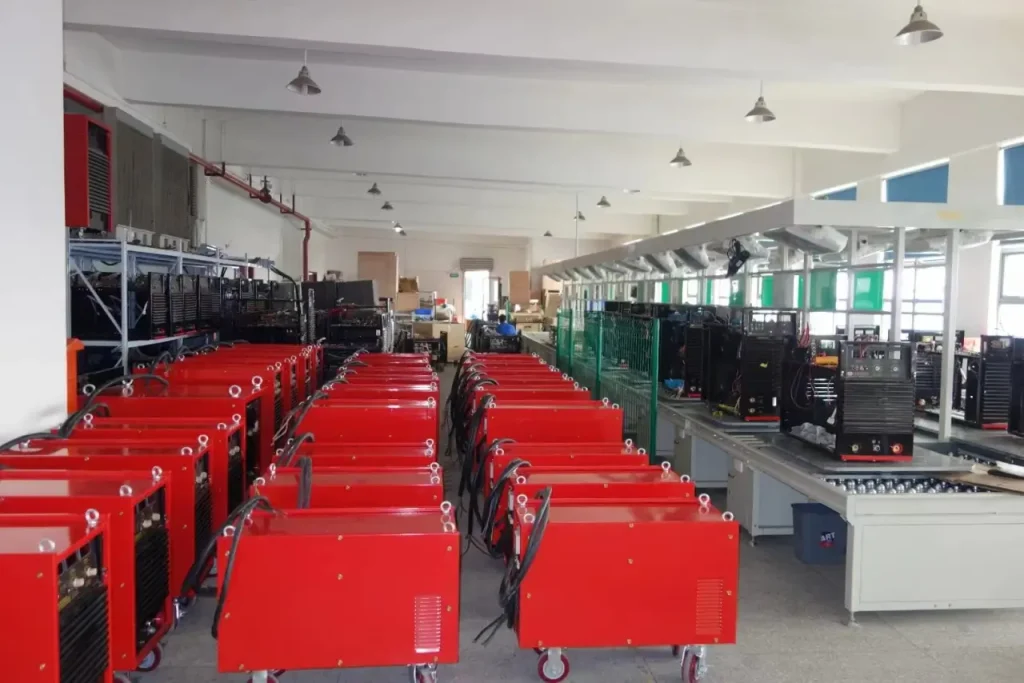
China has manufacturers with different strengths in drawn arc, capacitor discharge and automated stud welding. A lower quoted machine price does not always mean a lower delivered cost. Compare complete configurations, production lead times and the documents required at your destination.
Compare the Delivered Cost
Ask for the power source model, rated output, gun and cable specification, consumables and final test record. Compare those items alongside freight, duties and warranty before judging the price.
- Confirm the base-metal and stud range supported by the model.
- Compare packing and freight in the delivered quote.
- Ask for a production slot or dated stock confirmation.
Compare Power Sources by Job Requirements
Some factories offer inverter-based machines with digital controls; others supply thyristor or capacitor-discharge systems. The right power source depends on your stud diameter, welding process, duty cycle and site supply. Our process selection guide can help narrow the method before you compare models.
- Record current, time and other process settings.
- Check machine weight and site input power.
- Request a list of built-in protections.
Check a Complete Machine-and-Consumables Quote
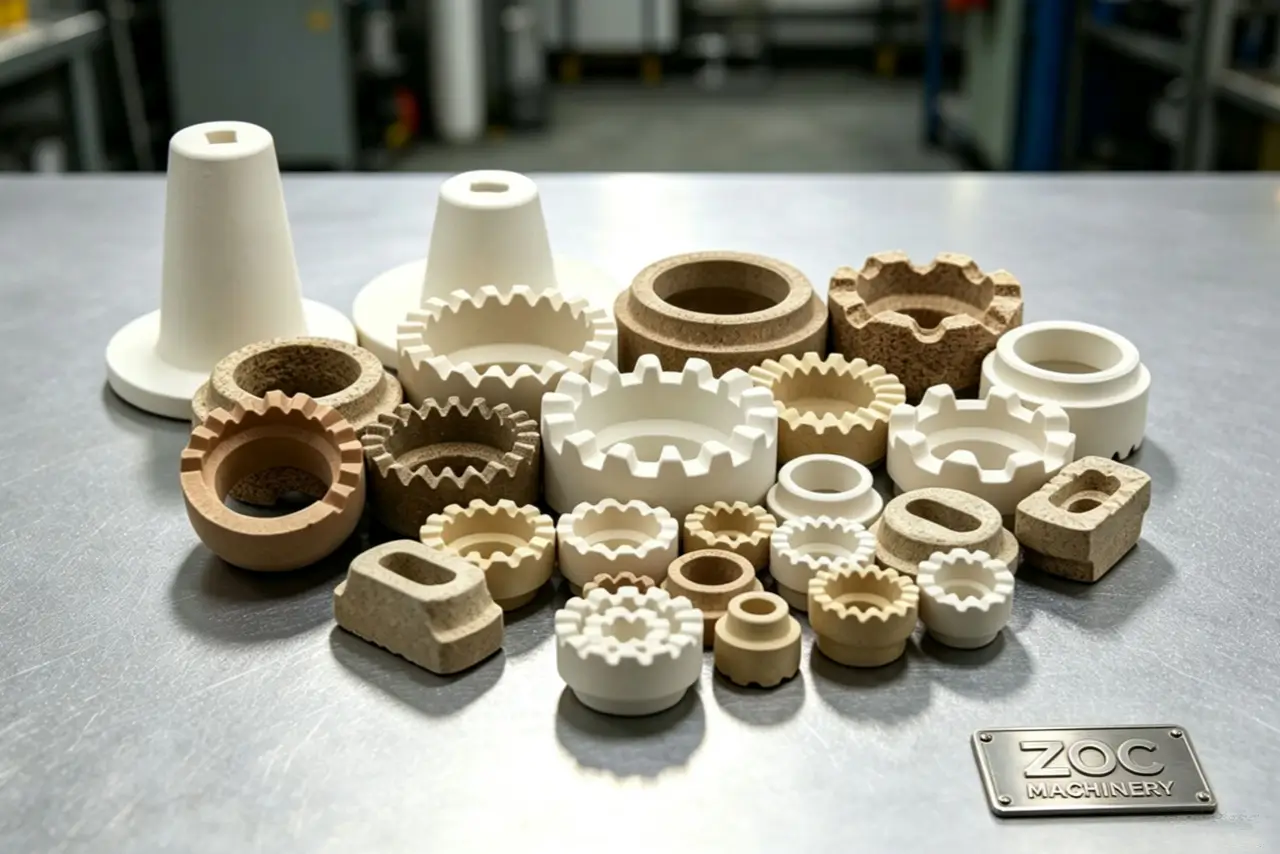
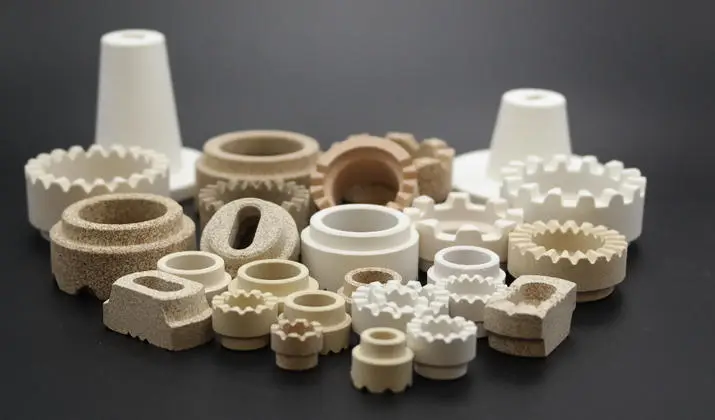
A factory may quote a machine, welding guns and ceramic ferrules together. That can simplify purchasing, but one invoice does not prove every part fits. Request model numbers, gun connector and cable details, chuck sizes and consumable specifications.
Use the table to compare what an integrated offer may include. Confirm each item on the actual quotation.
| Sourcing factor | Buyer question | Evidence |
|---|---|---|
| Supply integration | Who supplies each component? | Itemized bill of materials |
| Power source | Which process and stud range? | Model data and trial weld |
| One seller | Who supports the whole system? | Written warranty and contacts |
Confirm Who Builds and Tests the Machine
Before treating a seller as the manufacturer, ask where the quoted model is assembled and tested, who owns its design and who issues its warranty. A distributor or trading company may still be a good supplier if it states its role and support route clearly.
Inspect the Relevant Production Steps
A live factory call or visit can help, but it is not proof by itself. Ask to see the relevant assembly and final-test areas and connect the demonstration to the model and serial number you will receive.
- Ask to see final-test equipment for the quoted model.
- Verify a patent claim only if it matters to the design.
- Request traceable component and assembly records where available.
Review the Product Range
A focused catalog can indicate product experience, but a broad catalog is not automatically a warning sign. Ask the seller to explain the differences among its CD, drawn arc and short-cycle machines for your particular studs.
- Confirm chuck sizes for the specified studs.
- Compare CD, drawn arc and short-cycle product ranges.
- Check the manufacturer named in manuals and on the unit label.
Find the Technical Support Route
Ask who will answer technical questions about weld parameters, gun setup and faults. The contact may be a factory engineer or a trained distributor; what matters is a documented escalation path and a response you can test before purchase.
The comparison below shows questions to ask, not a claim that every factory or trader behaves the same way.
| Verification point | Manufacturer may provide | Distributor may provide |
|---|---|---|
| Factory visit | Access to assembly and test | Introductions or inspection access |
| Technical support | Design and production engineers | Local setup and escalation |
| Product range | Own model portfolio | One or several brands |
Choose Inverter Technology for the Job
An inverter is one option, not a blanket upgrade. Compare rated output, duty cycle, input supply, cable length, weight and the weld procedure it supports. For some jobs, an existing thyristor or capacitor-discharge platform may be the better fit.
Compare Power and Portability Data
If portability matters, compare the actual weights and power requirements of the shortlisted units. If energy use matters, request measured input data at a comparable welding duty. Technology labels alone do not tell you the difference.
- Request measured input data at a comparable duty.
- Compare weight and handling method for the exact model.
- Check the approved site supply range.
Test Arc Performance
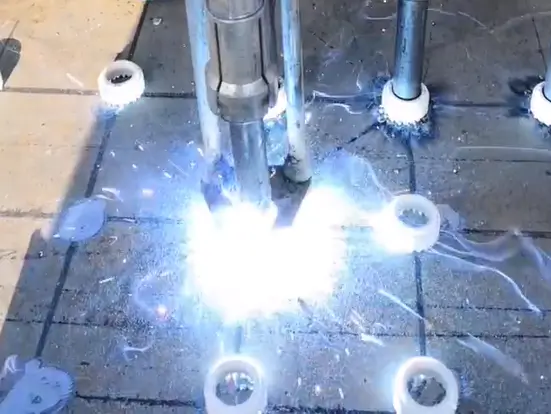
Arc stability and weld quality depend on the whole system: power source, gun, leads, return connection, stud and settings. Ask for sample welds on your material and record the test conditions.
- Qualify sample welds on your material.
- Assess heat input with the specified process and parameters.
- Inspect weld appearance to project criteria.
Check Site Reliability
For site work, verify the machine’s rated output at the relevant duty cycle and ambient temperature. Check cooling, ingress protection and service access rather than relying on a claim that an IGBT module can run continuously.
Compare the shortlisted models against their data sheets and trial weld results. The same technology can perform differently at different output and duty-cycle settings.
| Technology | Compare | Do not assume |
|---|---|---|
| IGBT inverter | Rated output, duty and weight | Fixed efficiency or weight advantage |
| Thyristor or SCR | Rated output and supported process | Inferior weld quality by default |
| Transformer-based | Model performance and service | Unsuitable without a trial weld |
Verify the Right Standards and Documents
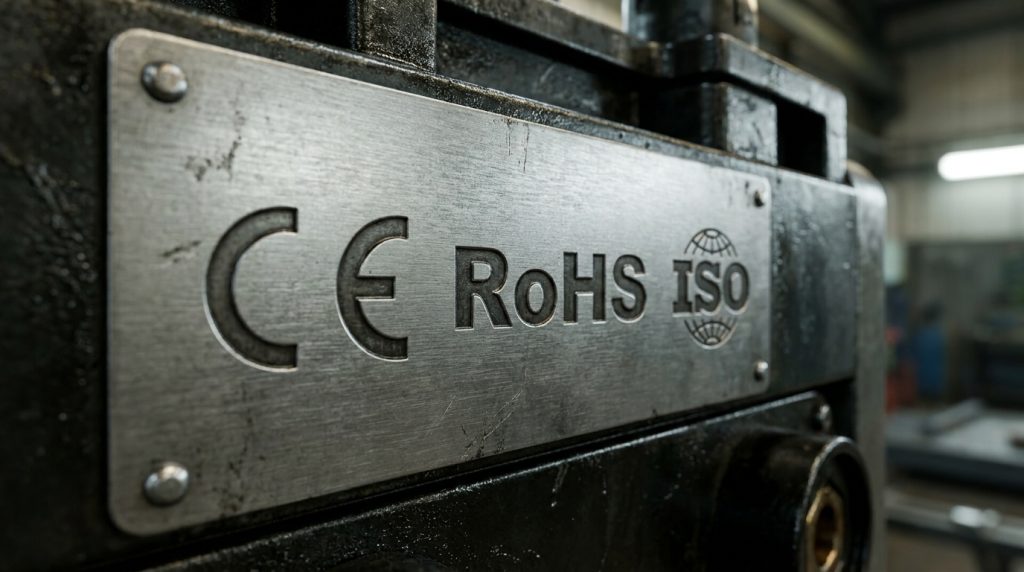
Separate market conformity, quality management and weld-product standards. For an EU-bound machine, ask which EU rules apply and request the relevant declaration of conformity and technical documentation. ISO 9001 concerns a company’s quality management system. ISO 13918 specifies studs and ceramic ferrules; it does not certify a welding machine.
CE Marking and Quality-Management Scope
CE marking applies to products covered by relevant EU rules and is backed by the manufacturer’s conformity assessment. It is not a universal quality certificate. For other destinations, confirm the electrical and product requirements that apply there rather than assuming CE or a North American listing is automatically required.
- Request the EU declaration of conformity where applicable.
- Match documents to the quoted model and responsible company.
- Verify the scope and validity of any ISO 9001 certificate.
Stud and Weld Standards Are Separate
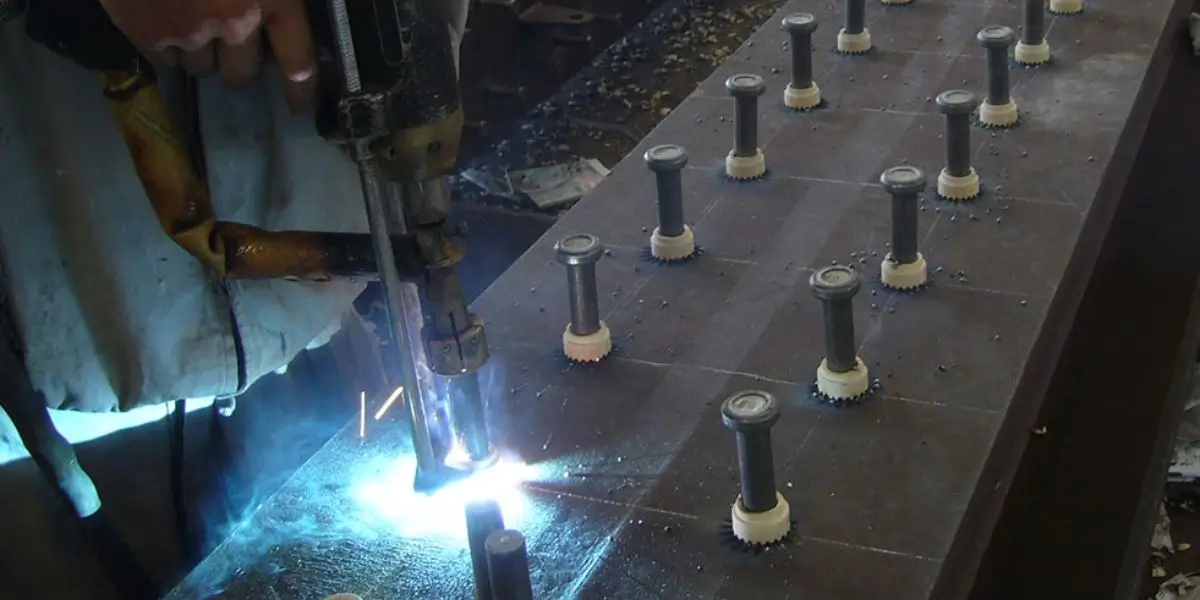
For structural stud welding, check the specified stud and ferrule standard separately from the equipment documents. Weld procedure qualification and production testing follow the project’s governing code, such as ISO 14555 where specified. Ask for records tied to the material and process you will use.
- Follow the project structural-welding specification.
- Check stud and ferrule dimensions to ISO 13918 where specified.
- Keep equipment documents separate from weld-test records.
Ask About Electrical Protection
Request the machine manual and details of overload, thermal and electrical protection for the exact model. Have the site supply and installation checked by qualified personnel.
The table maps each document to the claim it can actually support.
| Document | Applies to | Buyer check |
|---|---|---|
| CE marking / EU DoC | Covered products in the EU | Exact model and applicable rules |
| ISO 9001 | Supplier quality system | Certified entity and scope |
| ISO 13918 | Studs and ceramic ferrules | Specified dimensions and materials |
Compare Machine Specifications
A headline maximum current is not enough to size a stud welder. Compare the rated output and duty cycle at the stud size you need, along with cooling, input power, cable length and supported gun.
Duty Cycle at Your Required Output
Duty cycle states how long a unit may operate under defined conditions. Ask for the rating at the output you will use and the temperature at which it was measured. There is no universal duty-cycle percentage suitable for every construction site.
- Get duty-cycle data at the output you will use.
- Confirm thermal protection and cooling instructions.
- Check the specified ambient-temperature range.
Components and Serviceability
For a CD unit, ask how the capacitor bank is specified and serviced. For an arc unit, check the power components, cooling and serviceable parts. Claims about “millions of cycles” or a particular winding metal need model-specific evidence.
- Ask which power modules are used and whether they are serviceable.
- Compare transformer or capacitor specifications from the data sheet.
- Ask how control boards are protected and replaced.
Chassis and Site Handling
On a site, the chassis, connectors, cable strain relief and protection rating matter as much as weight. Check the machine’s dimensions and handling method against the way your crew will move it.
Use this table to request comparable specifications and test evidence rather than assumed “industrial-grade” numbers.
| Specification | Request | Compare on same basis |
|---|---|---|
| Duty cycle | Rating at required output | Ambient temperature and test method |
| Capacitor or power modules | Model-specific data | Serviceability and warranty |
| Transformer | Data-sheet rating | Input and output requirements |
Check System Compatibility
Buying the power source, gun and accessories from one seller can simplify accountability. Still check connector type, gun stroke, chuck size, cable rating and the stud or ferrule dimensions before ordering.
Match Guns, Leads and Chucks
A gun may have the right power connector but the wrong control wiring or chuck for the stud. Ask the seller for a system bill of materials and written compatibility confirmation for the exact model numbers.
- Verify cable rating and length for the welding current.
- Confirm gun control connector and trigger wiring.
- Match chucks to the chosen stud dimensions.
Compare Complete Delivered Quotes
A consolidated shipment may reduce handling, but it does not automatically reduce customs duties. Compare the delivered quote under the same Incoterm, including packing, freight, taxes, import charges and insurance responsibilities. Our machine price guide lists the cost items to check.
- Compare freight and packing for a combined shipment.
- Check the commercial invoice and packing list.
- Define warranty responsibility for every component.
Define Training and Service
Ask for setup instructions covering the complete package and the person who will answer questions after delivery. A single seller can make support simpler only when its warranty and service responsibilities are clear.
Compare the options below using actual component lists and contract terms.
| Sourcing route | Possible benefit | Check |
|---|---|---|
| One supplier | Single quote and support contact | Every component and warranty scope |
| Several suppliers | Choice of models and pricing | Connector and consumable compatibility |
| Trading company | Export coordination | Factory and service responsibility |
Protect the Shipment

Export packing should hold the machine securely through lifting, vibration and moisture exposure. Ask for crate drawings or photos for heavy equipment and confirm that the packing method meets the destination’s import rules.
Specify the Packing Method
A wooden crate can protect a heavy power source when it is correctly braced and marked. The gun, control leads and loose accessories still need separate restraint inside the package.
- Brace the power source against movement.
- Protect parts from moisture as specified.
- Restrain guns, cables and loose accessories.
Choose a Shipping Route
Choose sea, air or another route by shipment size, budget and required arrival date. Ask the forwarder for an estimated transit time and the seller for a realistic packing and dispatch date. Our import guide explains the documents and handoffs in more detail.
- Sea freight: compare cost and arrival window.
- Air freight: compare urgency with landed cost.
- Rail or road: confirm availability for the route.
Agree on Export Documents
Confirm the commercial invoice, packing list, origin evidence and any destination-specific documents before dispatch. Agree who prepares each item and who clears import customs under the chosen Incoterm.
Packing quality depends on the whole shipment, not the crate material alone.
| Packing method | Suitable when | Check |
|---|---|---|
| Wooden crate | Heavy power source | Bracing and import rules |
| Pallet and wrap | Packaged accessories | Moisture and movement protection |
| Small box | Individual spare parts | Cushioning and labels |
Make After-Sales Support Measurable
After-sales support should be written into the purchase terms. Ask for support hours, language, warranty exclusions, fault reporting steps and spare-part lead times. Do not assume a 24/7 line or immediate replacement unless the seller commits to it.
Manuals and Remote Setup
Request the manual for the exact machine and gun in a language your operators can use. Ask whether the seller can review photos, parameter records or video during setup, and how it will escalate unresolved faults.
- Manual and installation instructions for the exact model.
- Fault-reporting procedure and parameter records.
- Named technical escalation contact.
Spare Parts and Consumables
Chucks, connectors, cables and other wear parts should appear on a priced spare-parts list. Confirm stock location and lead time for the parts that could stop your job. Our maintenance guide can help you plan routine checks.
- Priced list of critical spare parts.
- Written lead times for replacement parts.
- Routine inspection and maintenance schedule.
Warranty and Claims
A warranty should state what is covered, who pays shipping, how claims are diagnosed and whether repair parts or a replacement unit will be supplied. Keep the warranty holder and service contact on the purchase order.
Use the table to turn general service promises into contract terms.
| Service item | Ask for | Write into quote |
|---|---|---|
| Manual | Exact model and gun | Language and revision |
| Remote help | Support hours and escalation | Contact and response terms |
| Spare parts | Critical-parts list | Stock location and lead time |
Choose a Supplier on Evidence
Shortlist stud welding machine manufacturers in China by technical fit, documented tests, delivery plan and service responsibility. Ask for the same information from each candidate so you can compare like-for-like offers.
Final Buyer Checklist
Before paying a deposit, check the model, gun, cables, consumables, input supply, factory relationship, conformity documents, test plan, Incoterm and warranty. Our manufacturer selection checklist gives you a second set of questions for the supplier call.
- Verified company and production relationship.
- Market-specific conformity documents checked.
- Manual and support language confirmed.
- Itemized machine, gun and consumables quote.
What ZOC Machinery Can Quote
At ZOC Machinery, we manufacture stud welding equipment and offer products including the flux fixing machine and RSN7 welders. For your project, send us the stud sizes, base metal, site power and duty-cycle target so we can identify a suitable configuration and what to verify in a trial weld.
- Total delivered price under a named Incoterm.
- Engineering contact for custom work.
- References relevant to the application, if available.
Calculate Total Cost of Ownership
Calculate total cost from the complete system, freight, consumables, power needs, spare parts and expected service. A cheaper unit can be good value when it meets those requirements; a higher price still needs evidence.
The final table keeps the decision tied to measurable requirements.
| Buying goal | Evidence | Decision |
|---|---|---|
| Technical fit | Stud range and sample weld | Qualified configuration |
| Conformity | Market-specific documents | Correct model and supplier |
| Total cost | Delivered quote and spares | Compare like-for-like offers |
Frequently Asked Questions
Can a manufacturer configure a machine for my local power supply?
Some models have alternate input-voltage and frequency versions; others cannot be changed after assembly. Send the site voltage, phase, frequency and available circuit capacity, then request the nameplate and manual for the exact quoted configuration.
How can I verify that a supplier operates a factory?
Ask for the legal company name, production address, model-specific test records and who owns the design and warranty. A live walkthrough or third-party inspection can add evidence, but a trading company can also be a capable supplier if it is transparent about the factory.
How do I check the machine’s compliance for my market?
Start with the destination country’s applicable requirements. For the EU, request the relevant EU declaration of conformity and supporting product documentation where CE marking applies. Check that documents identify the exact model and responsible manufacturer.
Can I get technical support in English?
Ask for an English manual for the exact model and a named support contact. Test the response with a setup question before ordering and put support hours and escalation terms in writing.
What lead time should I expect?
It depends on finished stock, customization, final testing, packing and the shipping route. Ask for separate written dates for production completion, dispatch and expected arrival rather than relying on a standard number of days.
Request a Project-Specific Quote
If you are comparing machines for bridges, shipyards or industrial fabrication, tell us the stud and base-metal specifications, production volume and delivery destination. Contact us with those details and we can prepare a configuration and quotation for review.