To import stud welding machines from China, start with the machine your work needs, not a supplier list. Specify the welding process, stud range, input power, gun and cables, expected workload, and destination country. Then compare suppliers on tested performance, total landed cost, documentation, and support after delivery.
How to Import Stud Welding Machines from China
Use a supplier’s about us page as a starting point, then confirm its registered business name, the entity issuing the invoice, and who will build and service the machine. A factory can be a good fit; a capable distributor may offer better local stock or support. The written scope matters more than the label.
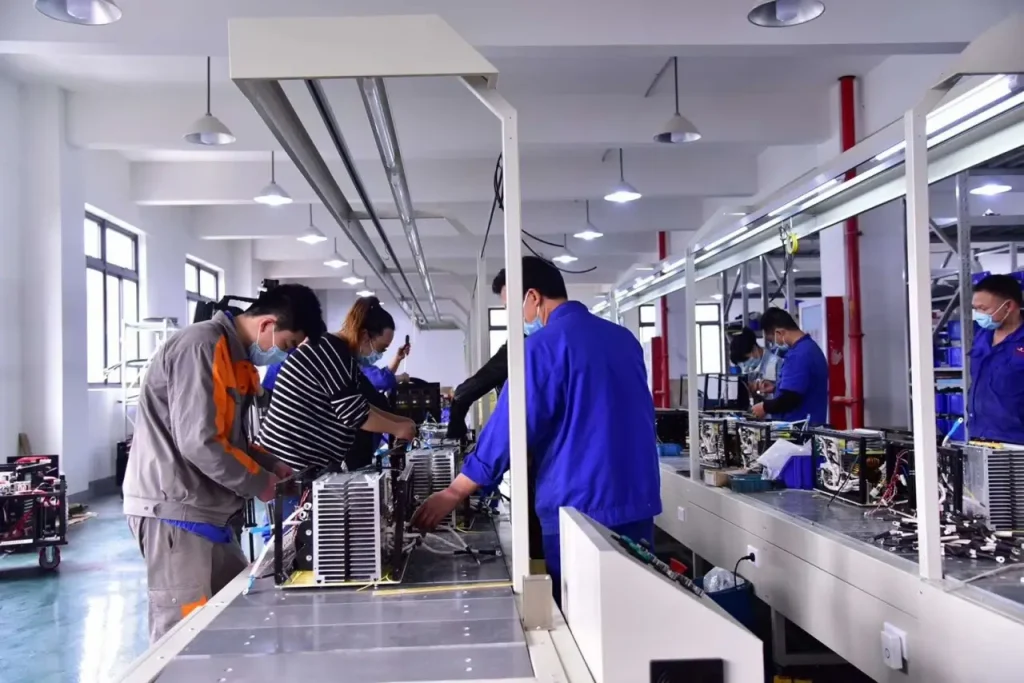
Factory or Trading Company?
Ask who designs the controller, assembles the power source, tests the finished unit, and stocks replacement parts. Request a live factory tour or a third-party visit when the order value justifies it.
A trading company is not automatically a problem. It becomes a problem when you cannot identify the manufacturer, the machine configuration, or who is responsible for warranty claims.
- Confirm the seller’s registered business name and invoice entity.
- Ask for a live tour or independent inspection if useful.
- Identify who designs and assembles the quoted model.
- Ask where the finished machine is tested.
Check Logistics and Service Support
Check whether the seller has shipped your machine type to your destination and can provide the documents and service route you need. Agree on a named contact for technical questions before paying.
Support begins with manuals, circuit information, consumable parts, and a clear warranty process. Freight booking alone does not solve a control-board fault after installation.
- List consumables and wear parts included in the shipment.
- Request manuals and wiring information in a usable language.
- Ask for examples of packing for similar machines.
- Agree on a technical support contact and response route.
Before placing an order, verify the seller, exact machine configuration, acceptance test, delivery term, and after-sales responsibility.
Use the comparison below to ask the same questions of a factory and a distributor.
| Question | Factory | Trading company |
|---|---|---|
| Complete price | Request itemized package | Request itemized package |
| Customization | Confirm design and test control | Confirm access to the maker |
| After-sales | Name service contact and parts stock | Name service contact and parts stock |
| Lead time | Confirm build and dispatch dates | Confirm maker and delivery dates |
Choose the seller that can document and support the complete package, not the one with the more attractive label.
Why Source from China?
China offers a wide range of stud welding machines, from capacitor discharge units for smaller attachments to drawn arc systems for larger studs. That range can make sourcing practical, but country of origin does not tell you whether a model suits your work or will cost less after import.
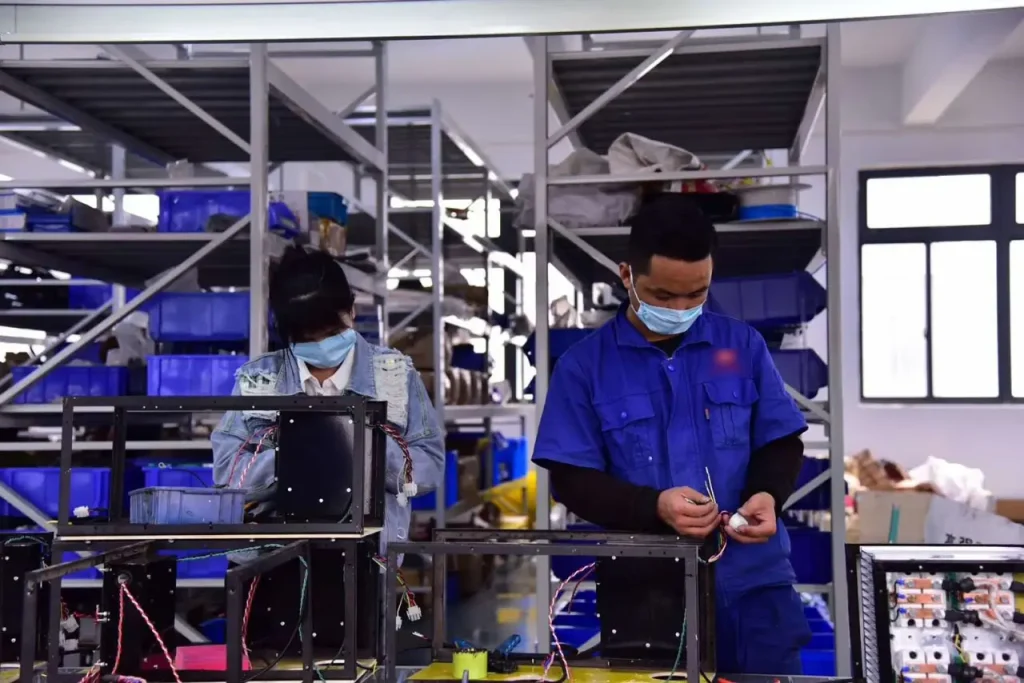
Compare the Machine, Not the Country Label
Compare the rated stud range, output, duty cycle, gun compatibility, input requirements, and service support of specific machines. Inverter and transformer-based designs both need to be judged on their actual specifications and test results.
A lighter machine may be easier to move, but include the gun, cables, and cart when planning site handling. Check its output and thermal rating at the weld cycle your crew will use.
- Compare current and time control on the quoted model.
- Check packed weight and site handling needs.
- Verify which settings can be stored or locked.
- Request rated input and efficiency data if energy cost matters.
Compare Total Value
A lower factory quote may be offset by freight, import charges, spares, or a longer repair time. Ask for a complete quote before comparing it with a local offer.
For a distributor, delivery and local support may matter more than the lowest unit price. For a contractor, the ability to make acceptable welds at the required pace usually matters most.
- Compare actual component and service costs.
- Check availability of replacement boards and guns.
- Ask for production capacity for your order, not a generic claim.
- Get freight quotes from the packed size and weight.
Compare total installed cost and support, not a claimed percentage saving against an unnamed brand.
The table lists buying questions that can be checked on each quoted model.
| Buying factor | What to compare | Evidence to request |
|---|---|---|
| Technology | Process and rated output | Model datasheet and test |
| Handling | Packed and operating weight | Dimensions and lifting plan |
| Price | Complete landed and service cost | Itemized quotations |
| Availability | Build, spares, and transit time | Written schedule |
No country, controller type, or sales channel guarantees weld quality. A test on representative studs and base metal is more useful.
Find and Verify a Supplier
Build a shortlist around the welding process you need. Use this stud welding machine range to identify drawn arc, short-cycle, and capacitor discharge options, then ask which model covers your specified stud and base material.
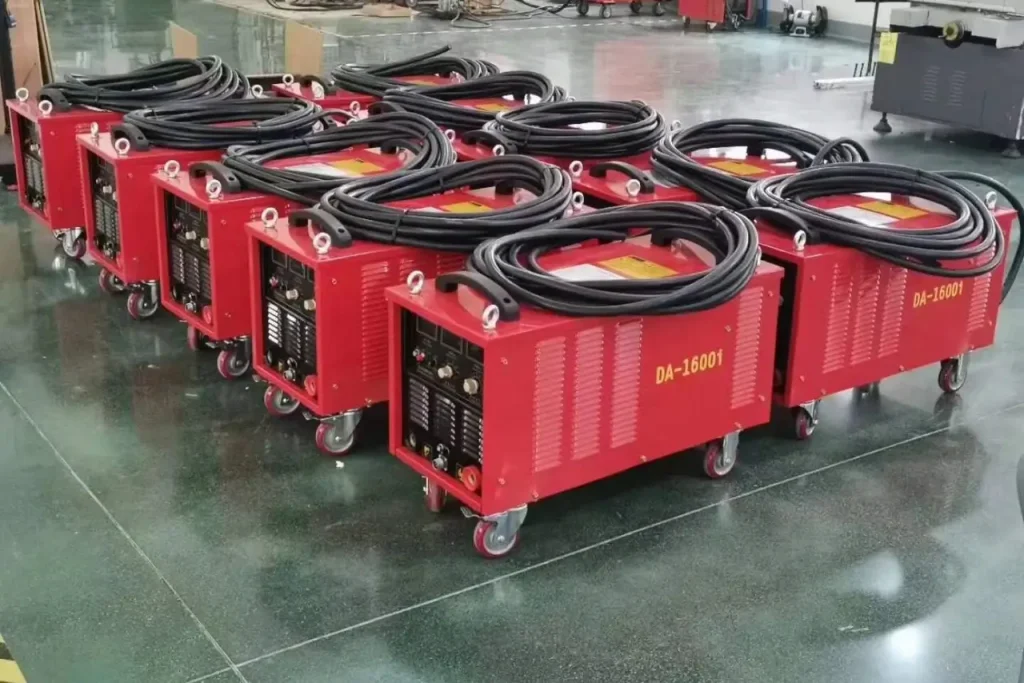
Build a Supplier Shortlist
Request the legal business name, manufacturing address, references for the same machine type, and a sample test report. This manufacturer evaluation checklist can help structure your supplier questions.
A specialist may explain gun setup and spare parts more clearly, but verify that in a call and in the written quotation. Do not infer capability from a website alone.
- Ask for references for the same machine type and destination.
- Review technical explanations and manuals, not only marketing copy.
- Verify any claimed patents or specialized processes.
- Check that the seller can supply its own guns and accessories.
Check Export and Compliance Experience
Destination-market requirements vary. Ask the seller for model-specific technical files and declarations, then check with your local importer, electrician, or conformity specialist which approvals apply. Past shipments to another country do not prove compliance in yours.
The useful paperwork identifies the exact model and responsible company. A generic certificate image is not enough.
- Request model-specific declarations and test records.
- Ask for a recent shipment example with private data removed.
- Check whether an origin document is needed for your entry.
- Agree on the Incoterms® rule and named place.
Shortlist suppliers that can show the machine, test it, and answer destination-specific documentation questions before shipment.
Use the checklist below to separate verifiable evidence from sales claims.
| Criterion | Useful question | Verification |
|---|---|---|
| Specialization | Who builds and tests this model? | Tour, records, and references |
| Compliance | Which market rules apply? | Model-specific documentation |
| Export experience | Has this model reached the destination? | Shipment reference |
| Capability | Who supports faults and spares? | Named contact and parts list |
A short video call can reveal how the unit is built and tested, but request documents and an inspection right in the order as well.
Test the Machine Before Shipment
Ask for a factory acceptance test on the actual ordered model. Check output, weld time, thermal behavior, the supplied gun and cables, and weld samples on representative material. Where the job requires bend tests, agree on the method and acceptance criteria before testing.
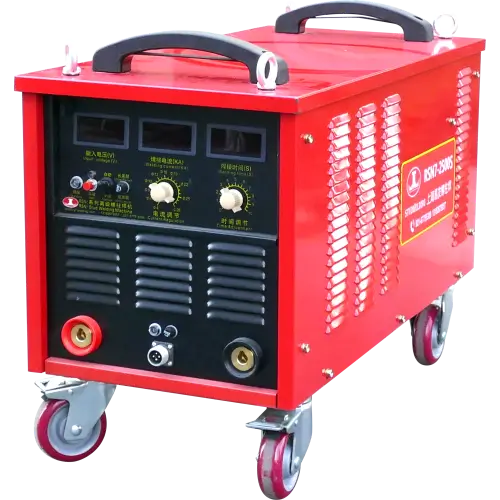
Request a Factory Acceptance Test
A good test record identifies the machine serial number, stud and base material, cable length, input supply, settings, and result. One unlabelled video of a successful weld does not establish the duty cycle of an entire production shift.
Inspect what is inside the machine as well as the finished casing. Request a component list, wiring diagram, service manual, and photographs or a live view of the assembled unit.
- Inspect wiring and component layout on the ordered model.
- Request duty-cycle data at the output you will use.
- Agree on weld-test samples and acceptance criteria.
- Ask how the machine handles input faults and overload.
Inspect Parts and Documentation
Component brand alone does not determine reliability. Look at cooling, connector ratings, cable sizing, assembly quality, and whether replacement parts can be obtained later.
Include the stud welding gun, chuck, return clamps, and cable set in the test. An adequate power source can still make poor welds with unsuitable leads or gun movement.
- Identify the fitted power modules and replacement part numbers.
- Check conductor and connector ratings against the machine output.
- Inspect chassis, lifting points, and service access.
- Ask for fan, filter, and cooling maintenance instructions.
Write measurable acceptance points into the order: supplied parts, test conditions, results, and how defects will be corrected.
The table turns a component claim into an inspection question.
| Component | What to inspect | Why it matters |
|---|---|---|
| Power modules | Part identification and cooling | Serviceability and heat control |
| Transformer and leads | Ratings and conductor size | Output under load |
| Control board | Documentation and fault access | Diagnosis and repair |
| Welding gun | Compatibility and movement | Repeatable stud placement |
If the seller cannot identify the tested unit or document its configuration, resolve that before final payment.
Calculate the Landed Cost
Landed cost includes the machine and accessories, export and freight charges, insurance where needed, customs charges, local handling, inland delivery, and the cost of making the unit usable on site. Use the blog for product background; check current tariffs and import rules with official sources and a local customs broker.
Define the Quoted Package
Ask whether the quoted price includes the gun, cables, clamps, consumables, manuals, and spare parts. A low power-source price can become an expensive complete system.
Compare itemized offers, not just a headline machine price. This stud welding machine price guide lists equipment costs you can request separately before adding freight and import charges.
- Confirm whether the gun and cables are included.
- Ask for quantity pricing only after package scope is fixed.
- Price chucks, clamps, ferrules, and recommended spares.
- Compare inverter and thyristor models for the specified joint.
Add Freight, Taxes, and Local Charges
Get a freight quote using the packed dimensions and gross weight. Include terminal fees, customs brokerage, delivery from the port, and any storage charges that can arise if documents are late.
- Get a freight quotation under the named delivery term.
- Confirm tariff classification with a destination-country broker.
- Price cargo insurance for the chosen delivery and risk terms.
- Include broker, terminal, and inland delivery charges.
The duty rate depends on the destination tariff schedule, confirmed classification, origin, and measures in force when the goods enter. Do not use a fixed percentage from another buyer’s shipment.
The cost table below is a worksheet. Enter actual quotes and your broker’s current duty estimate.
| Cost item | Enter your quote | Main variables |
|---|---|---|
| Machine package | Price including listed accessories | Model, gun, cables, spares |
| International freight | Forwarder quote | Mode, weight, volume, route |
| Duties and taxes | Broker estimate | Country, classification, origin |
| Local delivery | Destination quote | Terminal, storage, trucking |
A landed-cost figure is only as good as its assumptions about freight, classification, delivery term, and local taxes.
Specify Customization in Writing
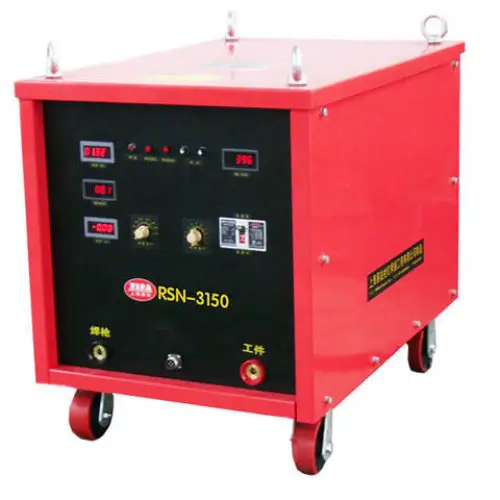
Custom input voltage, frequency, plugs, language, or cables may be available, but confirm feasibility for the exact model. A changed cable length can affect the welding current delivered to the stud; a voltage change may affect tests and documentation.
Electrical and Hardware Options
Specify phase, voltage range, frequency, rated input capacity, plug or hard-wired connection, and local electrical protection. Ask how the configuration will be tested before shipment.
For overhead or confined work, confirm gun weight, reach, ferrule grip, and cable routing with the planned welding position.
- Match input voltage and phase to the site supply.
- Choose controls operators can understand and service.
- Specify cable length and check its effect on output.
- Check safe lifting and movement on the jobsite.
Branding and Interface Language
If ordering under your own brand, agree on the nameplate, serial-number format, manuals, spare-parts labeling, and who holds the technical documentation. Rebranding may change importer responsibilities in some markets.
A translated screen helps only if the warnings, instructions, and service information are also clear to operators.
- Approve any logo and nameplate changes.
- Review translations of warnings, menus, and manuals.
- Agree on color only after technical requirements are fixed.
- Specify resale packaging and labels if needed.
Record every option and its test requirement in the purchase order. Do not rely on a chat message that the factory can “make it work.”
The table covers common options; confirm which are available on the quoted model and at what cost.
| Option | Specify in writing | Check before dispatch |
|---|---|---|
| Power | Voltage, phase, frequency, input | Nameplate and load test |
| Interface | Language and fault messages | Screens and manuals |
| Branding | Logo, nameplate, serial format | Importer responsibilities |
| Hardware | Gun, cables, wheels, spares | Fit and performance test |
Approve drawings or a configuration sheet before production, then inspect the same configuration before dispatch.
Set Order Terms and Payment Milestones
Use a purchase order and pro forma invoice that identify the contracting parties, exact machine and accessories, accepted tests, delivery term, payment stages, warranty, and remedy for nonconforming goods. Keep changes in writing.
Put the Specification in the Contract
State the named place and version of the delivery rule, such as Incoterms® 2020. The ICC rules allocate delivery, cost, and risk; they do not replace a detailed machine specification or payment agreement.
Before paying, compare the invoice with the agreed model, serial-number plan, gun, cables, spares, and shipping scope. Resolve missing items while the machine is still at the factory.
- Name critical component specifications in the order.
- Set the promised build and dispatch dates.
- Define warranty coverage, exclusions, and claim route.
- State the tests to pass before final payment.
Agree on Payment and Inspection Stages
Payment percentages are negotiable. Tie any balance payment to agreed evidence, such as a witnessed test and pre-shipment inspection, and choose a payment method that fits the order value and both parties’ terms.
Verify any change to bank details through a separately known company contact, not only through a reply to the email that announced the change.
- Pay only to the verified contracting company.
- Record finished-unit photos and serial numbers.
- Witness or obtain a record of the ordered machine’s test.
- Release payment at the milestone agreed in the contract.
The contract should make clear what must be delivered, when it is accepted, and what happens if the test fails.
This table shows a possible sequence of checks, not mandatory deposit percentages.
| Stage | Agreed evidence | Buyer check |
|---|---|---|
| Order | Signed specs, scope, delivery term | Confirm seller and payee |
| First payment | Contract milestone | Verify bank details |
| Inspection | Serial-numbered test record | Review deviations |
| Final payment | Accepted milestone and documents | Follow contract terms |
Keep copies of the signed order, test record, final invoice, and shipping instructions.
Plan Freight and Packaging
Choose freight using packed dimensions, weight, delivery deadline, handling risk, and destination charges. Sea freight is often practical for heavy machines; air may suit small urgent parts. Compare actual quotes rather than using a fixed unit count to choose LCL or FCL.
Choose a Freight Method
Ask a forwarder to price LCL, FCL, or air as appropriate and state what each quote includes at both ends. Confirm whether the cargo can be stacked and how it will be secured.
A supplier’s forwarder can book transport, but the buyer still needs to understand the named delivery term, insurance, destination charges, and documents needed for release.
- Compare sea and air quotes for the packed shipment.
- Ask whether LCL or FCL suits the cargo and schedule.
- Check ISPM 15 rules if regulated solid wood is used.
- Confirm who handles destination clearance and duties.
Protect the Machine in Transit
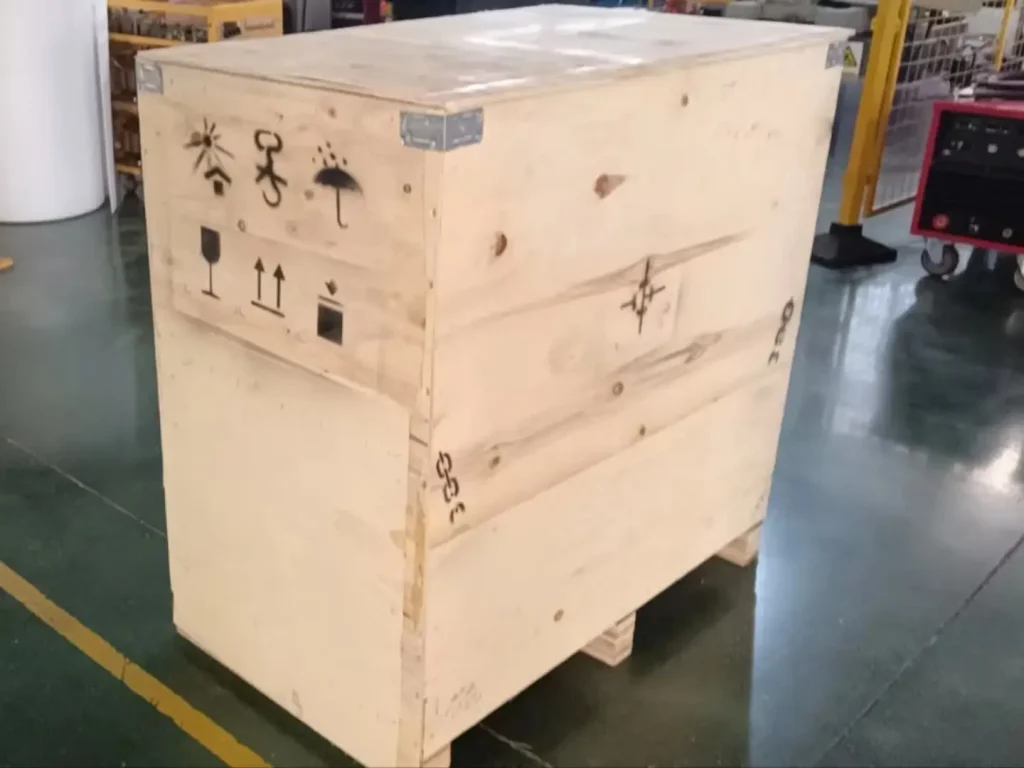
Specify a crate or frame that secures the machine against movement, cushions sensitive parts, and allows safe lifting. Ask for packed dimensions, gross weight, lifting points, and photographs before dispatch.
Use moisture protection appropriate to the voyage and storage conditions. If solid wood pallets or crates are used, check the destination’s ISPM 15 rules; processed plywood may be treated differently. The US APHIS guidance is one example for shipments entering the United States.
- Secure the machine to a suitable crate or frame.
- Use moisture protection suited to the route.
- Protect corners, controls, and protruding fittings.
- Mark lifting points and handling orientation.
Good packing and a clear damage-claim process matter more than a promise that sea freight is always safe.
The table helps compare freight options; ask the forwarder to confirm the handling plan for this shipment.
| Shipment | Method to compare | Packing check |
|---|---|---|
| Small order | LCL or air quote | Crate size and handling |
| Multiple machines | LCL or FCL quote | Securing and stacking |
| Urgent parts | Air or express quote | Shock protection and limits |
| Oversize cargo | Special equipment quote | Lifting and route plan |
Keep photos of the packed machine, seals, and handover condition so transport damage can be assessed.
Prepare Customs and Compliance Documents
Document requirements depend on destination, transport mode, and the goods. Before dispatch, ask your customs broker for the invoice description, tariff classification, importer details, packing information, transport document, and any origin or product-compliance records needed for this entry.
Commercial and Transport Documents
Do not copy an HS subheading from a generic guide onto every machine invoice. Welding equipment falls within a broader tariff heading, but the final national code depends on the exact model and destination. Use the official HS-code guidance and confirm classification with the importing country’s customs authority or broker.
Make sure the commercial invoice, packing list, transport document, and purchase order describe the same goods, quantities, and parties. Correct discrepancies before the shipment reaches the port.
- Transport document required for the chosen mode.
- Commercial invoice with a precise machine description.
- Packing list with pieces, dimensions, and weights.
- Origin document if the broker says it is needed.
Market-Specific Product Compliance
For EU buyers, ask for the documentation required under the rules applicable to that model, including the EU declaration and technical information where required. The European Commission importer guidance explains the importer’s checks; a generic “CE certificate” alone is not a complete compliance review. Other markets have different requirements.
A machine that clears customs still has to be suitable and lawful to use at the destination. Check electrical and product rules before purchase.
- Destination-specific declaration or conformity records.
- Test reports requested by the importer or authority.
- Insurance record when required by the contract.
- Manuals, warranty terms, and serial-number list.
Ask for document samples early, then have the final versions checked against the packed machine and shipment.
The checklist below separates routine shipment documents from records needed only when the destination or contract requires them.
| Document | Purpose | Check before shipment |
|---|---|---|
| Transport record | Cargo release or carriage | Parties and shipment details |
| Commercial invoice | Value and goods description | Model, quantity, agreed price |
| Packing list | Pieces and handling data | Serials, weights, dimensions |
| Conformity records | Destination-specific product checks | Exact model and applicable rules |
Late corrections can hold cargo and add charges; document review belongs before dispatch.
Reduce Technical and Supplier Risk
Treat an unusually low quote as a question, not proof of recycled components or poor workmanship. Compare the bill of materials, machine rating, included accessories, test evidence, warranty, and service response before deciding whether offers are equivalent.
Question a Very Low Quote
Ask why one quote differs: smaller current range, lighter cable set, fewer accessories, different delivery term, or a shorter warranty may explain the gap.
A higher price is not proof of better components either. Request the same measurable evidence from every bidder.
- Request cooling and component photos for the actual model.
- Compare ratings and components, not machine weight alone.
- Check input cables, plugs, and protection ratings.
- Resolve any refusal to provide agreed inspection evidence.
Plan Spares and After-Sales Support
After delivery, the important questions are who diagnoses faults, what parts are stocked, how warranty claims are handled, and whether a local technician can service the machine.
Agree on part numbers, lead times, manuals, and remote support hours before the first machine ships.
- Agree on warranty duration and covered parts.
- Ask if boards and modules can be replaced individually.
- Check availability of parts for the planned service life.
- Arrange operator and maintenance training if needed.
Risk control means checking the machine, the commercial terms, and the service path while changes are still easy to make.
Use the table to track each risk and the evidence that closes it.
| Risk | Action | Evidence |
|---|---|---|
| Unclear components | Agree on specifications | BOM and finished-unit inspection |
| Transit damage | Set packing and insurance | Photos and claim terms |
| Customs hold | Review classification and documents | Broker confirmation |
| Service delay | Plan spares and support | Parts list and response route |
A small pre-shipment check is usually easier than a dispute after customs clearance.
Before You Place the Order
Before ordering, send the supplier your stud range, base material, duty-cycle target, input supply, gun and cable needs, destination, and required documents. Ask for an itemized quote, a test plan, and a clear service contact. If you want ZOC to review that specification, contact us with the details so we can respond to the actual job.
Frequently Asked Questions
Can I order a custom input voltage?
Often, but it depends on the model. State the destination voltage, phase, frequency, and plug or hard-wiring requirements, then ask the supplier to confirm the rating and test the finished unit.
How long will production take?
Lead time depends on the model, customization, component availability, test schedule, and order size. Ask for a written production and dispatch date tied to the approved configuration.
Is sea freight suitable for electronics?
It can be, with suitable restraint, cushioning, moisture control, and insurance. Obtain packing photos and confirm how damage claims will be handled; no crate makes transit risk disappear.
How should I plan for repairs after the warranty?
Request manuals, wiring diagrams, part numbers, spare-parts prices, and the supplier’s repair process before shipment. Check whether local technicians can perform the work safely.
What payment method should I use?
Choose terms both parties can document and manage. Verify the payee independently, connect payment milestones to agreed tests and documents, and discuss a letter of credit or other protection when the order warrants it.