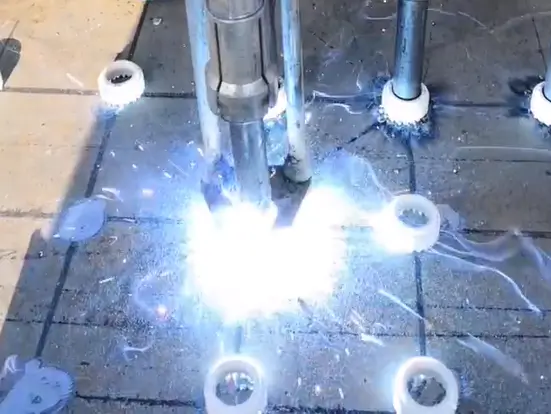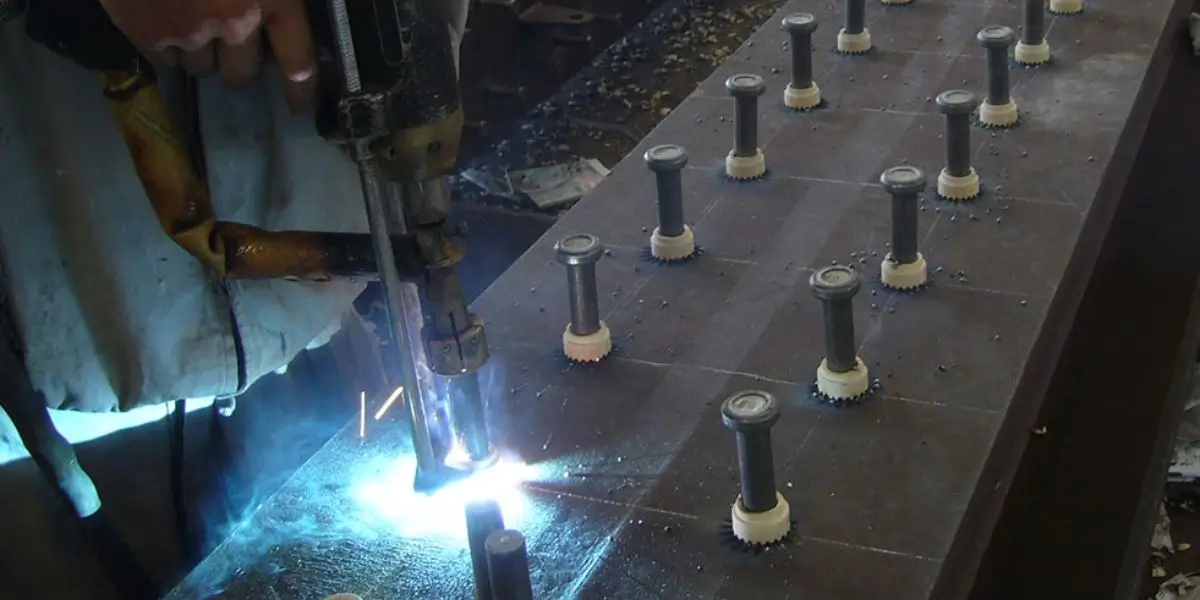
Short cycle stud welding is a drawn arc process with a short main arc, usually no more than 100 milliseconds. The gun lifts the stud, the arc melts the stud end and the base metal, and the gun plunges the stud into the weld pool. The shorter arc can reduce heat input on suitable sheet-metal parts, but stud size, surface condition and the required load still decide whether it fits the job.
Use it when you need a welded fastener on a thinner part and want to control rear-side marking, handling time or both. Do not treat any single sheet thickness or stud diameter as a universal limit. Check the actual power source, gun, stud design and welding procedure, then test a sample from the production material.
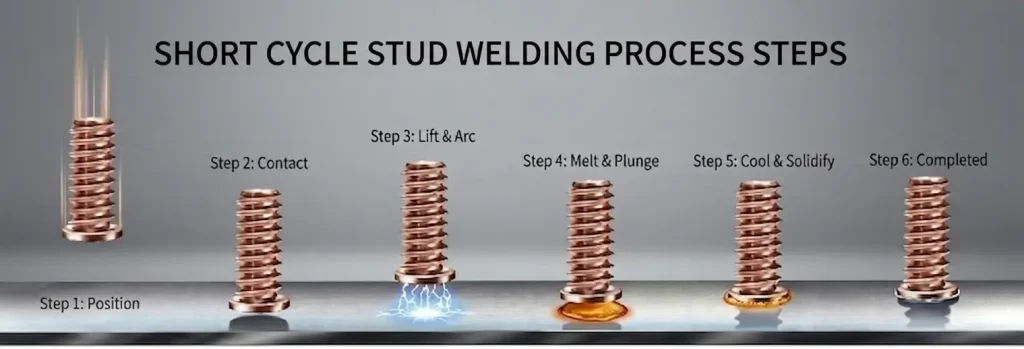
How Short Cycle Stud Welding Works
The welding sequence is familiar to anyone who uses conventional drawn arc equipment. The difference is the shorter main-arc time and the settings used to deliver heat quickly. “Short cycle” describes the process, not a guarantee that a particular weld will pass inspection.
- Place the correct stud in the gun and position it squarely on the prepared weld area.
- The gun lifts the stud and a pilot arc starts between the stud and workpiece.
- The main arc melts both surfaces for the set time.
- The gun plunges the stud into the molten metal; the joint cools before inspection.
| Parameter | What to verify on the job |
|---|---|
| Arc time | Set within the equipment and approved procedure range; short cycle is commonly up to 100 ms. |
| Stud and base metal | Check the supported diameter, material pairing and plate thickness together. |
| Weld-pool protection | Use none or shielding gas only where the procedure and stud design permit. |
| Acceptance | Inspect and test trial welds to the project requirement. |
The pilot arc starts the sequence; it does not remove all oil, scale or coating. Clean the weld point to the condition required by the procedure. A contaminated surface can still produce porosity or an inconsistent bond.
Short Cycle Compared with Capacitor Discharge Welding
Capacitor discharge (CD) welding releases stored energy in a very short pulse. Short cycle draws an arc for longer and can suit different stud and sheet combinations. Neither process is automatically stronger: joint performance depends on the stud, base material, setup and test result. Our CD vs drawn arc guide explains the broader process choice.
| Selection question | CD welding | Short cycle |
|---|---|---|
| Stud and sheet | Check the CD stud and sheet range for the unit. | Check the short-cycle stud, gun and base-metal range. |
| Heat input | Very brief pulse, often useful where rear-side appearance matters. | Longer arc than CD; sample-test for rear-side marking. |
| Surface condition | Prepare the weld point as specified. | Prepare the weld point as specified; the pilot arc is not a cleaning substitute. |
| Joint requirement | Qualify the exact setup for the load. | Qualify the exact setup for the load. |
If you are changing from CD because a joint fails, identify the failure first. Check the stud tip, ground connection, coating, plate thickness and inspection method before assuming a different process will fix it.
Short Cycle Compared with Conventional Drawn Arc
Short cycle is itself a drawn arc variant. Conventional drawn arc uses a longer main arc and is often chosen for larger studs or structural connections. Those welds may use a ceramic ferrule or shielding gas; some short-cycle welds need shielding gas too. See our short cycle vs drawn arc comparison for a side-by-side selection guide.
| Factor | Short cycle | Conventional drawn arc |
|---|---|---|
| Typical use | Suitable studs on thinner parts and repeat assemblies. | Larger studs, plate and structural work when specified. |
| Arc duration | Shorter main arc. | Longer main arc. |
| Protection | None or gas, according to the procedure. | Ferrule or gas, according to the procedure. |
| Strength | Prove the required load by testing. | Prove the required load by testing. |
A structural drawing or welding specification may dictate the process. Where it does, follow that requirement rather than swapping methods for a faster cycle. For a new application, start with the required stud and load, then qualify a procedure on the actual material.
Where Short Cycle Stud Welding Fits
Short cycle can be useful in vehicle assemblies, enclosures, appliances and other repeat sheet-metal work. The application matters less than the joint: the stud must fit the gun, the plate must support the weld, and both sides of the part must meet the appearance and strength requirements.
- Vehicle brackets, trim fixings and conduit supports where the stud design is suitable.
- Cabinets and enclosures with controlled access to the weld point.
- Appliance and HVAC components that can be fixtured repeatably.
- Automated cells where accepted welds per shift justify feeding and tooling costs.
| Application check | Question to answer |
|---|---|
| Part access | Can the gun sit squarely and maintain its set lift and plunge? |
| Rear-side finish | Does a sample weld leave acceptable marking or distortion? |
| Production rate | How many accepted welds are made per shift, including loading and inspection? |
| Traceability | What settings and test results must be recorded? |
That production-rate check matters. A short arc does not tell you the cycle time for loading a stud, locating the part, moving the gun and inspecting the weld.

Stud Size, Sheet Thickness and Surface Condition
The original 1.7–3 mm “sweet spot” is too narrow to serve as a rule. The lower sheet limit changes with stud diameter, material, flange geometry and procedure. A thicker plate does not automatically rule out short cycle either; the required stud and load may be the deciding factors.
| Material or condition | What to check |
|---|---|
| Mild steel | Stud material, clean weld point and tested parameters. |
| Stainless steel | Material pairing and any shielding requirement. |
| Galvanized or coated steel | Coating removal or approved preparation, fumes and trial-weld result. |
| Aluminum | Compatible stud, shielding and procedure for the alloy. |
Do not count on the arc to burn through zinc, oil or mill scale and leave a good joint. If coating removal is impractical, ask for a procedure that has been demonstrated on the same coating and thickness. Inspect the weld and the back of the sheet.
Choose Studs and Consumables for the Process
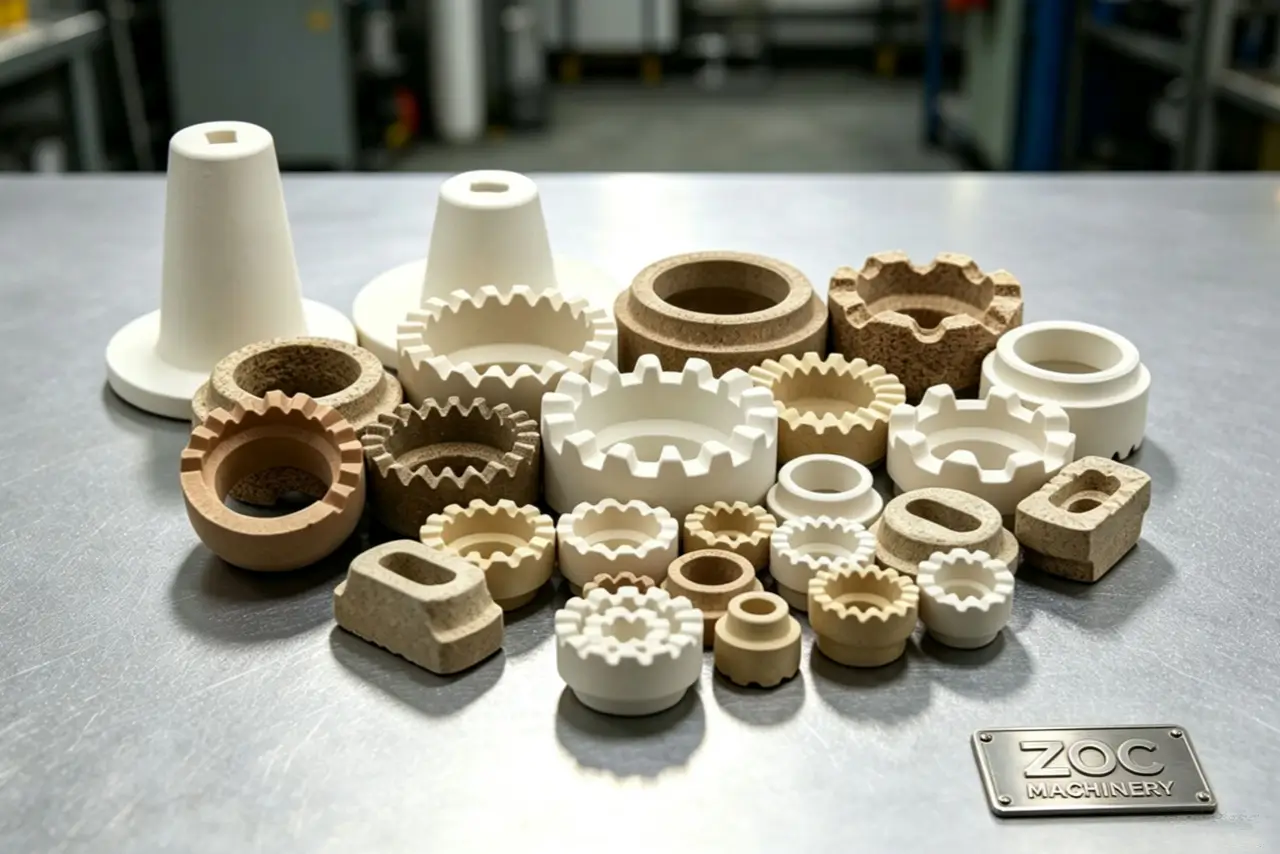
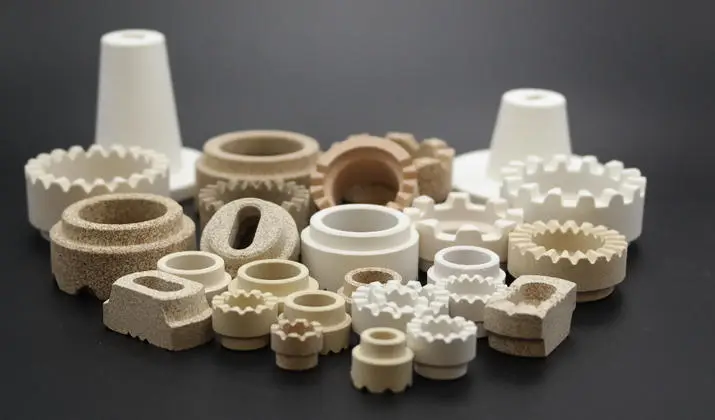
A stud used for CD welding is not automatically interchangeable with a short-cycle stud. The weld-end geometry, flange, material and chuck must suit the selected process. Confirm the exact part number with the stud and equipment supplier before buying in volume.
| Stud feature | Why it matters |
|---|---|
| Weld-end design | Changes arc initiation and the shape of the welded area. |
| Flange | Can increase weld area in an approved unshielded short-cycle setup. |
| Diameter and length | Must fit both gun hardware and the required joint load. |
| Material | Must be compatible with the base metal and welding procedure. |
The machine may support several stud sizes, but each size can need a different chuck, gas arrangement or parameter set. Keep the qualified setup with the part drawing so operators do not substitute a visually similar stud.
Automation and the Real Cost per Weld
Short-cycle equipment can be integrated with feeders, fixtures and robotic heads. Omitting a ferrule feeder may simplify one setup, while another application still needs shielding gas or a more careful inspection step. Build the case from measured accepted welds, not a claim that automation will double output.
| Cost item | Measure or quote |
|---|---|
| Equipment | Power source, gun, feeder, fixtures, cables and integration. |
| Consumables | Studs, gas if specified, chucks and wear parts. |
| Labor | Loading, positioning, inspection and rework time. |
| Output | Accepted welds over a representative shift. |
Run a sample batch with the proposed stud and fixture. Record stoppages and rejected welds as well as arc time. That gives procurement a cost per accepted weld that can be compared with CD or conventional drawn arc.
Select the Power Source and Welding Gun
The power source must support short-cycle timing and current at the required stud size. Check its input supply, duty cycle and compatibility with the chosen gun and cable length. A product label such as “inverter” does not establish weld quality by itself; use the model data sheet and a trial run.
ZOC lists several short-cycle stud welding machines with different short-cycle ranges. Compare the short-cycle rating for the exact model rather than its maximum ferrule-welding range. The original DH-16A gun link is retained here; confirm its supported stud sizes and connection with the selected power source before ordering.
| Equipment item | Check before purchase |
|---|---|
| Power source | Short-cycle current and timing range at the planned duty. |
| Gun and chuck | Stud diameter, lift adjustment, gas option and cable compatibility. |
| Site supply | Input voltage, protection and available power for that model. |
| Service | Wear parts, documentation and local support. |
For setup decisions, use the manufacturer’s instructions and the project procedure. Our stud welding parameter guide explains the roles of current, time, lift and plunge, but the final values must come from trial welds on the production material.
Shielding Gas, Porosity and Weld Checks
Some short-cycle welds run without pool protection; others need shielding gas, especially as stud size or material demands increase. There is no single gas mix that suits every steel, stainless-steel or aluminum job. Use the gas and flow rate specified for the stud, base metal and qualified procedure.
| Question | Practical check |
|---|---|
| Is gas required? | Confirm with the stud and equipment instructions, then test the joint. |
| Is the weld porous? | Review surface preparation, gas coverage, current, time and gun position. |
| Does it look sound? | Visual appearance alone does not prove the required load. |
| Is it repeatable? | Record settings and inspect production welds to the quality plan. |
A clean-looking fillet can still fail a mechanical test. Use the inspection method called for by the job, including destructive samples where required. Our stud weld quality checks guide covers common signs to discuss with your welding team.
Set Up a Repeatable Short-Cycle Weld
Operator training should cover the gun position, lift and plunge settings, return connection, surface preparation and inspection. Digital presets help only when they match the actual stud and part. Recheck the setup after changing a chuck, cable, gas arrangement or batch of studs.
- Confirm the stud and base-metal specification before setting current or time.
- Set the gun and return connection by the equipment manual.
- Make trial welds on representative material and inspect both faces.
- Test the joint to the project requirement and record the approved settings.
| Setup step | Record |
|---|---|
| Stud | Part number, material, diameter and weld-end design. |
| Base metal | Grade, thickness, coating and preparation. |
| Equipment | Power-source model, gun, chuck, cables and gas if used. |
| Procedure | Current, time, lift, plunge and acceptance result. |
The current edition of ISO 14555 covers procedure qualification, operator qualification and production-weld testing for arc stud welding. Apply the standard or project specification that governs your job; a preset chart is a starting point, not an acceptance record.
Frequently Asked Questions
Can short cycle weld aluminum?
It can be used for some aluminum combinations with the right equipment, studs, shielding and procedure. Trial-weld the actual alloy and follow the supplier’s gas recommendation; do not assume a steel setup will transfer.
How do I test joint strength?
Use the bend, pull or other test required by the project procedure, with a representative sample and recorded acceptance criteria. A visible collar alone does not establish strength.
Can short cycle be used on thick plate?
Possibly, if the stud size and load are within a qualified short-cycle setup. A structural specification may instead require conventional drawn arc. Plate thickness by itself is not the full selection rule.
What if the lift setting is wrong?
An incorrect lift can change arc stability and the weld pool. Reset it by the gun manual, then make and inspect trial welds before production.
What input power does the machine need?
Check the data sheet for the exact model and destination market. Input voltage and capacity vary by machine and can have configuration options; do not assume every short-cycle unit needs the same three-phase supply.
Request a Tested Setup
Send the stud drawing, base-metal grade and thickness, coating, load requirement, available supply and target production rate. Ask for a documented trial with the proposed machine, gun and consumables. contact us at ZOC Machinery with those details for a configuration quote.