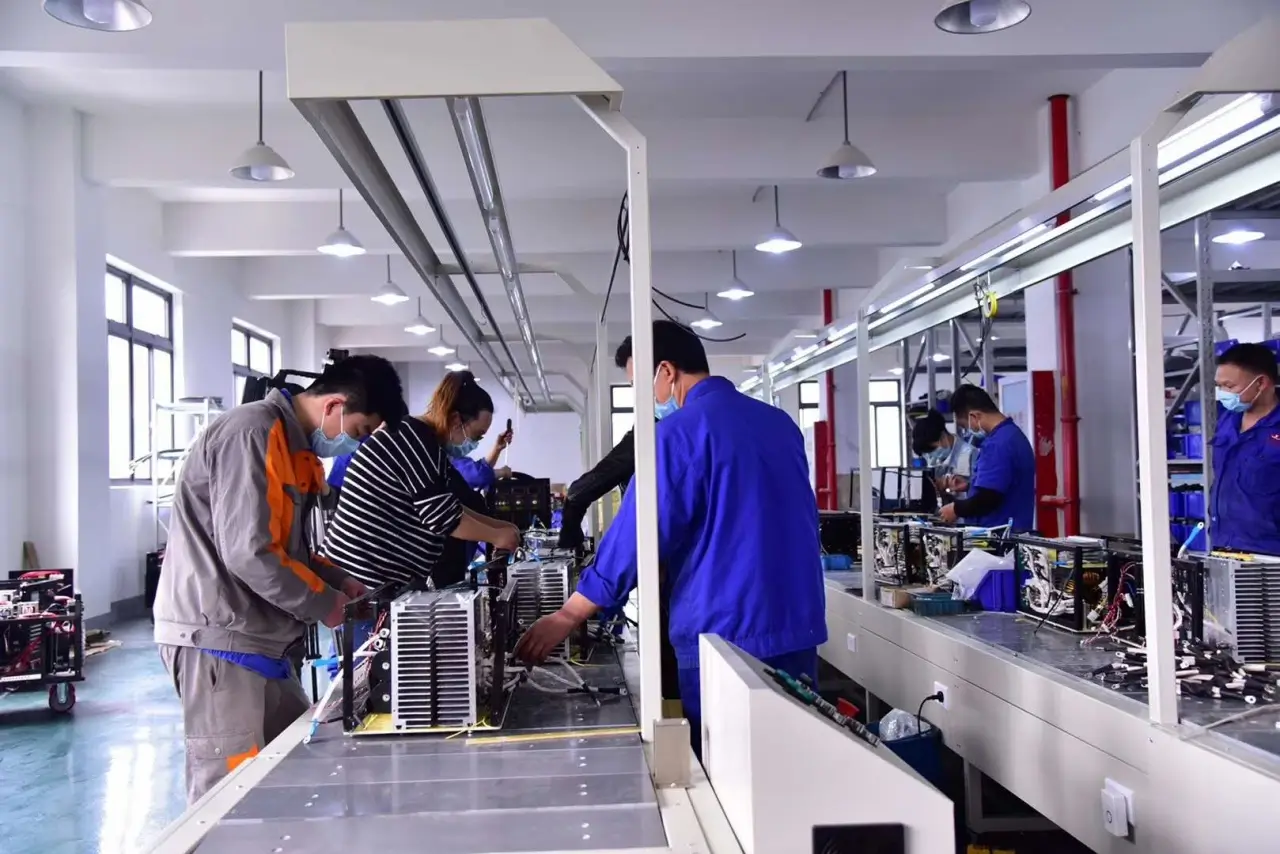
A quoted industrial stud welding machine price is useful only when it covers the system your job needs. Power source, stud diameter, duty cycle, gun, cables, automation, site power and delivery terms can all change the total. The advertised unit price also leaves out consumables, freight, training and parts. Use the breakdown below to request like-for-like quotations rather than relying on a broad dollar range.
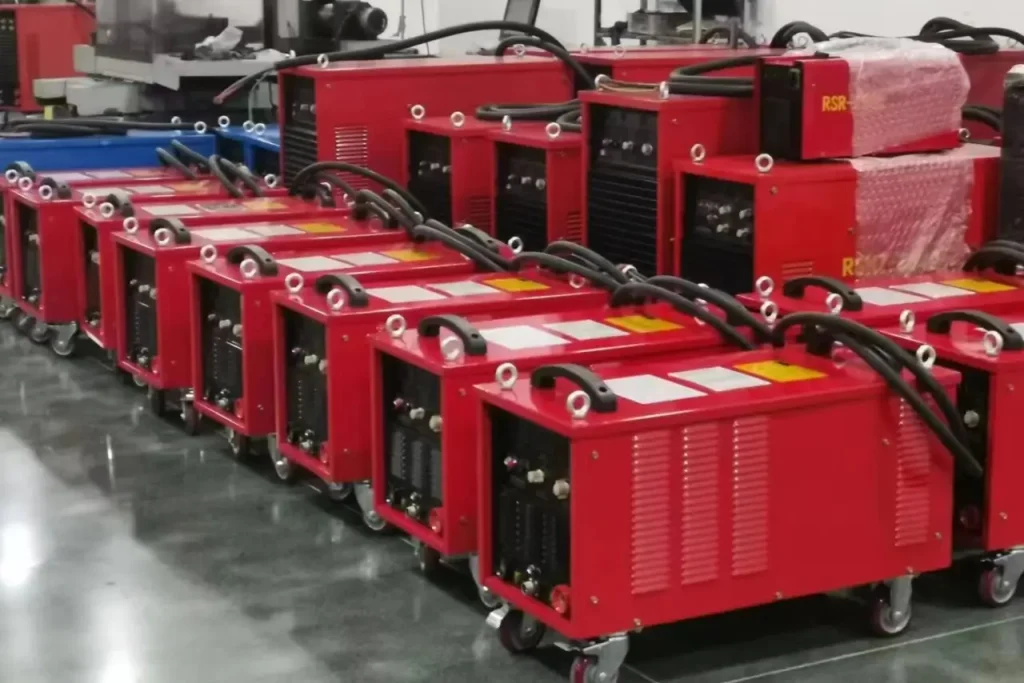
What Sets an Industrial Stud Welding Machine Price?
Start with the welding process and the largest and smallest studs on the schedule. A machine for small sheet-metal studs is not priced or specified the same way as a drawn arc unit for structural shear connectors. Compare output and duty-cycle ratings at the sizes you will actually weld.
Start With Output and Stud Range
- Rated output: compare at the required stud size and duty cycle.
- Power components: request the model-specific data sheet.
Check the Components Behind the Quote
- Service parts: check availability and replacement cost.
- Enclosure: match protection rating to the site.
Ask for the data sheet and service information for the exact model. A claim about copper windings or “industrial-grade” electronics does not establish weld performance or life on its own.
| Price factor | What to compare | Why it matters |
| Power components | Model data and serviceability | Supported welding process |
| Output range | Stud size at rated duty | Equipment capacity |
| Accessories | Gun, cable and consumables | Complete system cost |
Compare Power-Source Technologies
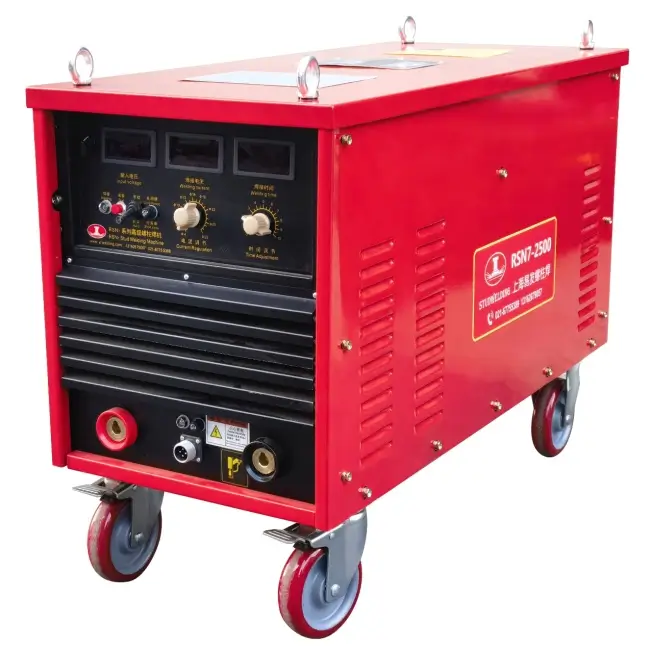
Technology affects the quote, but model capability matters more than its label. Compare inverter systems, thyristor and capacitor discharge equipment by supported process, rated output, input supply, gun compatibility and service. Capacitor discharge machines are a separate option for many small-stud applications.
Inverter vs Thyristor Equipment
- Inverter models: compare input power, size and controls.
- Thyristor models: compare output, weight and service.
Measure Energy Use for Your Duty
- Cooling: confirm duty-cycle rating at site conditions.
- Mobility: include handling and cable moves in job planning.
If electricity cost matters to the purchase, request measured input power at a comparable welding duty. Add travel and handling time only when a smaller machine would change your crew’s work.
| Technology | Price comparison | Operating data |
| Inverter | Quote the exact model | Measure input and duty |
| Thyristor arc | Quote the exact model | Measure input and duty |
| Capacitor discharge | Match small-stud use | Check energy and recharge |
When an Inverter Quote Is Worth Considering
An inverter may be worth a higher quote when its size, control features or supported duty fit the job. For structural steel projects, the approved welding procedure and site conditions decide what equipment is suitable; inverter technology alone does not establish code compliance.
Check Digital Controls
- Settings: check what the controller can save or display.
- Stud range: verify the rated sizes for that model.
Measure Accepted Output
- Cycle time: measure the whole production sequence.
- Weld inspection: compare accepted output, not appearance alone.
Ask which settings the machine can display, save or export, and whether those records are required by your project’s quality plan.
| Inverter feature | Possible use | Evidence to request |
| Digital controls | Repeatable settings | Saved parameters and trial weld |
| Switching design | Power-source control | Rated output and weld result |
| Cooling | Duty at site temperature | Manual and data sheet |
What a Thyristor Quote Includes
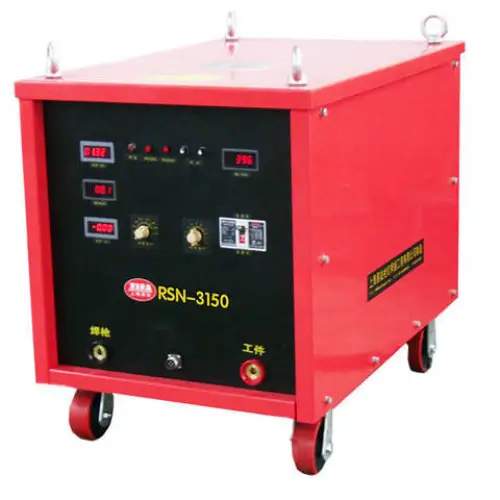
Thyristor machines can be a sensible option for repeated drawn arc work. Compare the exact ZOC RSN Heavy Series model with inverter alternatives on stud range, duty cycle, power input, weight, service and quoted accessories.
Compare Site Suitability
- Input supply: confirm operation within the manual’s range.
- Field service: ask what faults can be diagnosed on site.
Check Structural Stud Capacity
- Shear studs: match machine, gun and ferrule to the procedure.
- Chassis: compare protection, access and transport needs.
For a site with generator power or long leads, confirm the allowable input range and cable-length limits in the manual. Do not assume one power-source type tolerates poor supply better than another.
| Structural capability | Ask for | Confirm |
| Current and time | Rated output for stud | Procedure and sample weld |
| Stud diameter | Approved machine and gun range | Stud and ferrule match |
| Duty cycle | Output at planned rate | Site input and cooling |
How Dual-Gun Equipment Changes Cost
A dual-gun system costs more because it has extra output and gun hardware. It may support two work positions or two stud sizes, but confirm whether both guns can weld at the required settings and duty cycle before forecasting output.
Confirm Simultaneous Output
- Two guns: verify simultaneous output with two welding guns.
- Two setups: check changeover time for different studs.
Compare Two Workflows
- Floor space: compare the full system footprint.
- Throughput: record accepted welds in a trial run.
Compare the price of one dual-output unit with two single-output machines, including guns, cables, electrical supply, maintenance and backup capacity.
| System setup | Potential benefit | Check |
| Single gun | Simple workflow | Accepted output per shift |
| Dual gun | Two work positions | Simultaneous duty and power |
| Automated gun | Less manual positioning | Fixture and feed performance |
Cost of Automation and CNC Integration
Automation adds costs for feeding, positioning, controls, fixtures and integration with the production line. Ask for a cycle-time demonstration using your stud and part. The quote should separate machine hardware from tooling, programming, installation and acceptance testing.
Include Feeding and Fixtures
- Feeding: test the stud orientation and reject handling.
- Positioning: include fixture and part-loading time.
Test the Full Cycle
- Process control: log settings and inspection results.
- Sensors: specify the faults they must detect.
Start with a pilot or sample run. Record accepted welds per shift, stoppages and operator involvement before using automation savings in a purchase case.
| Automation level | Quote includes | Trial metric |
| Manual feed | Power source and gun | Accepted welds per shift |
| Semi-automated | Feeder and controls | Stoppages and accepted output |
| CNC integration | Fixture and programming | Installed cycle and reject rate |
How Stud Diameter Affects Equipment Selection
Stud diameter affects the required power source, gun and cable, but it is not a price formula. Match the machine to the specified process and base material, then check the maximum stud rating at the planned duty cycle. Our steel-structure equipment guide covers larger shear studs, while short-cycle models cover different work.
Check Ratings for Larger Studs
- Larger studs: check current, time and duty requirements.
- Cables: size for the equipment and run length.
Avoid Oversizing or Undersizing
- Small studs: evaluate CD or short-cycle processes.
- Structural studs: follow the approved drawn arc procedure.
Compare the model’s rating at your required output and ambient conditions. A fixed “20% headroom” rule is not a substitute for its duty-cycle data and trial welds.
| Stud size | Likely process | Cost check |
| Small studs | CD or short cycle as specified | Gun, tooling and energy |
| Medium or structural | Process per weld procedure | Rated output and duty |
| Large structural | Approved drawn arc setup | Power, cables and ferrules |
Maintenance and Total Cost of Ownership
A preventive maintenance routine can reduce avoidable stoppages, but it will not erase wear costs. Budget for chucks, cables, fans and other service parts, and follow the manufacturer’s cleaning and inspection intervals.
Protect the Power Source
- Dust: clean the cabinet by the manual, with power isolated.
- Cooling: inspect fans and airflow as specified.
Budget for Guns and Cables
- Connections: check leads and terminals for wear.
- Chucks: replace worn parts that affect contact.
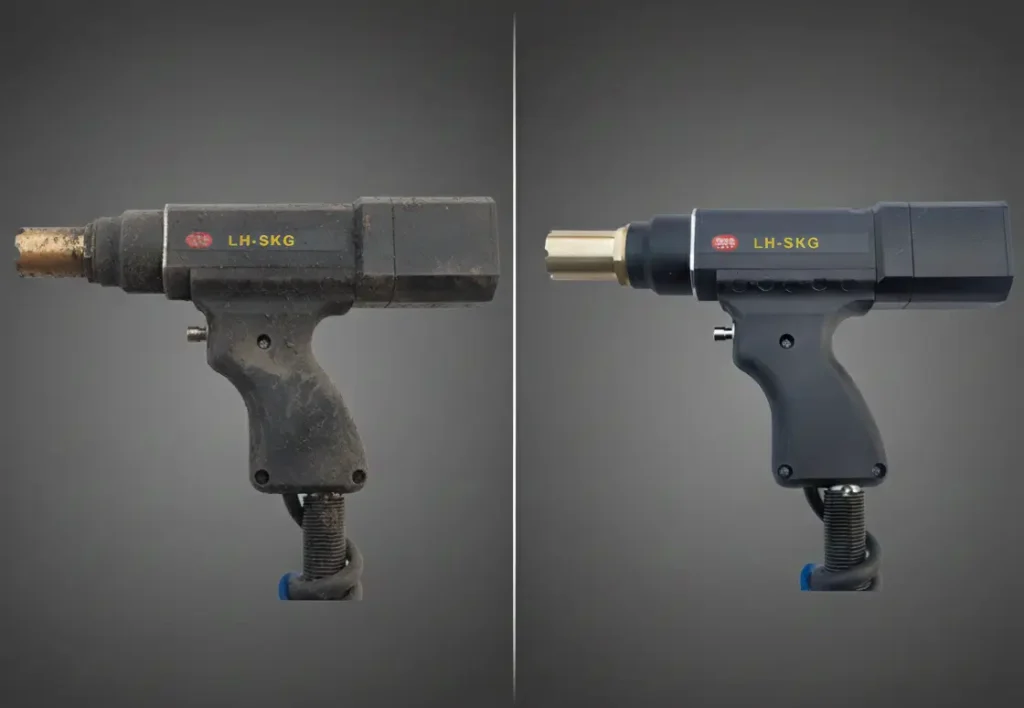
For gun wear and cleaning, see our daily maintenance guide for stud welding machines. Keep maintenance steps matched to the exact power source and gun manual.
Isolate power before cleaning inside a cabinet, and use the method specified by the manufacturer. An unsupported weekly “blowout” schedule can damage components or spread conductive dust.
| Maintenance item | Schedule from | Cost to include |
| Cabinet cleaning | Manufacturer manual | Labour and filters |
| Cable inspection | Manufacturer manual | Repair and leads |
| Chuck care | Gun manual | Replacement and rework |
Compare Factory-Direct and Distributor Quotes
A direct factory quote can remove a reseller layer, but it does not guarantee the lowest landed cost or the best local support. Compare the same system and warranty scope from a manufacturer and distributor. Our supplier-versus-manufacturer guide explains the tradeoffs, and the import cost checklist covers cross-border charges.
Compare Complete Delivered Cost
- Direct quote: include freight, duties and service.
- Technical route: identify the responsible support team.
Ask About Custom Configurations
- Configuration: confirm approved cable and input options.
- Factory evidence: request model-specific test records.
Ask who owns the warranty, who supplies parts and whether a requested cable, input-power or cooling change is supported for that model.
| Buying route | Delivered-cost check | Support check |
| Local dealer | Unit plus local services | Stock and warranty |
| Direct factory | Unit plus import charges | Parts and warranty |
| Used equipment | Condition and repairs | Service history |
Calculate Return on Investment
To test return on investment, compare total installed cost with a realistic alternative. Include equipment, guns, tooling, energy, maintenance, consumables, training and freight; then use measured accepted output and labour hours from a representative job.
Measure Labour on a Trial Job
- Labour: measure time per accepted weld.
- Rework: record reject and repair costs.
Build a Total-Cost Model
- Energy: compare measured input at equivalent duty.
- Downtime: include spare parts and backup plans.
Calculate payback from your own production volume and cost per accepted weld. A fixed 12-month payback or guaranteed labour saving is not supported by a machine price alone.
| ROI item | Measure | Include in model |
| Labour | Hours per accepted weld | Wage and setup time |
| Rework | Rejected or repaired welds | Materials and delay |
| Energy | Input at comparable duty | Tariff and usage |
Frequently Asked Questions
Can one machine weld different stud sizes?
Often, within the model’s rated range and approved process. Each size may need a different chuck, ferrule, gun setup and parameters. Check the exact machine and stud documentation rather than assuming one unit covers every diameter.
Which power source is best for site construction?
Start with the stud schedule, welding procedure, site power and cable run. Compare an inverter or thyristor model by rated output, duty cycle, weight, weather protection and available service. Trial welds on the site material are more useful than a technology label.
Can I buy spare parts after the machine?
Ask for a priced list of chucks, cables, boards and other critical parts before ordering. Confirm stock location, lead time and warranty terms for the exact model.
When does a dual-gun system make sense?
It can help when two operators or two stud sizes would otherwise wait for the same setup. Confirm simultaneous output and compare accepted welds per shift with a single-gun workflow before paying for the extra hardware.
Can a machine be configured for a hot work area?
Some models offer cooling or protection options. Provide the expected ambient temperature, duty cycle and ventilation conditions; request a written rating for that configuration. Do not assume any modification permits continuous welding at a particular site temperature.
Request an Itemized Quote
For an itemized system quote, contact ZOC Machinery with the stud sizes, process, base metal, site supply, daily volume and delivery destination. We can then show the purchase and operating-cost items for your configuration.