The most common types of weld studs are threaded studs, smooth pins, internally threaded studs, and purpose-made parts such as shear connectors and insulation pins. Shape tells you what the stud holds. The weld end tells you which process and equipment can attach it. Both decisions matter when you order a stud for production.
A weld stud can provide a fastening point without a through-hole, but the joint is not automatically stronger, leak-tight or free of backside marks. Start with the load, base material and available access. Our weld stud selection guide covers standards and dimensions in more detail; you can review related accessories once the stud specification is clear.
What are the main types of weld studs?
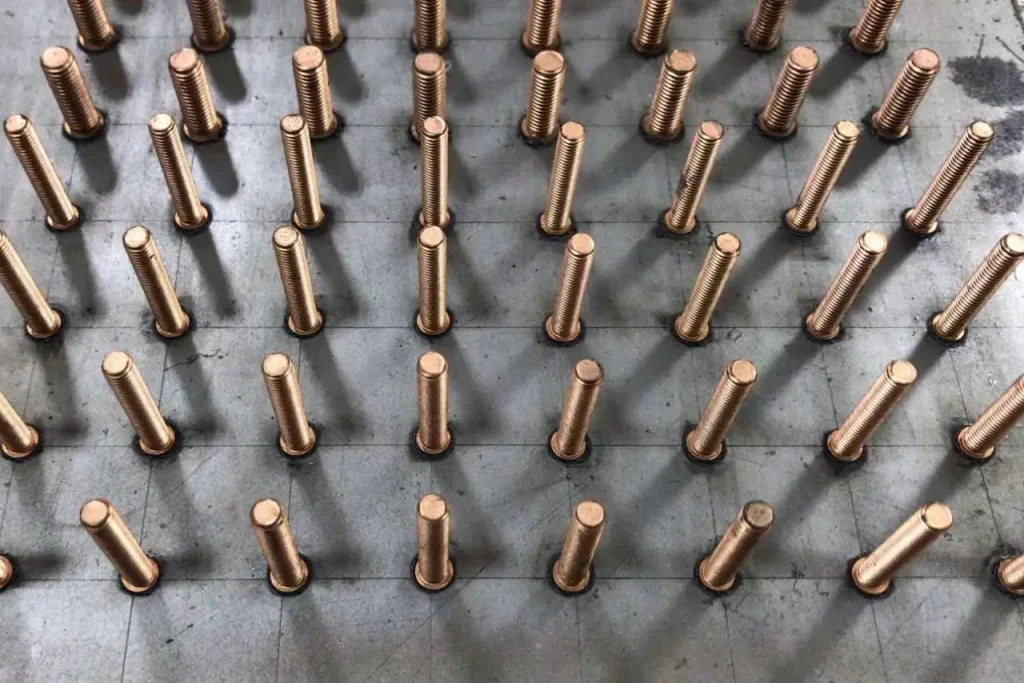
A useful first split is by the job the exposed end must do. External threads take a nut. A smooth pin locates or supports a part. An internal thread accepts a bolt. A headed shear connector transfers forces between steel and concrete. The same broad function may be available with different weld-base designs, so the name alone does not tell you whether a stud is for CD, short-cycle or drawn arc welding.
| Stud form | Typical function | Specify as well |
|---|---|---|
| Externally threaded | Fastens a bracket or panel with a nut | Thread, length, material, weld-base type |
| Unthreaded pin | Locates, supports or retains a component | Diameter, length, end shape, process |
| Internally threaded | Accepts a removable bolt | Thread depth, outside size, process |
| Shear connector | Transfers force in composite construction | Head and shank dimensions, design standard |
| Insulation pin | Retains insulation with a clip or washer | Pin and retainer system, base material |
When should you use threaded weld studs?
Choose an externally threaded weld stud when a nut must clamp a removable component to a metal surface. Thread size and length need to suit the mating part and any coating or insulation. Check the load and torque requirements before selecting a stud solely because its thread fits the nut.
Welding avoids drilling through the workpiece, which can help where one-sided access or a closed panel matters. The assembly still needs an appropriate weld and, where applicable, a seal design. A welded stud does not make every enclosure leak-tight by itself.
| Design question | Check on the drawing |
|---|---|
| What is attached? | Thread diameter, pitch and usable length |
| What carries the load? | Stud, weld and base-metal capacity |
| What is the base sheet? | Thickness, material and reverse-side finish |
Where do unthreaded weld studs fit?
Unthreaded weld studs are useful as locating pins, stops, supports and attachment points for clips. A smooth shank also works where a threaded fastener would add no value. The pin may need a specified end shape or diameter tolerance if another part slides over it.
Do not assume a smooth pin carries more sideways load than a threaded stud of similar size. The load path includes the weld and sheet beneath it. If the pin acts as a pivot, check wear, clearance and the load on the weld as well as the pin material.
| Use | Critical dimension or condition |
|---|---|
| Locating pin | Position and diameter tolerance |
| Stop or support | Height and side-load requirement |
| Clip attachment | Retainer fit and pull-off requirement |
What does an internally threaded weld stud do?
An internally threaded stud provides a tapped fixing point without tapping the base sheet. It is useful when a bolt must be removed during service or when an external thread would interfere with the assembly. The body still stands above the surface unless a specific recessed design is provided; “internal thread” does not mean “flush.”
Specify usable thread depth, outer diameter and height, then check that the weld-base geometry matches the chosen process. For a thin sheet, trial welds and load testing matter more than a claim that the stud is “heavy duty.”
| Feature | Specify |
|---|---|
| Internal thread | Size, pitch and usable depth |
| Stud body | Outside diameter and installed height |
| Attachment | Bolt engagement, weld capacity and sheet thickness |
How are CD weld studs different?
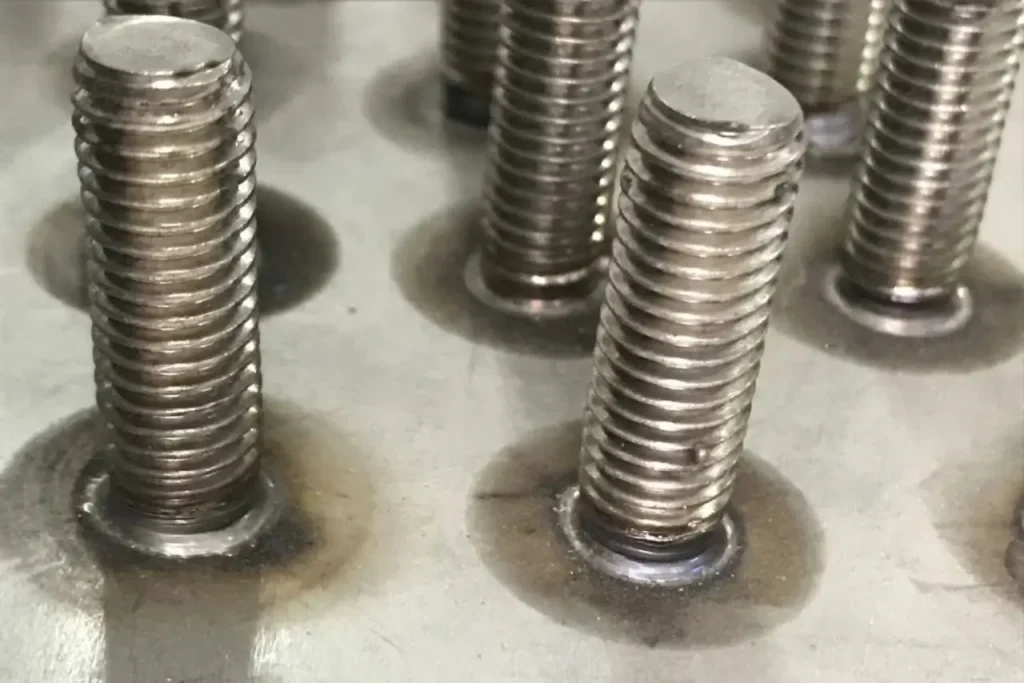
Capacitor discharge (CD) studs have an ignition tip designed for a short discharge. The process is often chosen for thin, clean sheet where heat input must be limited. It is available for threaded, unthreaded and internally threaded forms. Our CD stud welding guide explains the contact and gap methods.
CD is not a promise of a flawless reverse side. Sheet thickness, surface finish, stud size and settings affect whether a mark or indentation appears. Make sample welds on the actual material and inspect both sides before approving the stud for production.
| CD selection item | Why it matters |
|---|---|
| Ignition tip | Must match the process and be undamaged |
| Sheet material and thickness | Set the weldable range and backside appearance |
| Surface condition | Clean contact is needed at stud and work return |
When are drawn arc weld studs the better fit?
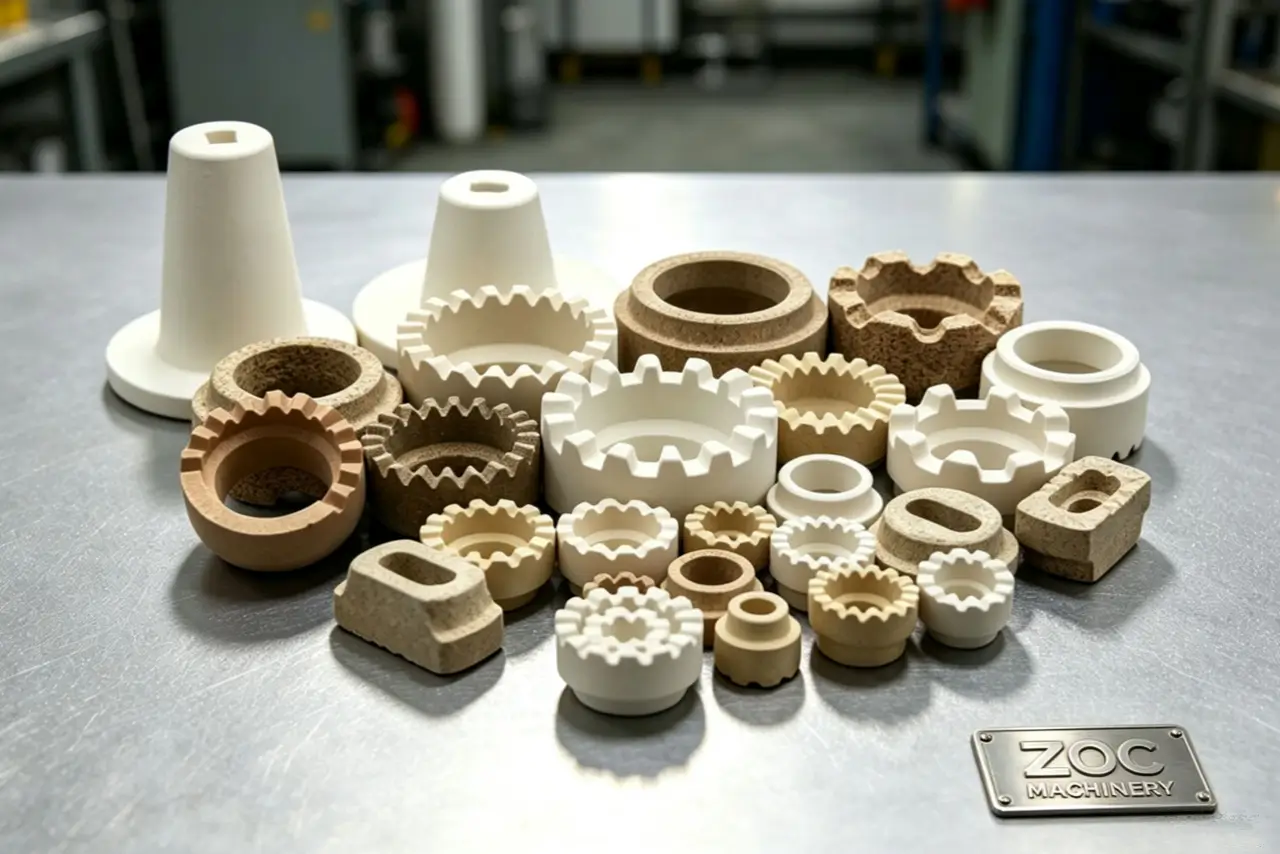
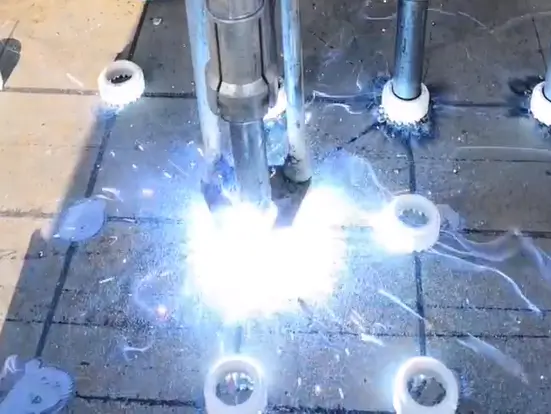
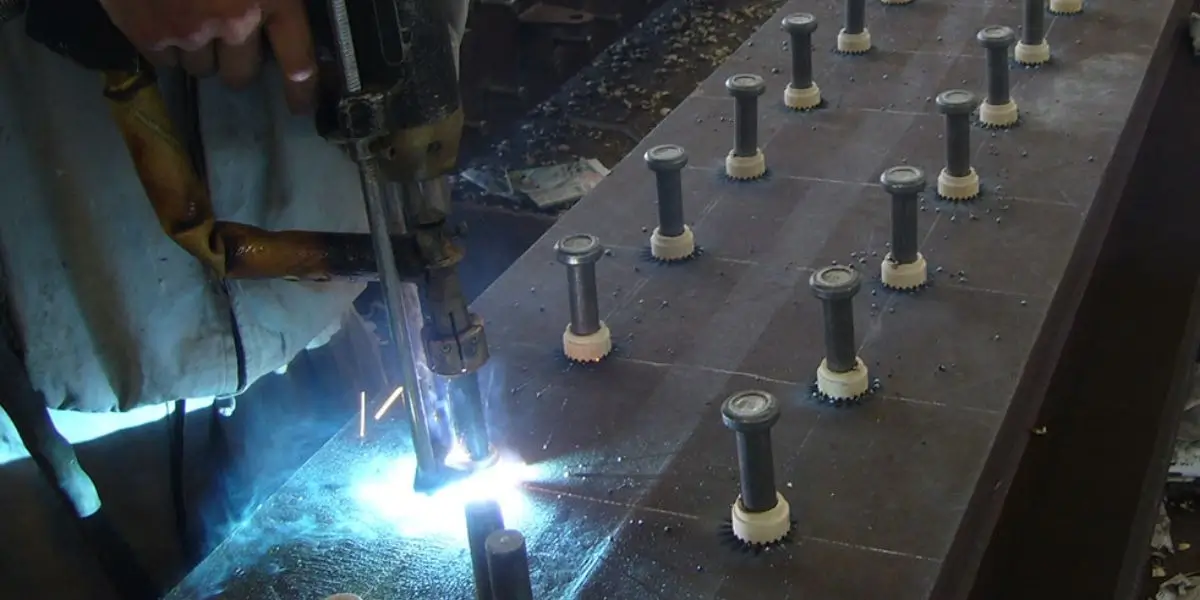
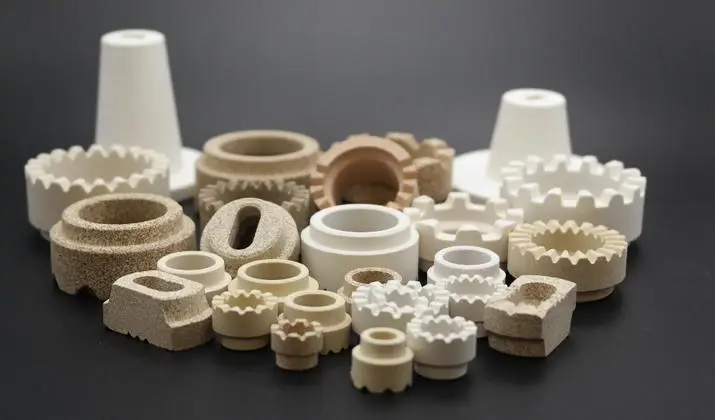
Drawn arc welding is commonly used for larger studs and heavier steel sections. Studs for this process have a different weld end from CD tip-ignition studs. Depending on the procedure, the weld pool may be protected by a ceramic ferrule or shielding gas. See the drawn arc stud welding process and our ceramic ferrules range when specifying a ferrule-based setup.
A large stud is not automatically suitable for a rough or rusty plate. Clean the weld area and use the stud, ferrule or gas arrangement, equipment settings and inspection method required by the procedure. For a side-by-side process choice, see CD versus drawn arc comparison.
| Drawn arc choice | Confirm |
|---|---|
| Stud weld end | Designed for drawn arc, not CD tip ignition |
| Weld protection | Ferrule or shielding gas as specified |
| Base metal | Material, thickness and prepared weld surface |
Where do short-cycle studs fit?
Short-cycle drawn arc welding occupies a different operating range from both CD and longer drawn arc cycles. It commonly uses a stud with a flange and a weld-base design made for that process. Equipment and job requirements determine whether shielding gas is used. Our short-cycle stud welding guide explains the sequence.
Short-cycle can work well in repeat production, including automated lines, but throughput depends on part handling and inspection as well as weld time. Galvanized surfaces require process-specific checks; do not treat the zinc coating as something the arc can always burn through safely or consistently.
| Question | Short-cycle check |
|---|---|
| Is the stud correct? | Use the specified flange and weld-base geometry |
| Is the surface coated? | Confirm preparation and weldability by trials |
| Is gas required? | Follow the equipment and qualified procedure |
Which stainless steel weld studs should you choose?
Stainless weld studs are chosen for corrosion resistance, but the grade should match the service environment and the base material. A 304-type grade can suit many general uses; a 316-type grade may be considered where chloride exposure is more severe. Neither grade guarantees freedom from staining or pitting.
The weld procedure must suit the specific stainless material and surface condition. If a dissimilar metal combination is proposed, assess corrosion as well as weldability. A material label alone cannot establish long-term joint life.
| Service condition | Selection check |
|---|---|
| General indoor use | Required grade and finish |
| Chloride or chemical exposure | Corrosion assessment for the actual environment |
| Dissimilar metals | Weld qualification and galvanic-corrosion review |
Which specialized weld studs are common?
Shear connectors and insulation pins are two common purpose-made forms. A headed shear connector is designed for composite steel-concrete construction; it should not be substituted with an ordinary threaded stud. Our shear studs versus regular weld studs guide covers that distinction.
Insulation pins hold mats or blankets with clips or washers. Earthing or grounding studs need a specified conductive path and compatible materials. These details are part of the product drawing, not optional additions after welding. Custom head, flange or shank shapes should be assessed with the welding process before a batch is ordered.
| Special form | Function | Check before ordering |
|---|---|---|
| Headed shear connector | Steel-concrete force transfer | Structural design and connector specification |
| Insulation pin | Retains insulation | Pin, clip and base-metal system |
| Earthing stud | Electrical connection point | Conductivity, corrosion and fastening detail |
How do you select a weld stud for a production job?
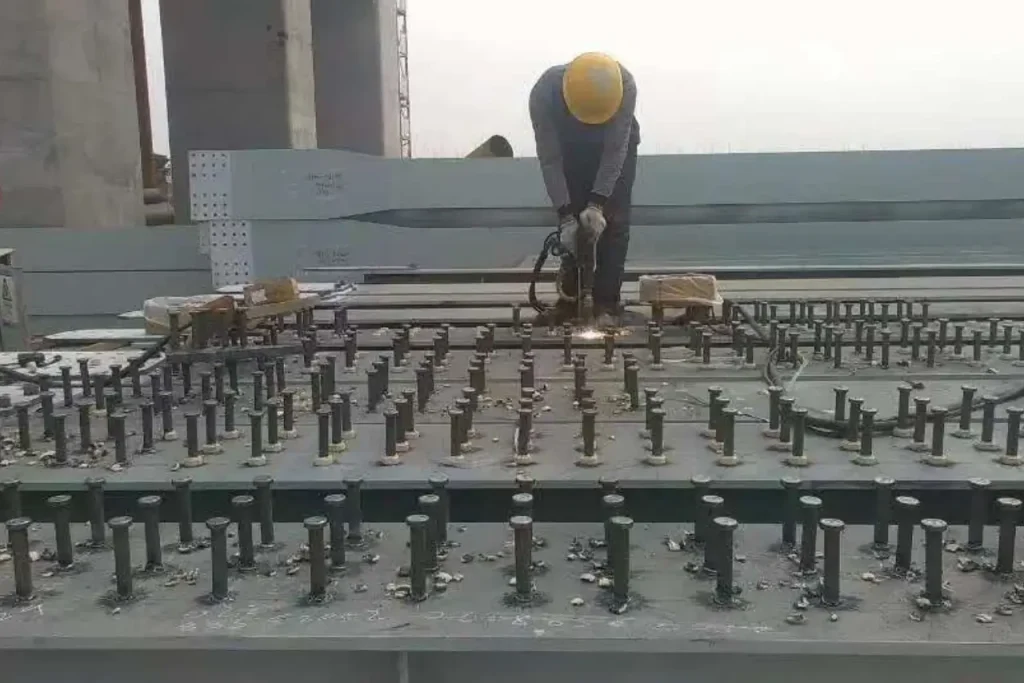
Start with the attached part and the loads it places on the stud. Next record the base material, thickness, coating and finish. Only then choose the process and its weld-base design. If the assembly is structural or safety-critical, use the applicable design and welding requirements and qualify the joint by the specified tests.
ISO 13918 distinguishes stud types by both shape and welding technique. It lists, for example, threaded, unthreaded and internally threaded types for different processes, as well as shear connectors. Our weld quality inspection guide explains why a neat-looking weld is only one part of acceptance.
| Selection step | Information to record |
|---|---|
| Assembly function | Thread, pin, internal thread or special head |
| Base part | Material, thickness, coating and finish |
| Welding process | CD, short-cycle or drawn arc and matching weld end |
| Acceptance | Drawing, procedure and test requirements |
Frequently asked questions
Can weld studs be attached to galvanized steel?
Some stud welding procedures can be qualified for galvanized material. Coating type and thickness, fumes, surface condition and inspection all need attention. Do not assume a setting that works on bare steel will work on zinc-coated steel.
Which stud material works at high temperature?
Select material against the actual service temperature, load, environment and applicable design standard. There is no single stainless or nickel alloy that is best for every hot application.
Can a standard MIG welder attach weld studs?
A conventional MIG setup does not provide the timed stud-welding cycle described here. Use equipment and a gun designed for the selected stud welding process, or follow a separately qualified attachment method.
What is the minimum sheet thickness for CD stud welding?
It depends on the stud, machine, material and acceptance criteria. CD can be used on thin sheet, but a nominal minimum from a catalog does not guarantee adequate strength or an unmarked reverse side on your part.
How should weld stud strength be checked?
Use the visual and mechanical tests required by the drawing, welding procedure or applicable standard. A bend, torque or pull test may be specified. Hitting every stud with a hammer is not a universal acceptance method.
What should you send a supplier?
Send the stud drawing or a clear description of its function, plus the base material and thickness, the chosen welding process, expected load, service environment and required tests. Those details help distinguish a stud that merely fits the thread from one that can be welded and inspected for the job.
If you need help matching a stud to an assembly, contact us today with the drawing and application details. ZOC Machinery can then check suitable equipment and consumable options against that specification.