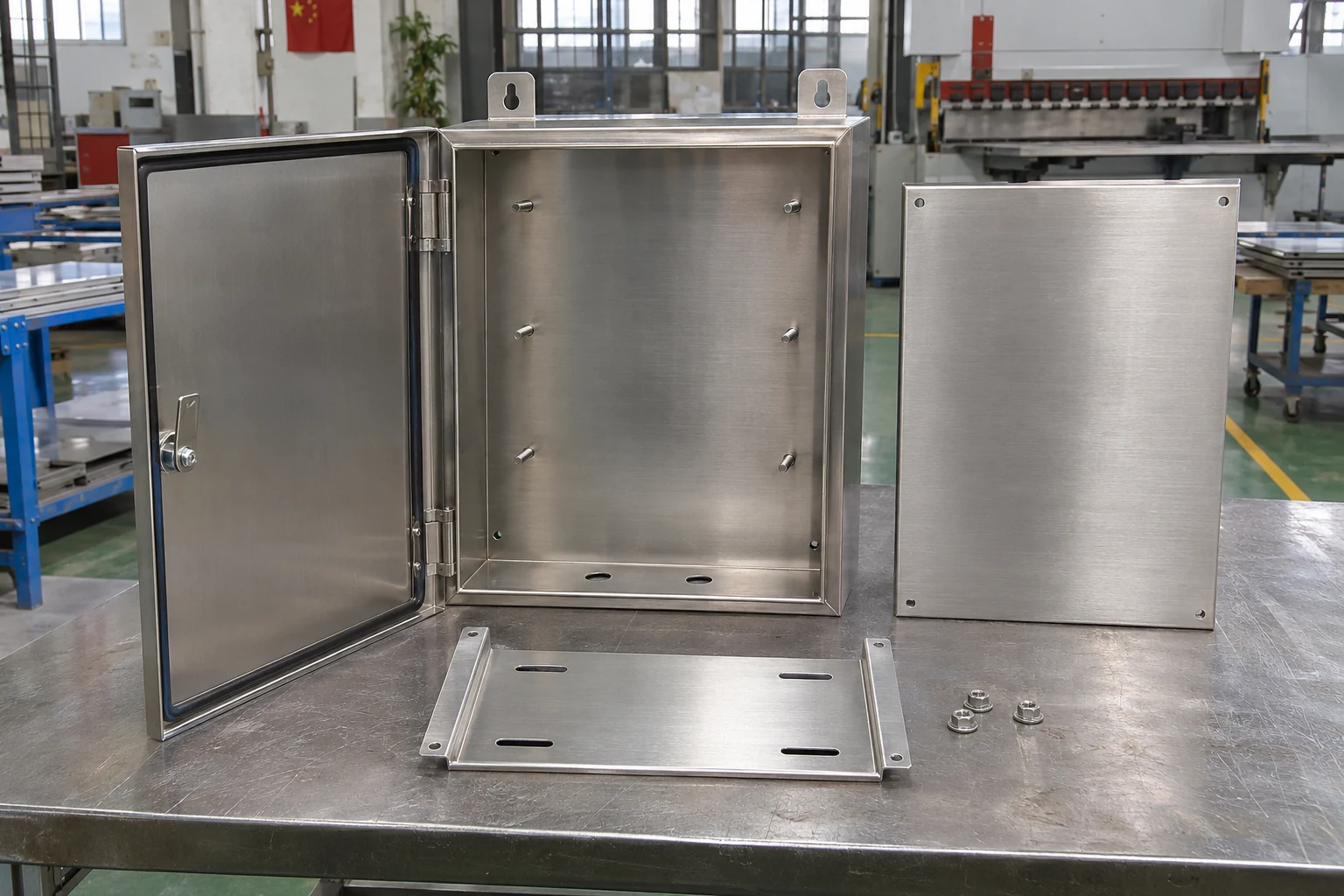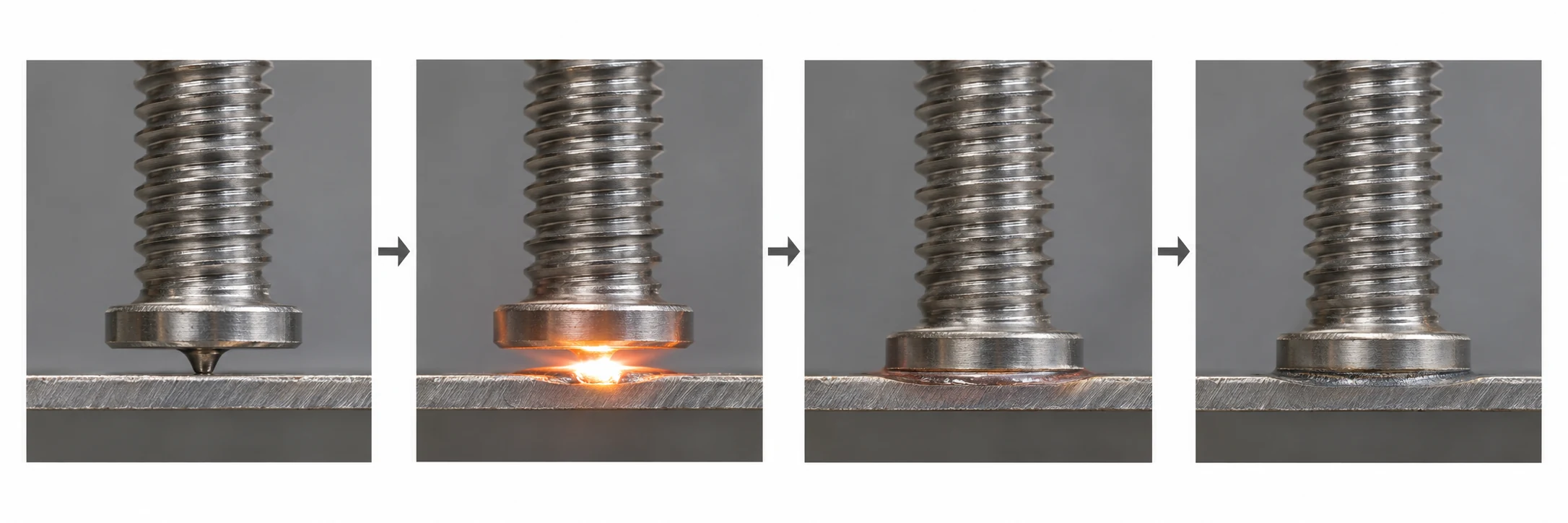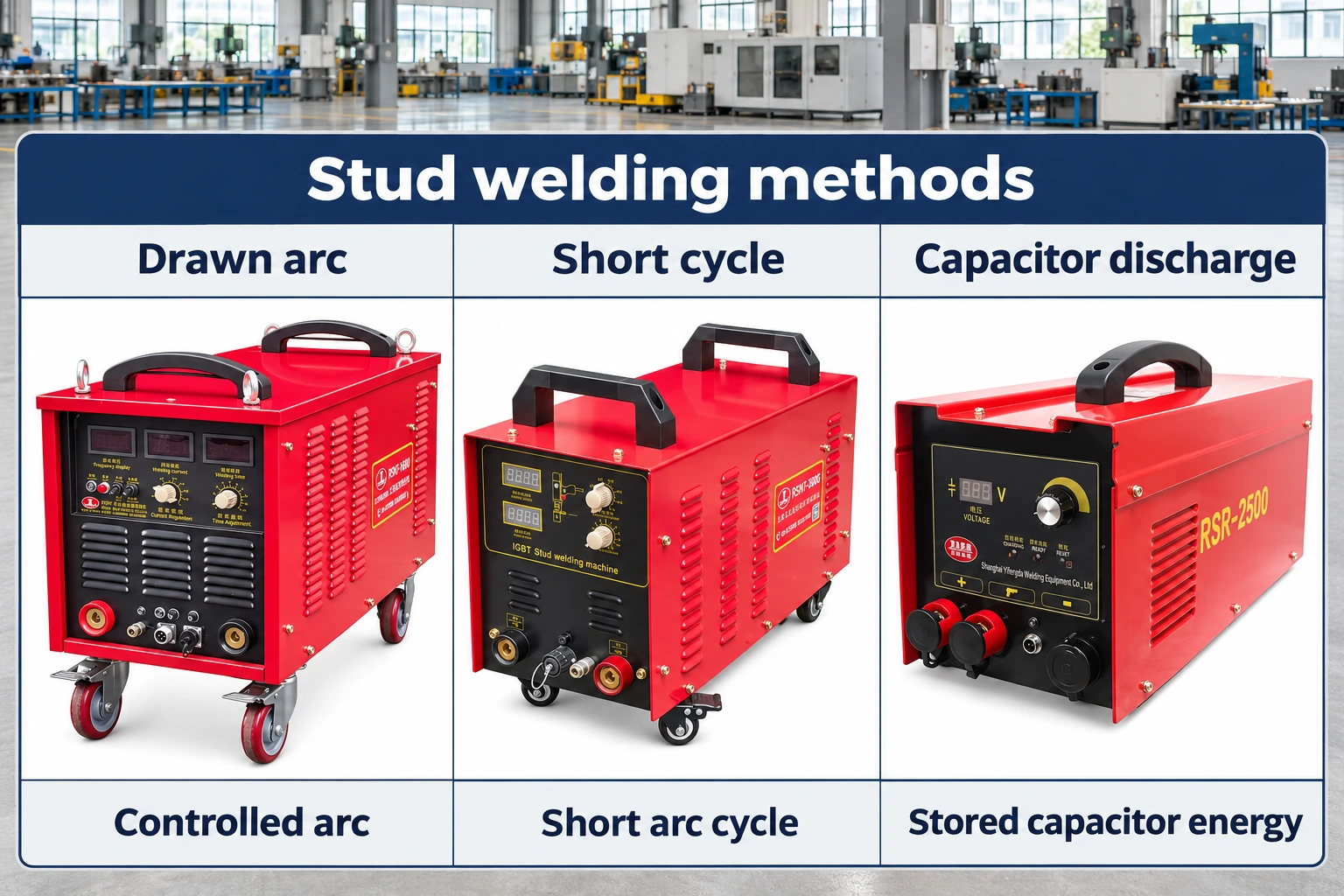
Choose a stud welding gun by matching its welding process, compatible power source, stud dimensions, front-end accessories, and production workload.
You order a replacement stud welding gun for a steelwork crew, only to find that its control connector doesn’t match the existing welder. Production is delayed while your team checks whether an adapter or a different gun is needed.
This guide explains how to evaluate welding processes, machine compatibility, accessories, and production requirements before purchasing. Use our stud welding gun range to compare available gun types as you work through those checks.
How to Choose a Stud Welding Gun for Your Welding Process
Choose a CD, short-cycle, or conventional drawn-arc gun according to your fastener, base metal, and welding procedure. Our stud welding process selection guide explains the differences between these processes and helps you identify a suitable starting point before comparing gun models.
Which gun type suits your work?
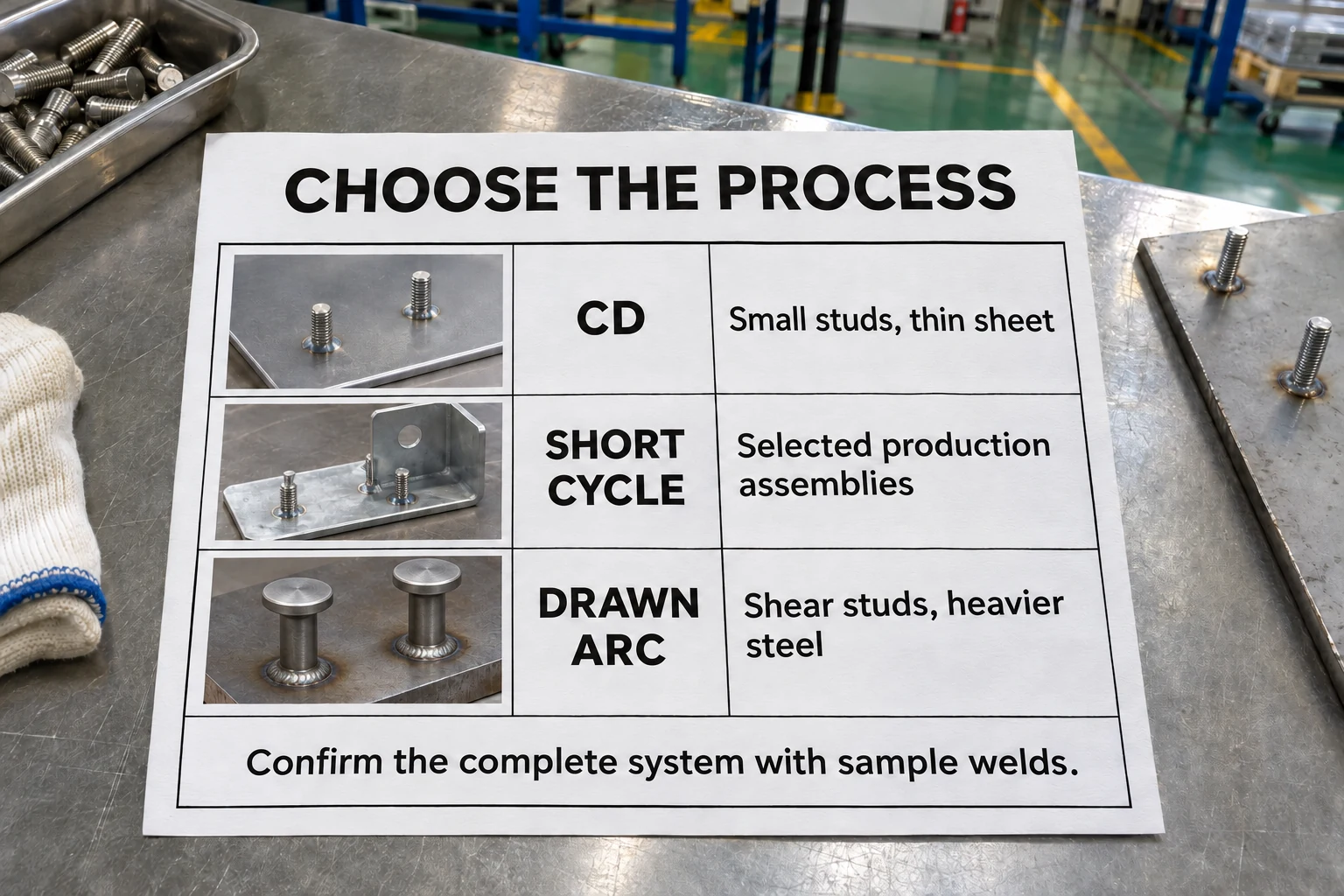
CD welding is often suitable for small studs on thin sheet, while conventional drawn arc commonly serves larger studs on heavier steel. Short-cycle arc welding suits selected production assemblies where the stud design and material support that process.
- CD guns may use contact or gap operation; confirm the required mode.
- Arc guns need the correct controls and ferrule or gas arrangement.
- An automated welding head needs machine integration and suitable feeding hardware.
What should you confirm before choosing a model?
Start with your parts. Provide your supplier with the stud drawing, base-metal grade, material thickness, and required load capacity or service conditions. These details help determine the appropriate welding process rather than simply selecting a gun that can hold the stud.
| Your work | Process to evaluate | Check before ordering |
|---|---|---|
| Thin enclosure panel | CD | Weld-end design and reverse-side appearance |
| Repeated mounting studs | Short cycle or CD | Material and production trial |
| Structural shear connectors | Conventional drawn arc | Approved procedure and complete system |
Confirm the process and, for CD, the required contact or gap mode before comparing models. That gives you a defined starting point for checking the power source and accessories.
How to Check Stud Welding Gun Compatibility
A gun fits your welder only when the equipment supplier confirms that its electrical connections, control functions, and operating range suit the specified welding process and stud range. Checking plug shape alone leaves several compatibility questions unanswered.
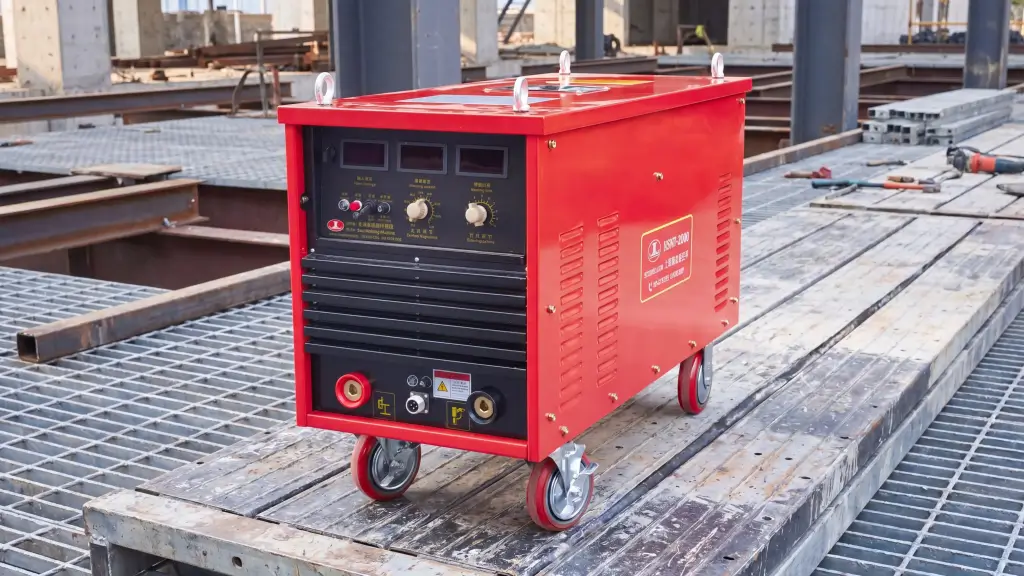
Can you connect a replacement gun directly?
Ask for written confirmation using the exact welder model and gun configuration. A mechanical adapter cannot establish whether the trigger circuit, lift coil, control sequence, and current path work together.
- Send clear photographs of both connectors and the machine nameplate.
- Confirm control-pin assignments and any required gun calibration.
- Specify the weld-cable length and cross-section supplied with the gun.
Where does the usable welding range come from?
Check the whole combination. Compare the gun with the actual power source, leads, stud, and procedure. When evaluating inverter drawn-arc stud welders, request a gun-and-machine pairing for your intended diameter rather than relying on the gun’s maximum rating.
| Compatibility item | Evidence to request |
|---|---|
| Power and control connections | Connector specification and pin assignment |
| Gun movement and controls | Supplier-confirmed model pairing and setup instructions |
| Usable stud range | Material-specific system capability |
Ask the supplier to specify the confirmed gun-and-welder combination in the quotation, including the connectors and cables. This allows your purchasing and technical teams to verify the same equipment configuration.
How to Match Stud Sizes, Chucks, and Accessories
The gun must accept your stud diameter, weld-end geometry, and length with the correct chuck and front assembly. For a model such as the YF-CD-10 CD stud welding gun, ask which chuck, holder, and leg configuration is supplied for every fastener on your list.
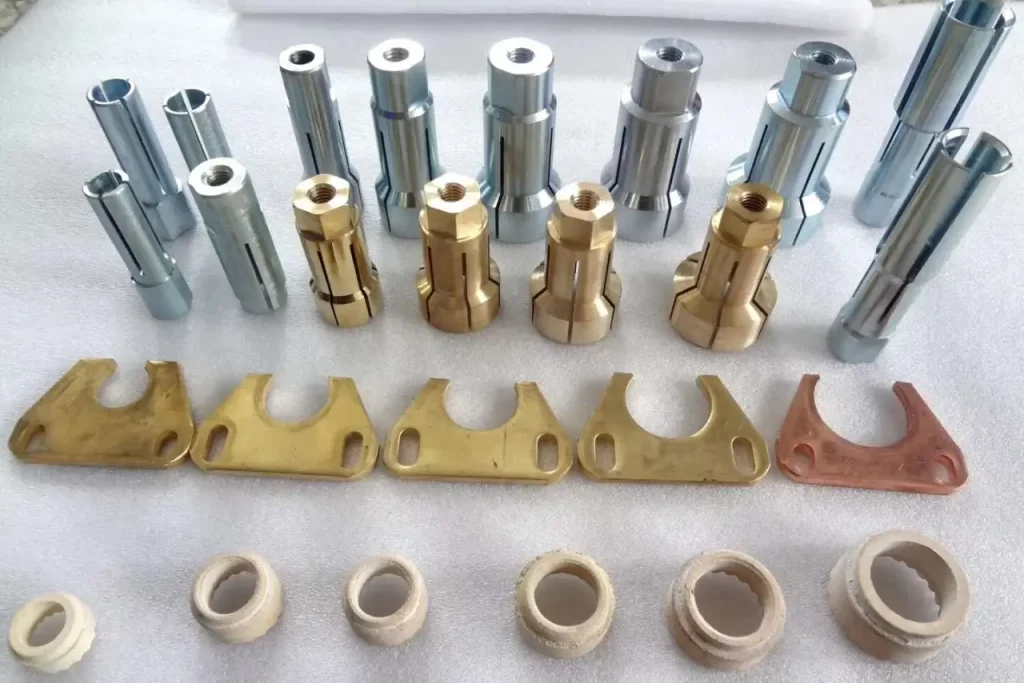
Will one chuck fit all your studs?
Usually, you need chucks or collets matched to each specified stud size and geometry. A worn or incorrect chuck can grip poorly, interrupt electrical contact, or make loading difficult.
- List every stud diameter and length you intend to weld.
- Identify threaded studs, headed connectors, pins, or special fasteners separately.
- Include spare chucks and adapters in the quotation.
How can you avoid awkward size changes?
Try the changeover. Ask your supplier to demonstrate loading, adjustment, and removal using your shortest and longest studs. Check whether a long stud needs extended legs or another front assembly, and whether the operator can reach the adjustment points.
| Fastener detail | What you should verify |
|---|---|
| Diameter and geometry | Correct chuck bore and gripping profile |
| Shortest stud | Loading access and specified projection |
| Longest stud | Leg reach, clearance, and removal space |
Check reach and loading space against your shortest and longest studs.
Choosing the Right Ferrule Holders, Legs, and Feet
Choose holders, legs, and feet that support the specified weld protection while allowing the gun to sit squarely and move freely. Check physical access around ribs, edges, fixtures, and already installed studs.
For drawn-arc applications using ceramic ferrules, select ferrule holders, support legs, and feet that match the stud and welding position. CD and other non-ferrule configurations may require different front-end accessories.
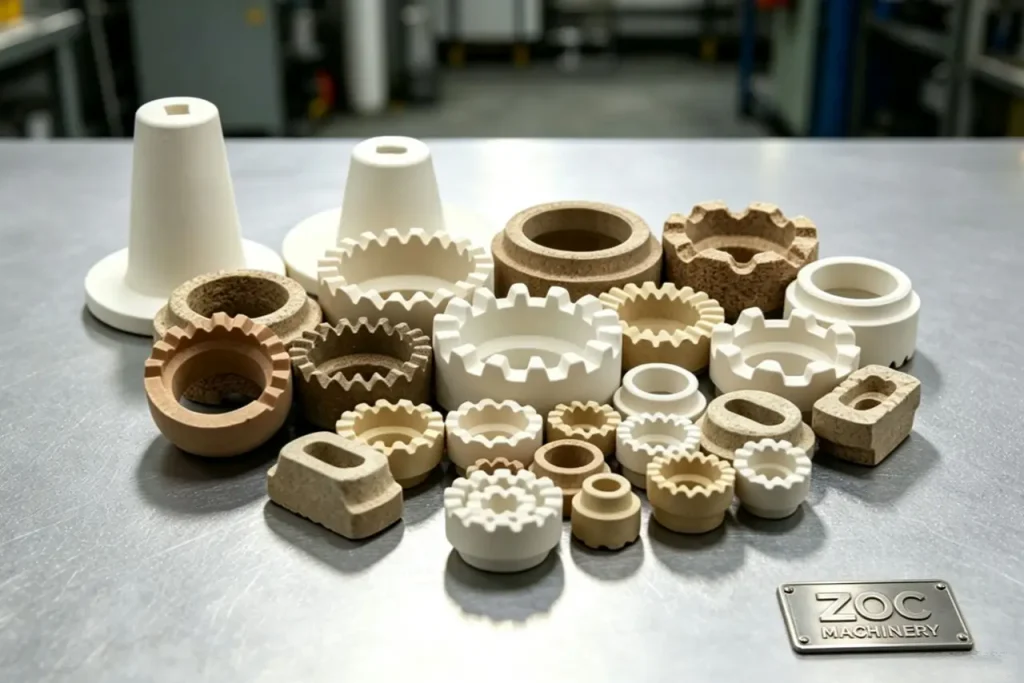
Does ferrule size follow stud diameter alone?
No; the ferrule profile, holder fit, welding position, and application also affect selection. Match your ceramic ferrules for stud welding to the stud and supplier-confirmed setup, including any through-deck requirements.
- Check ferrule height, outside dimensions, and holder clearance.
- Confirm the required leg length and adjustment travel.
- Verify access for loading and removing the gun after welding.
Should you choose an open or closed front assembly?
Check the working space. Let the actual stud and joint geometry determine the front arrangement. A universal stud-length cutoff cannot replace a clearance check using the supplier’s assembly drawing or a trial setup.
| Assembly part | Fit check |
|---|---|
| Ferrule holder | Holds the correct ferrule without obstructing travel |
| Support legs | Reach the work and allow specified adjustment |
| Foot or gas shroud | Seats correctly and clears surrounding features |
A holder that fits the ferrule still needs clearance at the actual joint.
What to Look for in a Drawn Arc Stud Welding Gun
Look for a drawn-arc gun with the required stud capacity, repeatable lift and plunge, and a front assembly that fits your joint. When comparing a model such as the YF-DH-25 drawn arc stud welding gun, verify the stated operating range with the actual gun-and-welder combination.
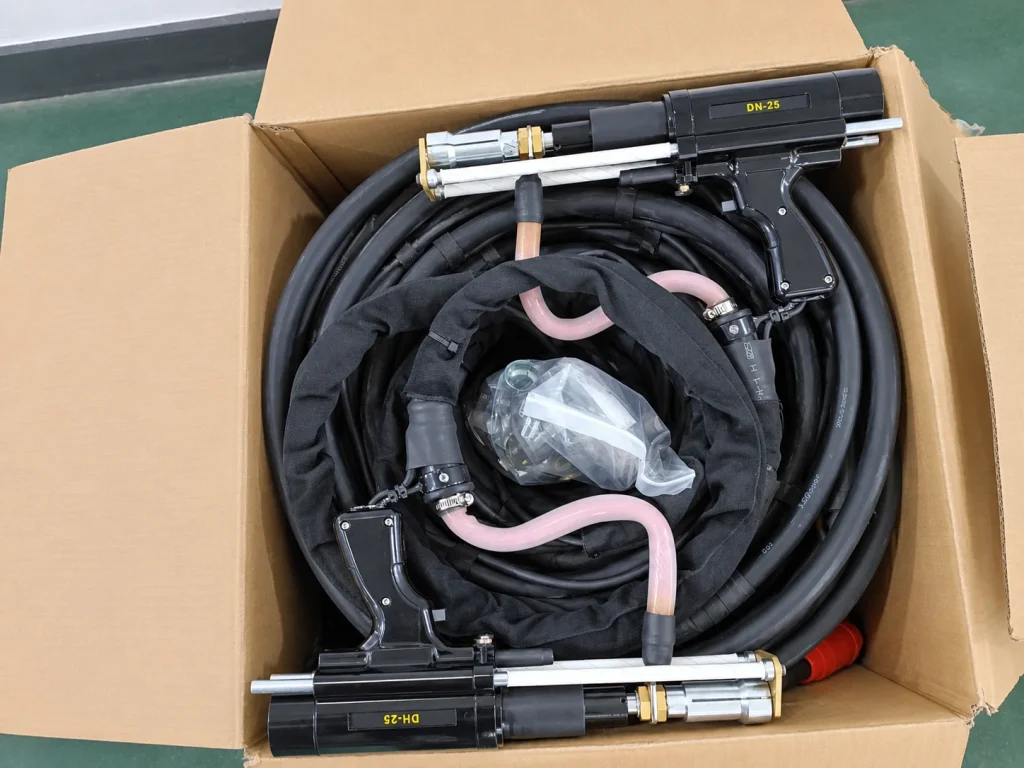
Which mechanical adjustments affect the weld?
Lift establishes the arc gap, and plunge brings the stud into the molten metal. The required settings depend on the gun, stud, material, and welding procedure; a single setting cannot cover every job.
- Check that the moving assembly travels without binding.
- Look for readable, repeatable adjustment marks and secure locking.
- Confirm any specified damping or length-compensation features.
How should you compare two arc guns?
Ask for a welding demonstration using the same stud, base material, power source, and inspection requirements. Compare the guns based on adjustment repeatability, ease of operation, and the consistency of the resulting welds.
| Feature | What the trial should establish |
|---|---|
| Lift adjustment | Repeatable movement at the specified setting |
| Plunge mechanism | Free travel and correct seating |
| Front assembly | Stable support without stud interference |
Keep the accepted trial settings with the gun configuration for repeat orders.
How Gun Weight, Cable Length, and Access Affect Selection
Gun weight affects handling, while cable length and joint access determine whether you can position the gun squarely. Test reach and balance with the complete assembly.
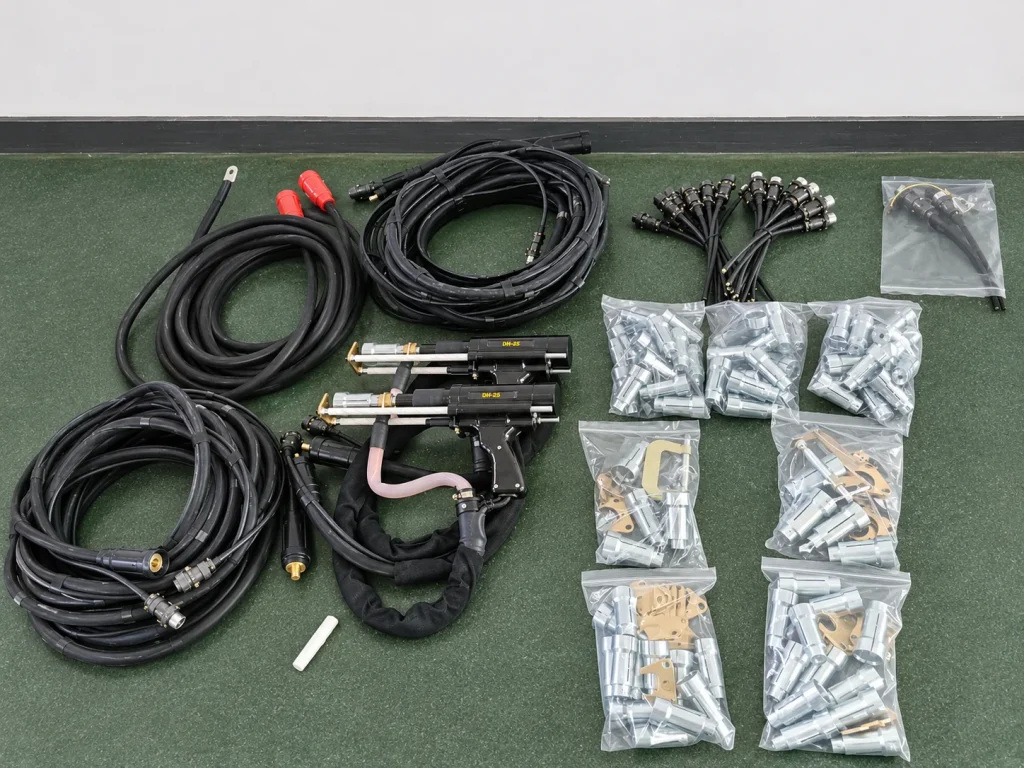
What should an operator try before you buy?
Have the operator handle the configured gun at the intended bench or workpiece height, using normal work gloves. Check the reach and balance with the real cable arrangement, especially where access restricts wrist position.
- Can you load studs without repeatedly changing your grip?
- Does the front assembly reach the joint squarely?
- Can the cable move without pulling the gun out of position?
How should you specify cable length?
Check the cable route. Specify the reach you need, then ask the supplier to approve the cable length and cross-section. Allow for movement and cable support while keeping connections protected; the stud gun maintenance guide covers checks for the leads and connectors.
| Working condition | Purchasing check |
|---|---|
| Repeated bench welding | Grip, balance, and cable support |
| Restricted joint access | Body length and front-assembly envelope |
| Cable reach | Approved length, cross-section, and extension arrangement |
| Mobile site work | Cable protection and service access |
Assess body weight with the cable supported as it will be during production.
Choosing a Stud Welding Gun for Different Applications
Match the gun to a representative assembly and verify both weld acceptance and the fit of the component installed afterward. Our stud welding applications guide can help you translate an industry label into specific stud, joint, and inspection requirements.
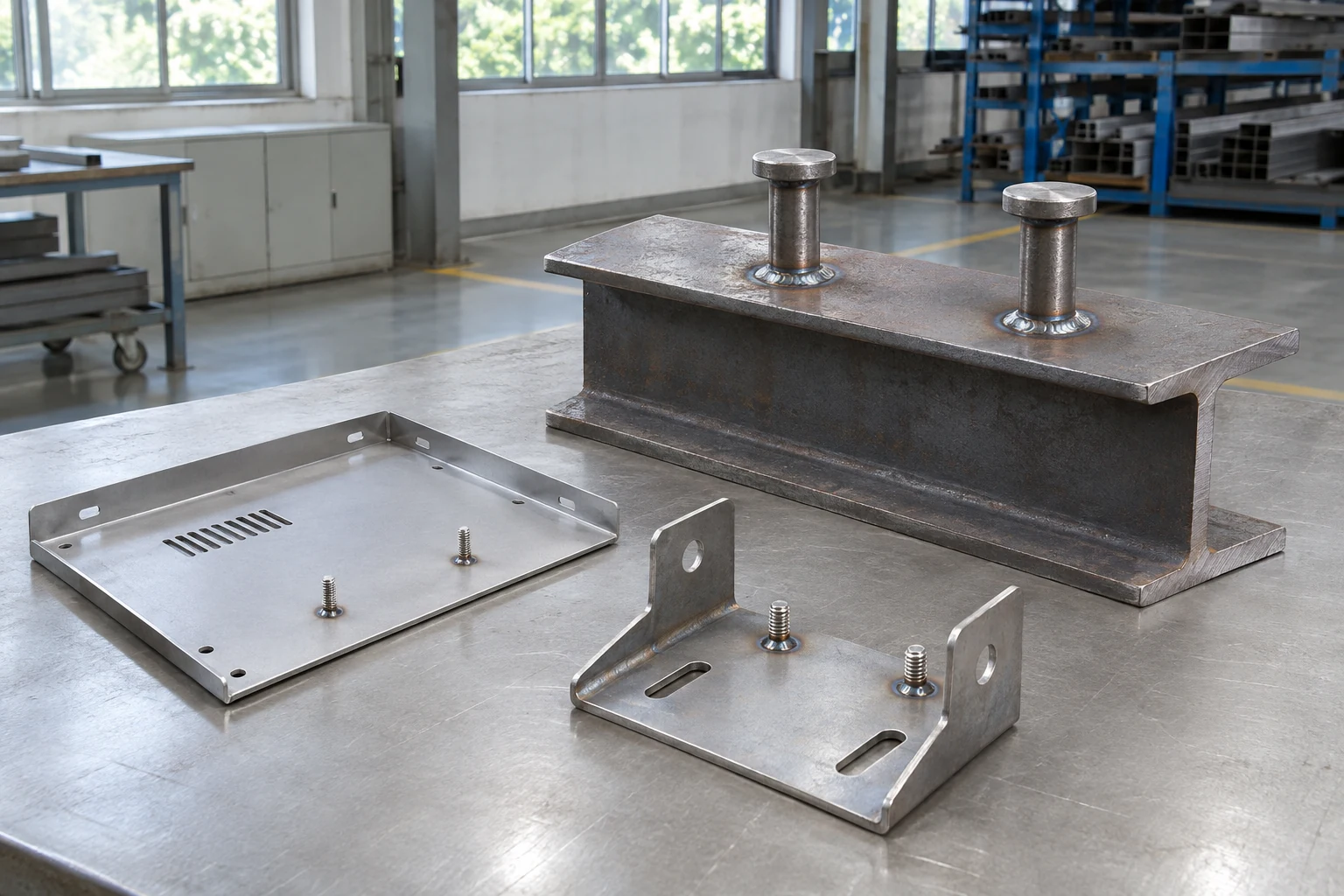
What changes between panels and structural steel?
An enclosure buyer may need small fasteners and an acceptable reverse-side finish. A structural contractor may need shear connectors installed under a specified procedure, while a vehicle-component manufacturer must also check position and assembly tolerances.
- For panels, inspect both faces of the trial part.
- For brackets, check the mating component against the stud pattern.
- For shear connectors, follow the project’s welding and inspection requirements.
What should your sample test prove?
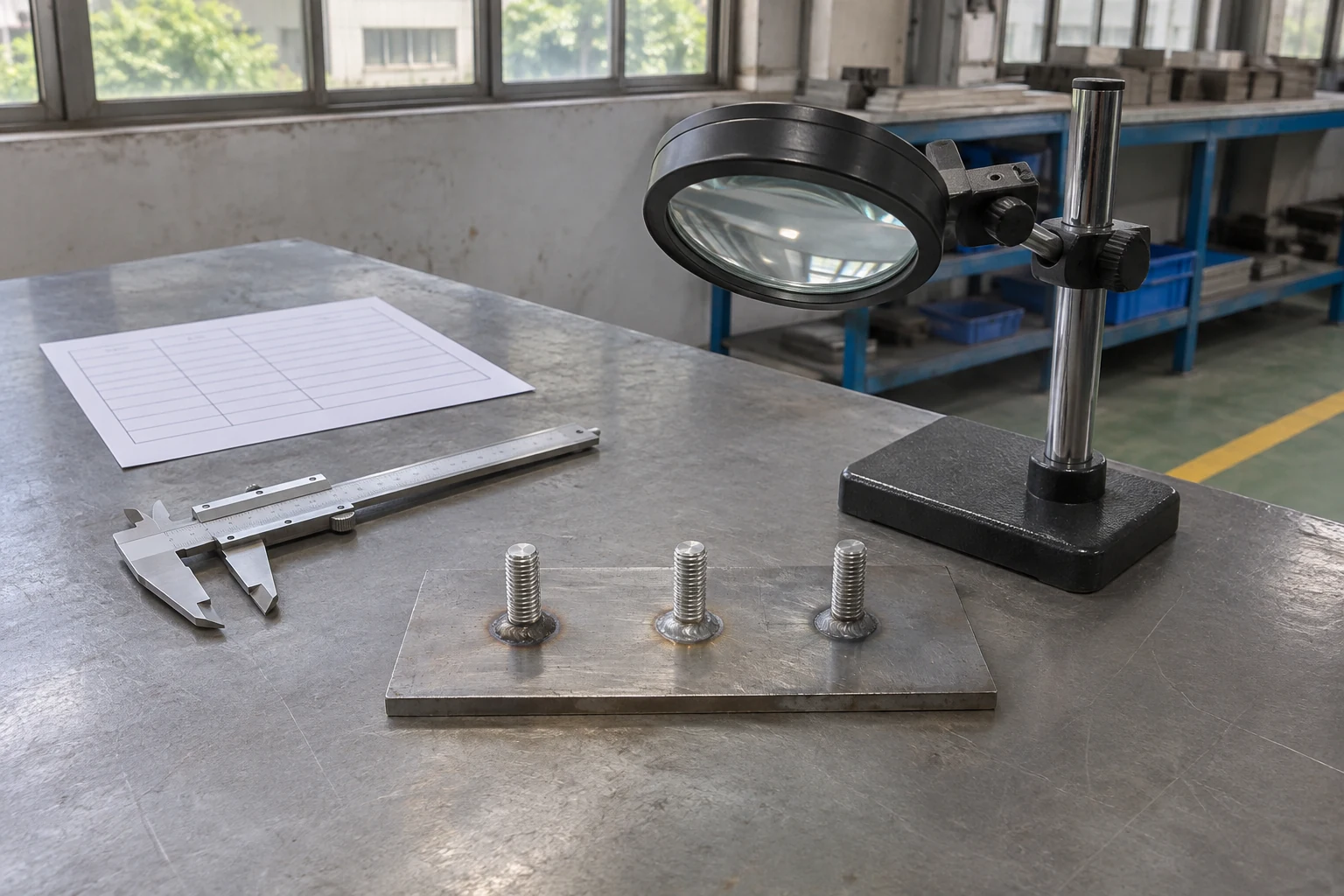
Use a representative part. Match the intended material, thickness, surface preparation, stud, and welding position. A tidy collar alone cannot establish internal fusion or load capacity; apply the tests required by your procedure and acceptance plan.
| Trial check | What it tells you |
|---|---|
| Appearance and position | Visible defects and dimensional fit |
| Required mechanical tests | Response under the specified test conditions |
| Repeated production trial | Handling and consistency over successive welds |
Include both weld acceptance and component fit in your trial record.
Stud Welding Gun Selection Chart
Compare guns by welding process, then specify how they will be handled and fed. Use this chart to shortlist equipment for your workpiece, fastener, and compatible power source.
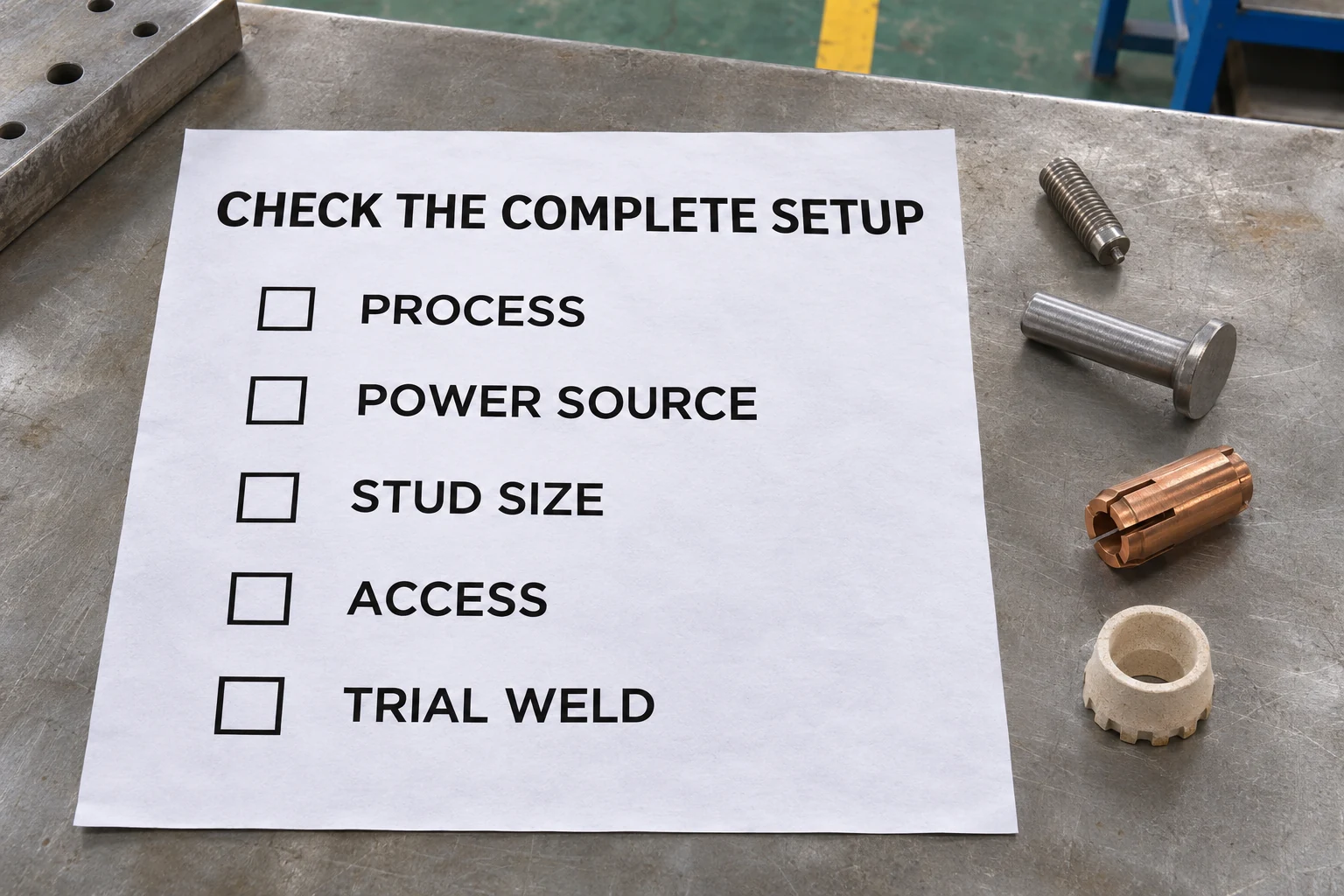
Which process and handling arrangement should you compare?
Narrow the choice in two steps. Use the process rows below to identify candidates, then select manual or automated handling for that process. Automation describes how you position and feed the stud; the welding method still needs to suit the joint.
- Confirm the stud’s weld-end design and material with the chosen process.
- Check the supplier-confirmed power source, gun controls, and front accessories.
- For automation, include feeding, positioning, interfaces, and fixture access.
| Selection dimension | Candidate | Typical work | Checks before shortlisting |
|---|---|---|---|
| Welding process | CD | Small mounting studs on suitable thin sheet | Contact or gap mode, material, chuck, and power source |
| Welding process | Short cycle | Suitable brackets and repeated industrial assemblies | Stud design, heat input, gun motion, and power source |
| Welding process | Conventional drawn arc | Structural shear connectors and heavier fabrication | Stud size, lift and plunge adjustment, shielding, and current |
| Handling and feeding | Manual | Work requiring operator positioning and part changes | Grip, access, cable routing, and loading space |
| Handling and feeding | Automated | Repeated positions on a defined production assembly | Process compatibility, feed system, fixtures, controls, and cycle |
Shortlist the process and power source before choosing manual or automated handling. Use a representative trial to confirm the complete configuration, including fixtures and feeding equipment where applicable.
What Should a Stud Welding Gun Quotation Include?
A useful quotation identifies the configured gun, compatible welder, included accessories, spare parts, and delivery terms. For additional help evaluating suppliers, use our guide to stud welding machine manufacturer selection alongside the gun-specific checks below.
Which missing items cause purchasing problems?
A low gun-only price can leave you sourcing chucks, holders, cables, or documentation separately. Ask the supplier to distinguish included equipment from optional parts and state what they need from you for compatibility confirmation.
- Exact gun configuration, cable specification, and connector details.
- Chucks, holders, feet, and consumables for your stud list.
- Manuals, spare-part references, warranty terms, and support arrangements.
How do you compare supplier offers fairly?
Put both offers on the same basis. Compare the same accessory package, shipping terms, destination, and sample requirements. Obtain written lead times and spare-parts availability rather than assuming they follow from a general sales statement.
| Quote item | Written detail to request |
|---|---|
| Equipment package | Itemized gun and accessories |
| Compatibility | Named welder and confirmed configuration |
| Ownership costs | Wear parts, freight, and service terms |
Compare quotations after the gun, leads, accessories, and service terms are itemized on the same basis. Include the cost of any missing chuck, holder, or cable before choosing the lower-priced offer.
Frequently Asked Questions About Stud Welding Gun Selection
Check process differences, replacement compatibility, stud-size changes, and cable configuration before committing to an order.
Can I Use Another Brand’s Gun with My Existing Welder?
Sometimes, with confirmed compatibility. You need supplier confirmation of the exact electrical connections, control sequence, operating range, and any required calibration; a matching plug does not establish those conditions.
What Is the Difference Between CD and Drawn Arc Stud Welding Guns?
They use different welding processes. CD equipment commonly serves small fasteners on suitable thin sheet, while conventional drawn arc commonly serves larger studs and heavier fabrication. Confirm with the supplier which power source, controls, and accessories suit the process you select.
What’s the Best Stud Welding Gun for Thin Aluminum Panels?
A suitable CD gap gun may be a candidate, but the best choice needs trials on your actual panel. Verify weld performance, material suitability, and acceptable marking before ordering; low heat input does not guarantee an unmarked surface.
Can One Stud Welding Gun Handle Different Stud Diameters?
Yes, within its supplier-specified operating range. Size changes may require different chucks, holders, support legs, or welding settings, so confirm the complete configuration for each fastener.
How Do I Know If a Longer Stud Welding Gun Cable Will Work?
Use a longer cable only when the equipment supplier approves its length and cross-section for your system. Changing the cable can affect the welding circuit, particularly the discharge behavior of CD equipment. Repeat the required sample checks after a configuration change.
Conclusion: Choose a Gun That Matches Your Welding System
Before placing an order, confirm the welding process, stud dimensions, gun-and-welder compatibility, and required accessories. A representative welding trial, supported by the required stud welding quality checks, can help verify that the complete setup meets your production requirements.
What should you send with your enquiry?
Bring the details together. Send the information below so our team can discuss a specific gun package and quotation.
- Stud drawing, material, diameter, and length.
- Base metal, thickness, welding position, and required output.
- Welder model, connector photos, destination, and required date.
| Selection decision | Confirm before ordering |
|---|---|
| Can it weld your joint? | Suitable process and accepted trials |
| Will it fit your equipment? | Confirmed machine, gun, and leads |
| Can you put it into service? | Complete accessories and setup guidance |
Need help selecting a compatible stud welding gun? Contact our team with your stud specifications, welding machine model, and application requirements. ZOC Machinery can help identify a suitable gun configuration, matching accessories, and quotation.