Stud welding attaches a metal fastener to a workpiece, while spot welding joins overlapping sheets; your joint design determines which process fits. Suppose you’re building electrical cabinets that need both removable mounting brackets and permanent sheet joints. Ordering one welder for both tasks can leave you with inaccessible joints, damaged panels and unplanned fixtures. A practical Stud Welding vs Spot Welding comparison starts with joint design, tool access and verified performance before you choose equipment.
Stud Welding vs Spot Welding: How Do They Differ?
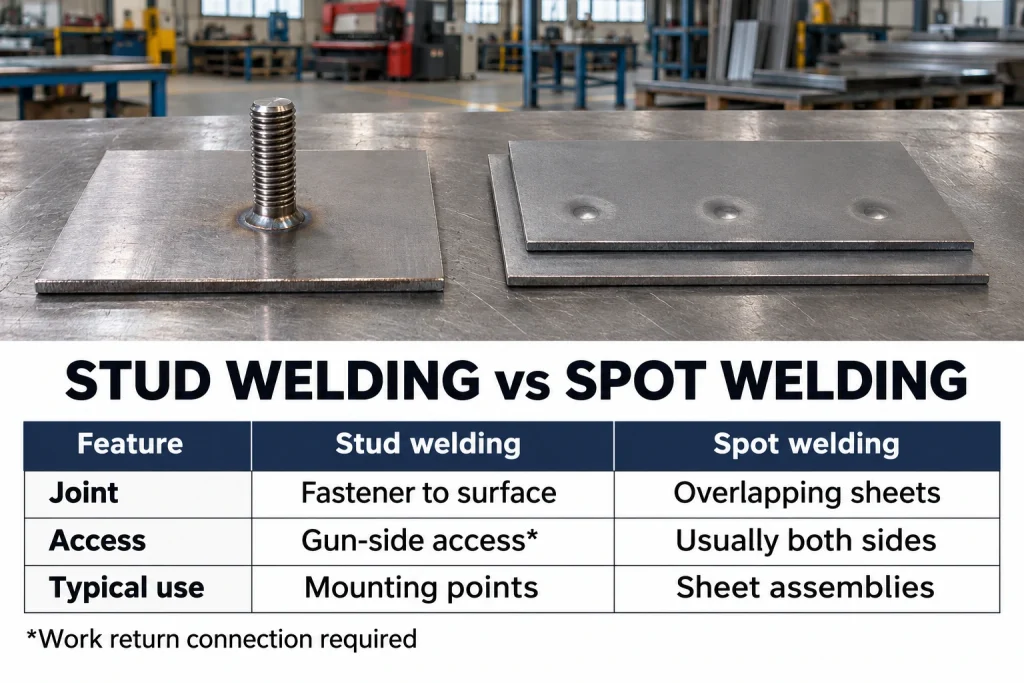
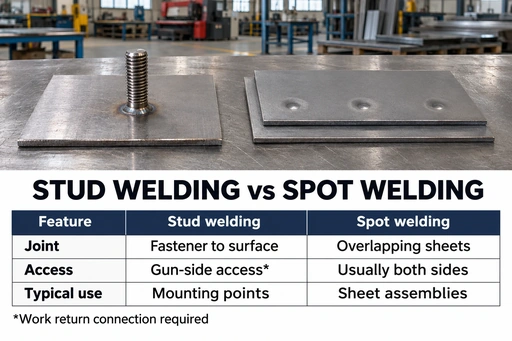
Stud welding adds a fastener to a metal surface; resistance spot welding joins sheets at an overlap. In arc stud welding, an electric arc melts the end of the stud and a corresponding area of the base metal, allowing the two surfaces to fuse when the stud is plunged into the molten pool. In spot welding, current passes through clamped sheets and creates a fused nugget at their interface. For small fastener attachments, capacitor discharge stud welding uses a brief pulse of stored electrical energy.
Resistance spot welding and resistance projection welding both use electrical resistance heating, but their joint configurations and tooling differ. Projection welding concentrates current and force through designed projections, which may be formed on weld nuts or studs. A conventional sheet spot welding setup should not be treated as interchangeable with equipment configured for those fasteners.
What Does Each Process Leave on Your Part?
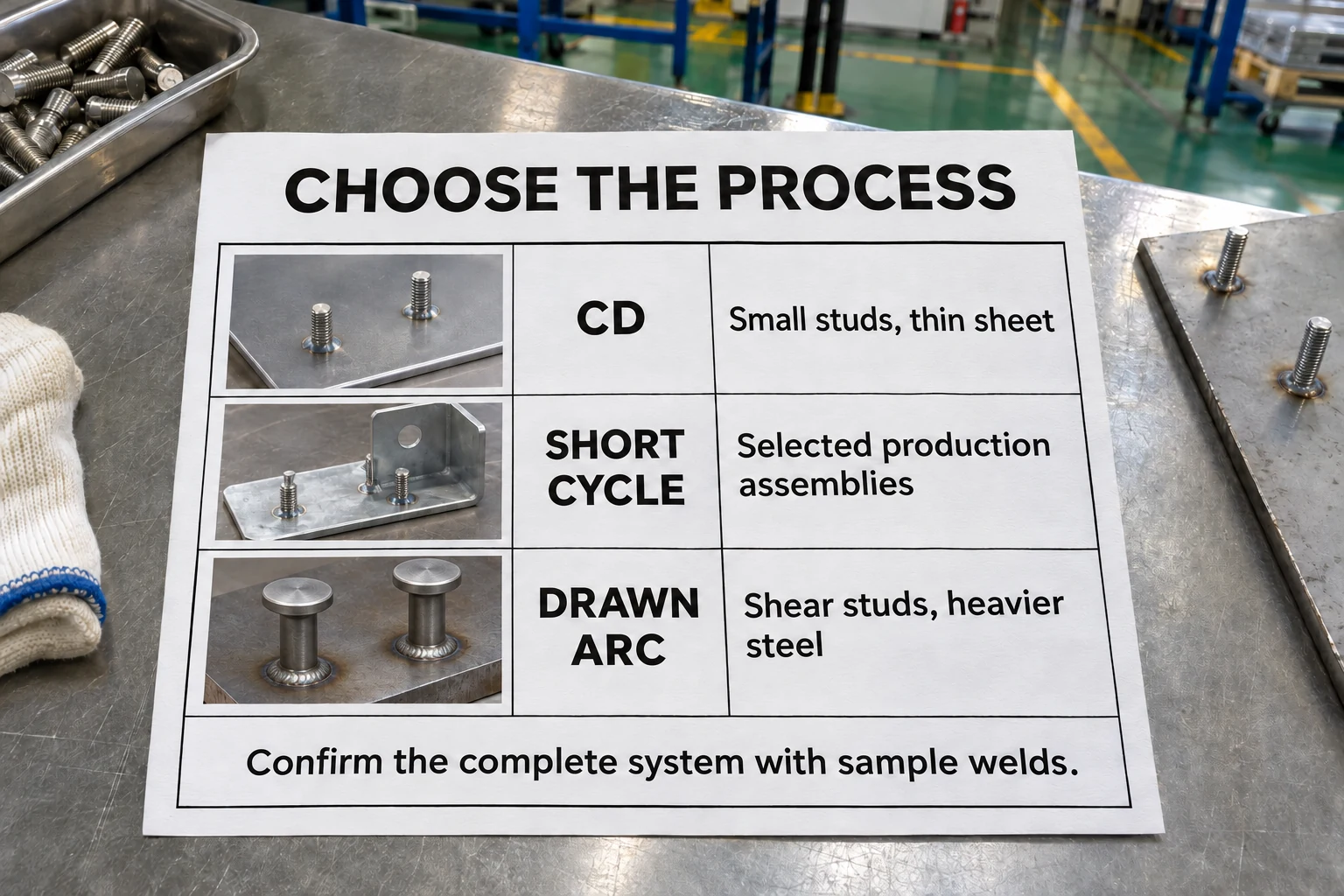
A threaded mounting stud gives you a location for a removable bracket or cover. A spot weld holds sheets together permanently at a local point. Our stud welding process selection guide compares CD, short-cycle and conventional drawn arc methods for fastener attachments.
| Design feature | Arc stud welding | Sheet spot welding |
|---|---|---|
| Added part | Weldable fastener | Usually no filler or fastener |
| Joint location | Fastener base and workpiece | Interface between overlapping sheets |
| Later assembly | Nut, clip or screw as designed | Sheets remain locally joined |
Key Takeaway: Separate permanent sheet joints from fastener attachment points on your drawing. That identifies the equipment functions you need before you compare quotations.
Which Process Gives You the Strength You Need?
Either process can meet demanding loads when you design and qualify its joint for the application. Stud attachments and sheet overlaps carry loads through different geometries. Compare performance against your actual tension, shear, peel and fatigue requirements.
How Should You Compare Joint Performance?
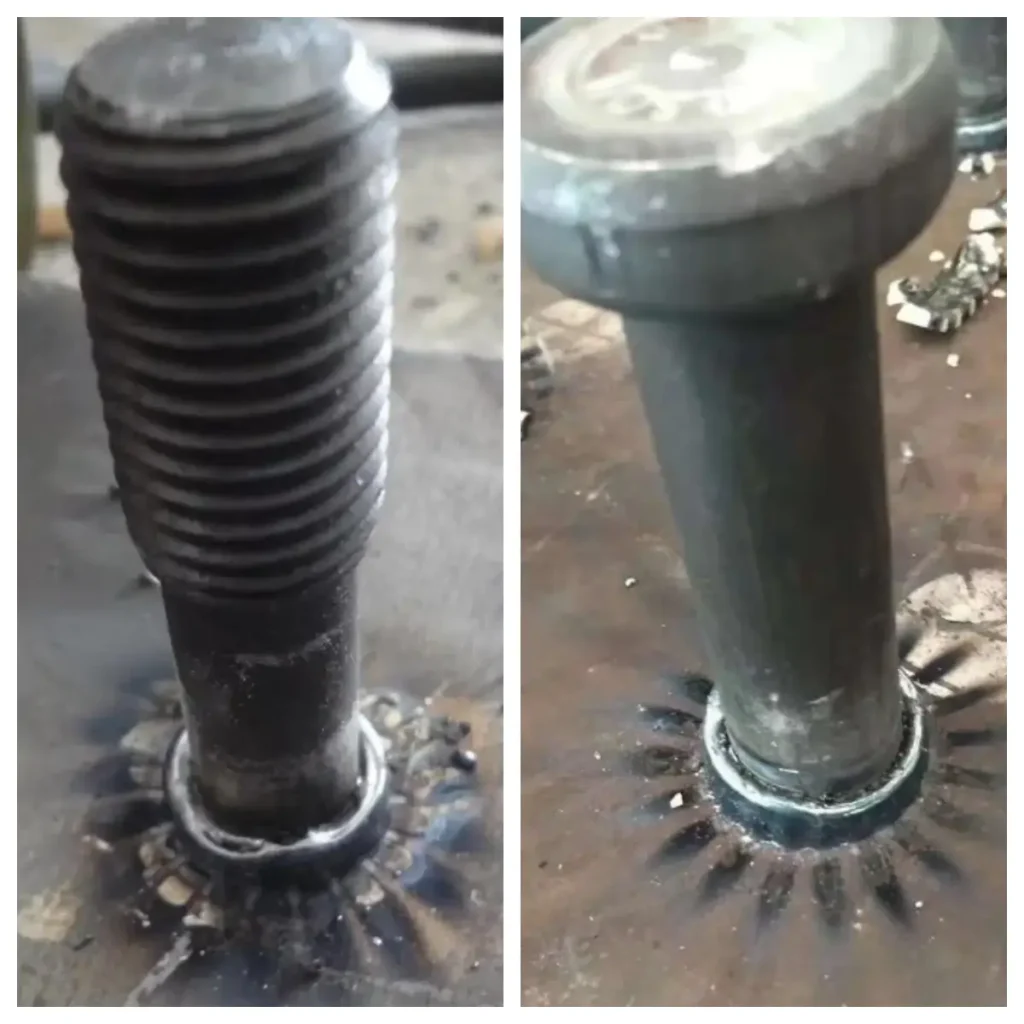
Start by identifying the expected load direction. A panel can tear around a sound stud weld, while a spot-welded assembly can fail through its sheet or weld interface. Neither a neat collar nor a small surface indentation proves load capacity. Your acceptance criteria should cover the whole connection, including base material and fastener location.
- State service loads and any repeated loading.
- Include sheet thickness, edge distance and fastener or weld spacing.
- Test representative assemblies using a method appropriate to their service.
| Joint | What can govern failure? | What should you verify? |
|---|---|---|
| Welded stud | Stud, fusion zone or surrounding sheet | Specified attachment performance |
| Spot-welded overlap | Nugget, sheet or joint geometry | Required joint strength and failure mode |
Compare test results for the connections your product will use, including any limits imposed by the surrounding sheet.
Which Welding Process Is Faster for Production?
The faster process is the one that meets your required output across a complete production cycle. Neither method should be evaluated by welding time alone. Loading, positioning, clamping, equipment recovery and maintenance all affect sustained production efficiency.
What Factors Affect Production Cycle Time?
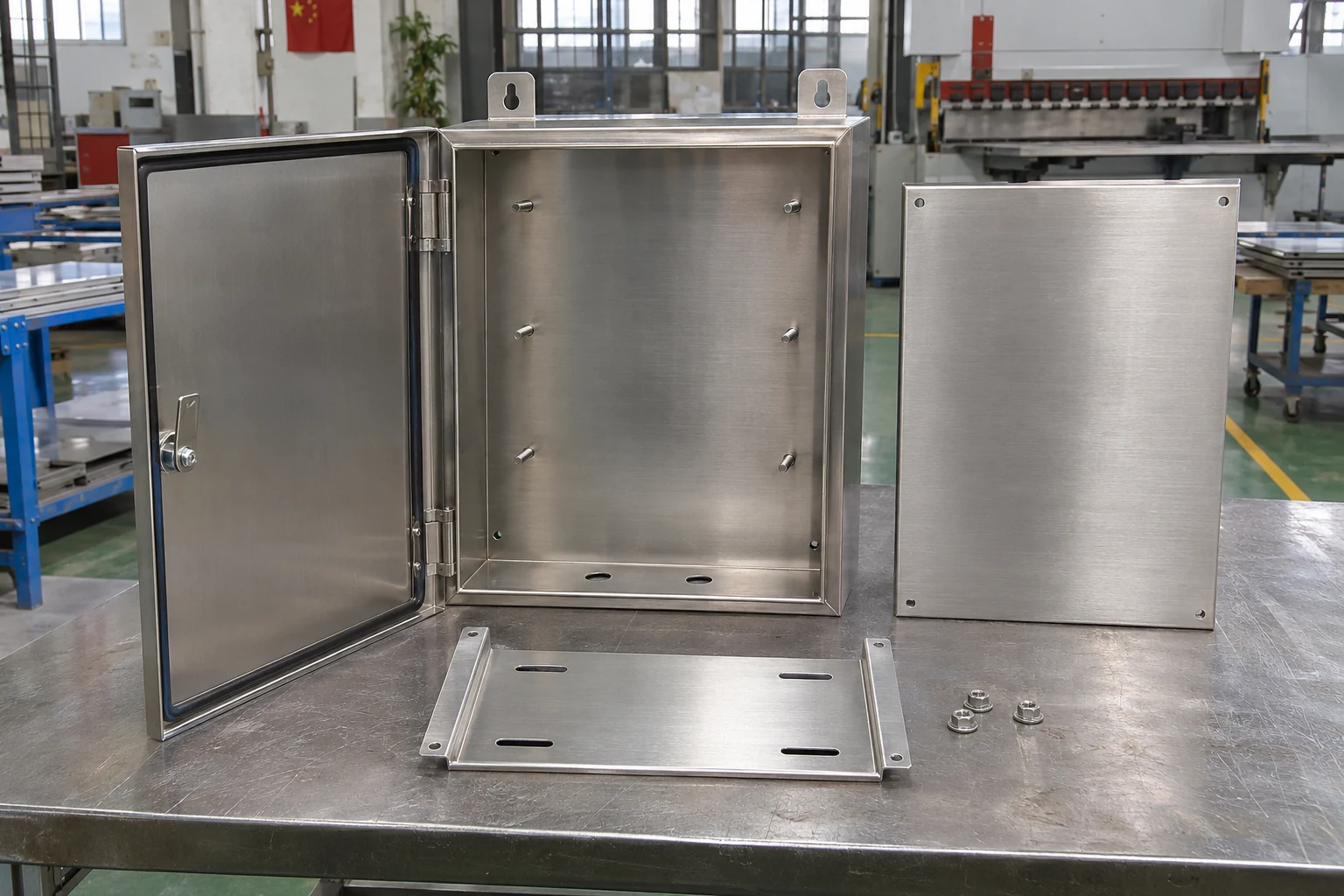
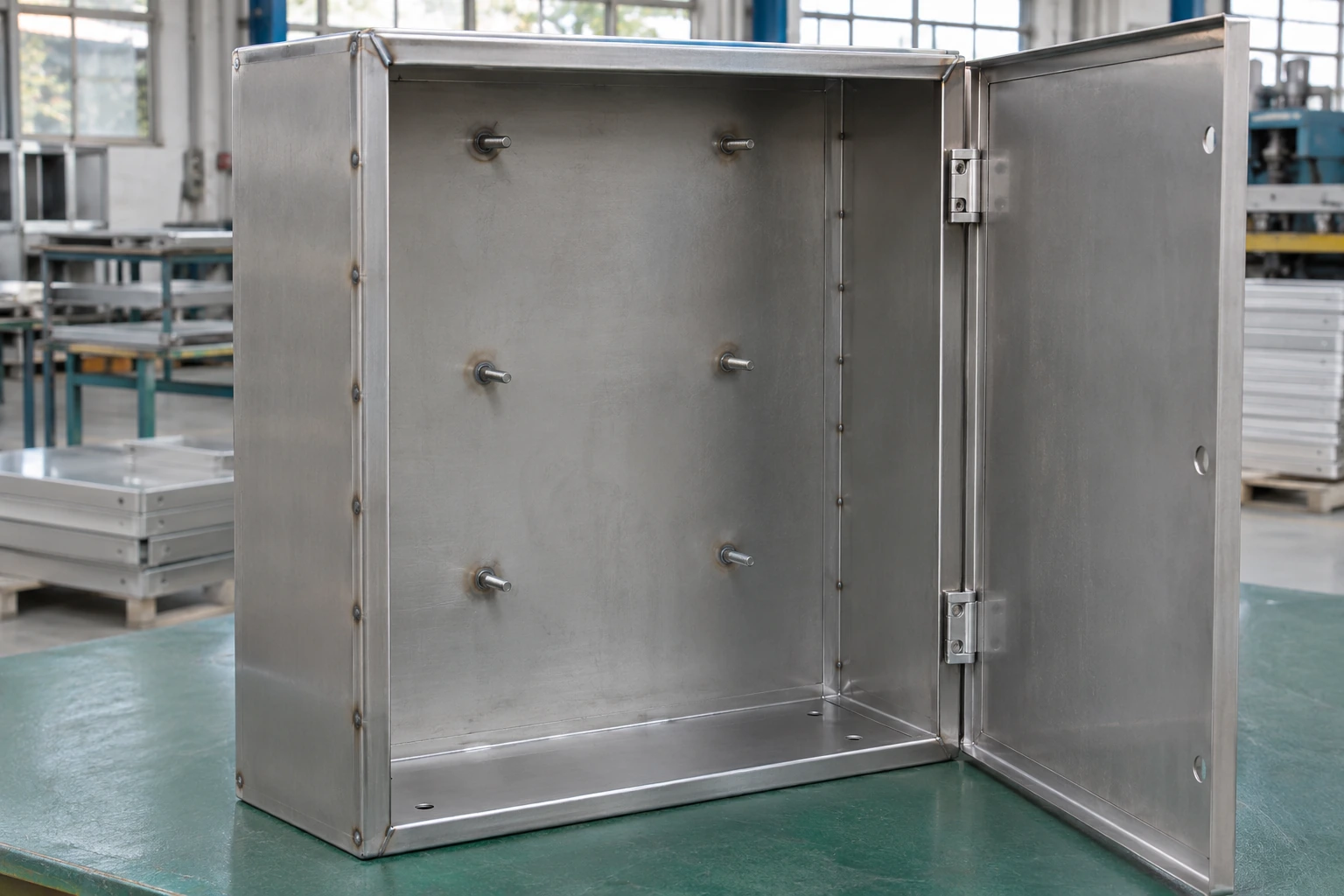
Measure the complete production cycle. For example, installing six mounting studs in an electrical cabinet requires feeding and positioning each fastener. Spot welding a sheet-metal flange, on the other hand, requires suitable electrode access, clamping and part positioning. Manual loading can limit an otherwise fast machine. Compare short-cycle stud welding with your production requirements, then check the rated duty of suitable short-cycle arc stud welders.
| Production condition | Stud welding consideration | Spot welding consideration |
|---|---|---|
| Manual work | Stud feeding and gun movement | Part handling and electrode access |
| Repeated assemblies | Fixture accuracy and feeding | Clamp sequence and electrode condition |
| Sustained output | Rated duty and recovery | Duty, cooling and tip maintenance |
Record accepted parts per shift, changeover time and interruptions during your trial, rather than extrapolating from one welding pulse.
Which Metals and Sheet Thicknesses Can You Weld?
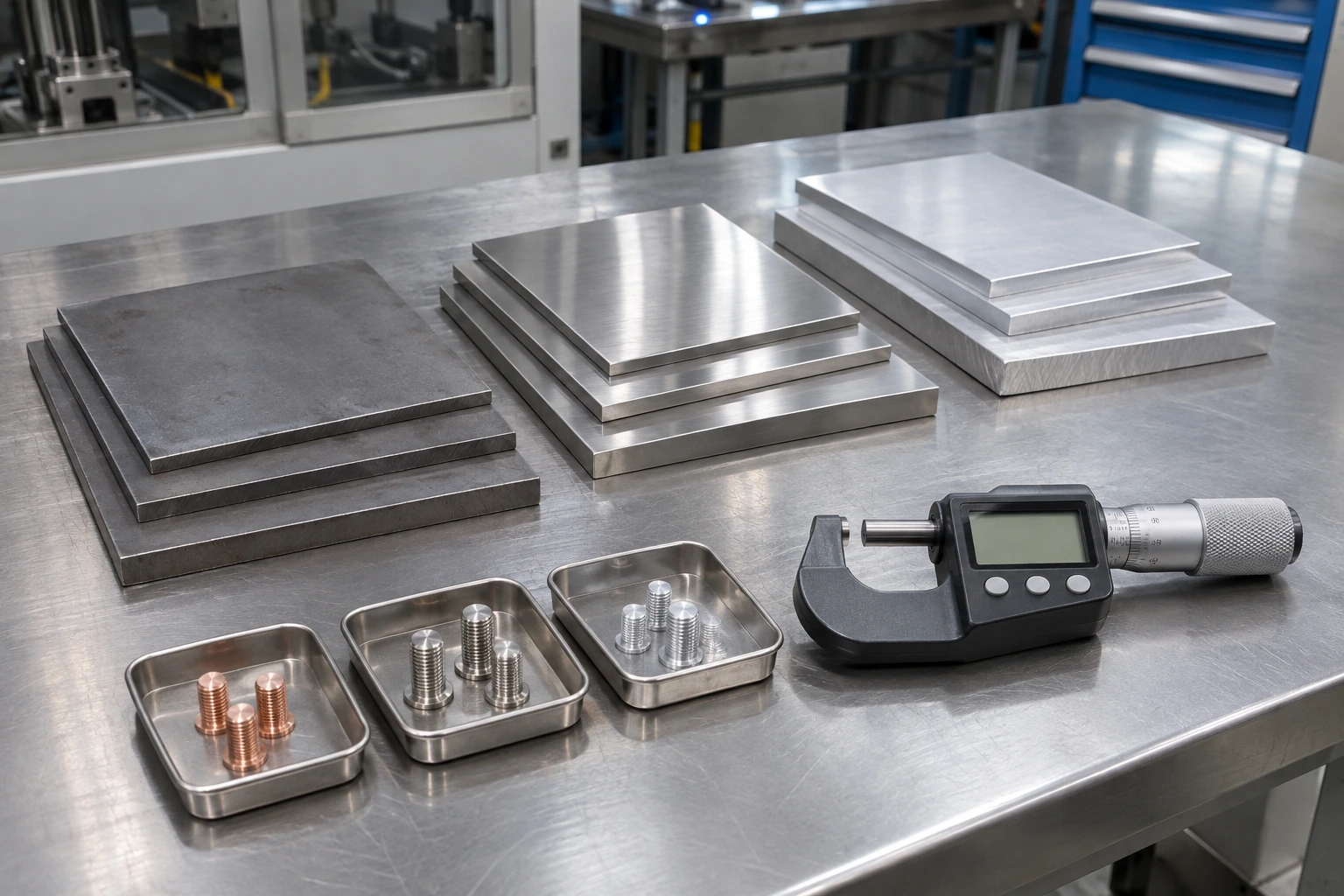
Both processes can join suitable steels and selected nonferrous materials. Their suitability depends on alloy combinations, thickness, surface condition and equipment capability. Electrical and thermal properties affect equipment needs, while coatings can change contact resistance and fusion conditions. Material type alone is not enough to determine weldability.
Can You Use One Setup for Every Material?
Aluminum spot welding requires equipment and electrode practices suited to its conductivity and surface oxide. Stud welding also needs a compatible fastener material, weld-end design and process. Evaluate CD stud welders for thin sheet using your actual panel and stud combination.
- Give suppliers alloy grades and thickness tolerances.
- Describe plating, paint, oxide or other surface treatments.
- Agree how samples will be prepared and checked after welding.
For thin panels, inspect burn-through, distortion and reverse-side appearance alongside attachment strength. A published thickness range helps you shortlist machines, but does not qualify every alloy, coating and fastener combination within that range.
How Do Access and Surface Finish Affect Your Choice?
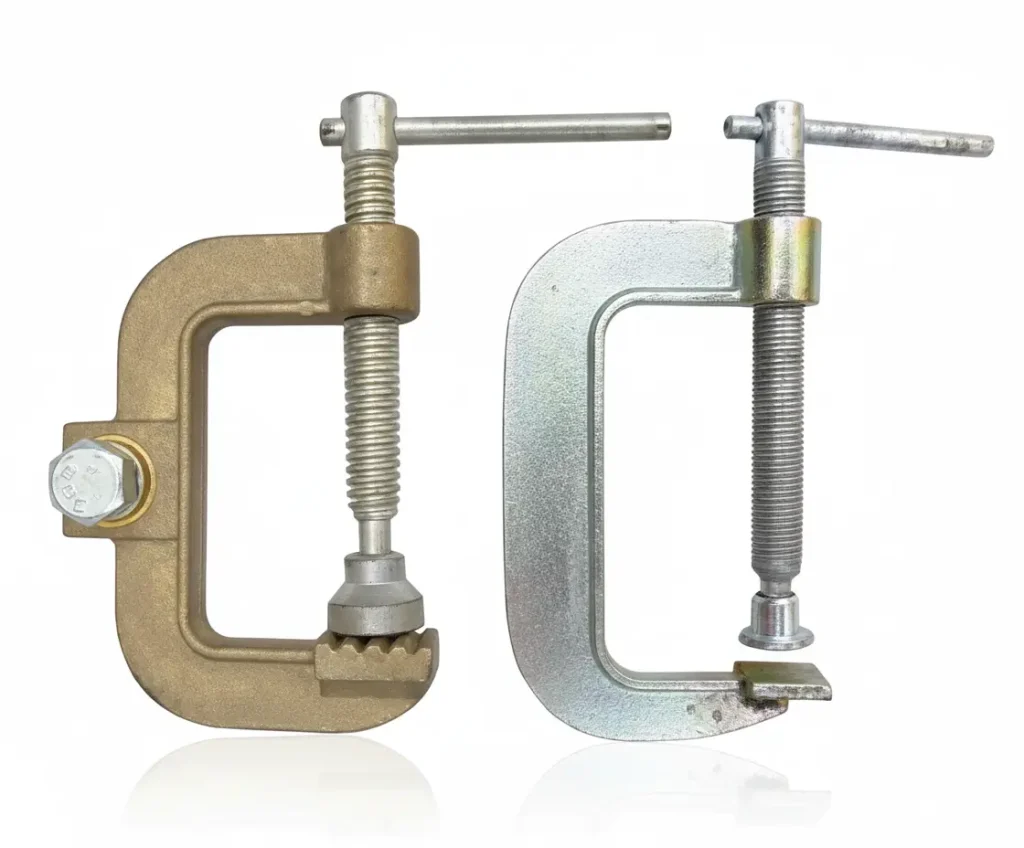
Stud welding needs access for the gun and a suitable work-return connection; conventional direct spot welding needs room for opposing electrodes. Finished geometry can block either tool. Check access at the actual assembly stage, including the space needed for fixtures, cables and part removal.
Will Your Tool Reach the Joint After Forming?
A narrow cabinet may leave no room for a lower spot electrode, while nearby walls can obstruct a stud gun’s foot or chuck. Ferrule-shielded drawn arc stud welding also needs space for the ferrule and its holder. Conventional spot welding normally leaves electrode marks. CD stud welding can reduce reverse-side marking, but appearance still needs approval on representative panels.
- Confirm tool clearance and work-return attachment locations.
- Inspect both faces after welding, cleaning and finishing.
- Ask about specialized spot welding arrangements if conventional access fails.
Review a physical part or dimensioned model before accepting a tooling proposal. Changing the assembly sequence may provide access without changing the specified joint.
Which Applications Suit Each Welding Process?
Stud welding suits designed attachment points, while spot welding suits local joints between overlapping sheets. Electrical cabinets, appliances and vehicle assemblies can contain both joint types. Their presence in the same industry does not make their functions interchangeable.
Could Your Assembly Need Both Processes?
A cabinet manufacturer might spot weld an overlapping flange and add studs for removable internal hardware. A vehicle assembly might need spot-welded sheet joints alongside stud-mounted clips. In an appliance, welded mounting studs may support a component while spot welds assemble selected sheet panels. Each joint needs its own location, material and performance requirements.
Structural shear connectors present another stud welding application, with project-specific design and inspection requirements. Their role differs from both a small enclosure mounting stud and a spot-welded sheet flange. Specify the actual fastener or sheet joint rather than selecting equipment from an industry label alone.
How Do Stud Welding and Spot Welding Costs Compare?
Neither process is universally more economical. Equipment investment, tooling, consumables, labor and production volume influence cost per accepted part. Compare quotations for complete systems at the same output and acceptance level; a manual bench machine and an automated cell serve different production needs.
How Can You Compare Quotations Fairly?
Stud systems may need a power source, gun, cables, chucks and feeding equipment. Spot systems may need fixtures, electrodes, cooling and suitable electrical infrastructure. Use our stud welding machine price guide to prepare the stud-system scope, then request an equally complete quotation for the spot welding operation. The following example uses hypothetical production costs to demonstrate how to calculate cost per accepted part. These figures are illustrative only and do not represent actual equipment quotations or a direct cost comparison between the two welding processes.
- Include freight, installation, training and spare parts.
- Separate consumables from reusable tooling.
- Include scrap, rework and maintenance when calculating accepted output.
| Illustrative input | Amount | Calculation basis |
|---|---|---|
| Allocated equipment and tooling | $60 | Example cost per shift |
| Labor | $120 | Example cost per shift |
| Energy, consumables and maintenance | $60 | Example cost per shift |
| Total allocated shift cost | $240 | $60 + $120 + $60 |
| Accepted output | 800 parts | Output after rejected parts |
| Cost per accepted part | $0.30 | $240 ÷ 800 |
Key Takeaway: A lower equipment price does not always result in a lower cost per finished part. Apply the same cost categories and output assumptions to both proposals before making a purchasing decision.
How Should You Test Welds Before Ordering Equipment?
Establish acceptance criteria before conducting welding trials, then use production-representative parts. A supplier demonstration should reproduce your materials, access and expected operating conditions. Stud attachments and sheet spot joints require inspection plans suited to their different geometries and service loads.
What Should Your Trial Report Include?
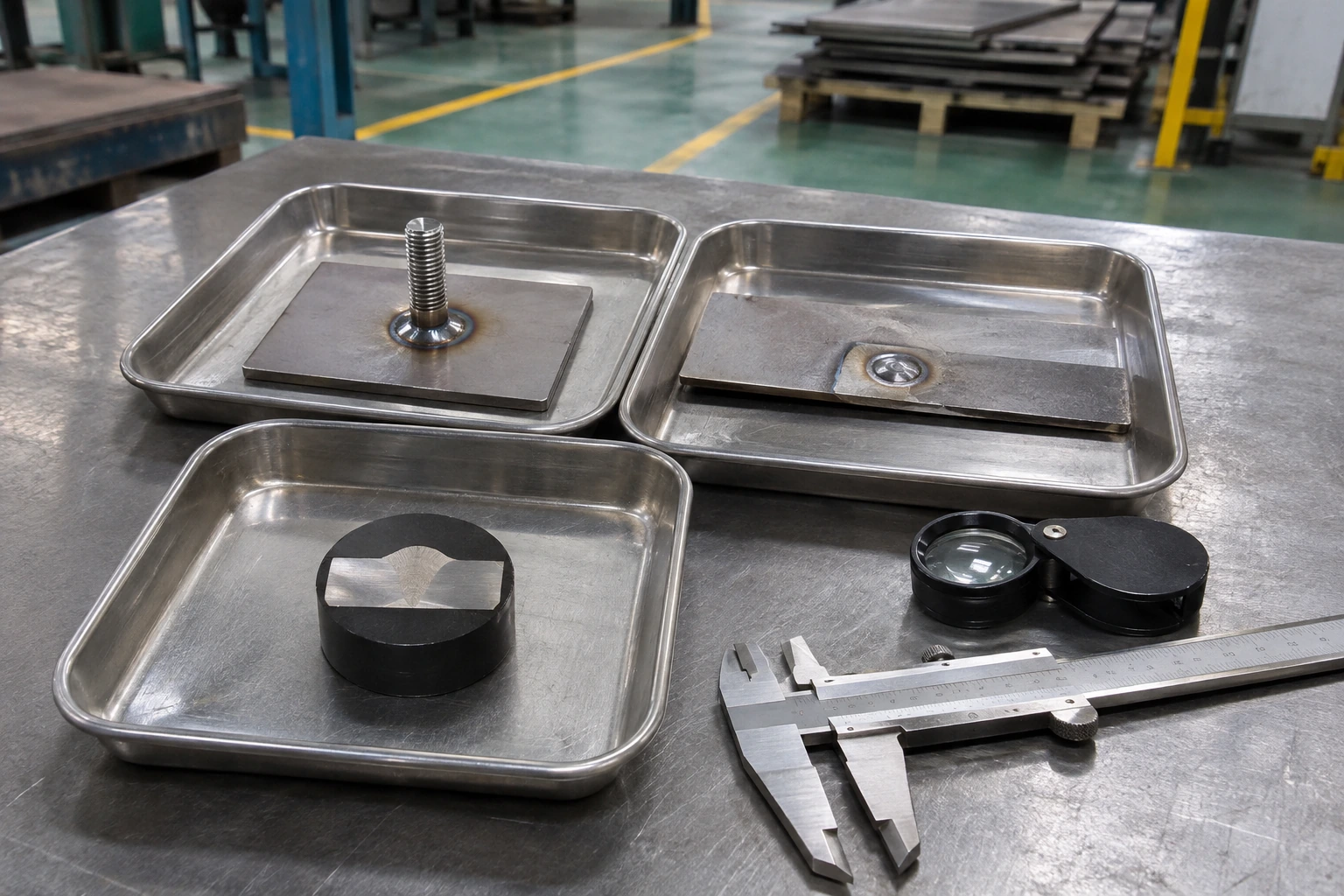
For stud attachments, inspection may include dimensional checks and specified bend, torque or pull tests. Use the stud weld inspection guide to prepare questions about visual checks and mechanical verification. Spot joints may require peel, chisel, tensile-shear or section examinations under an appropriate procedure.
- Record material grades, coatings, dimensions and equipment settings.
- Identify specimens, test methods, acceptance limits and sampling frequency.
- Record test results and the agreed response to nonconforming welds.
- Check repeatability after warm-up, repositioning or consumable changes as the trial plan requires.
The test method and acceptance limits depend on material, thickness, joint design and the applicable specification. As the spot weld testing guidance explains, even chisel-test suitability varies with material and thickness. Avoid treating one nugget diameter or one test result as a universal acceptance rule.
Which Process Should You Choose for Your Project?
Choose stud welding for qualified fastener attachments and spot welding for qualified overlapping sheet joints. The selection then depends on material compatibility, access, finish, production rate and cost. Reviewing relevant stud welding applications can help you identify the fastener function before discussing a machine model.
Once you have identified stud welding as the right process, explore our stud welding machines to compare available equipment configurations and find a suitable solution for your production requirements.
What Should You Send for a Useful Equipment Review?
Send ZOC Machinery your drawing, material grade, thickness, fastener details and expected output for a stud welding equipment review. We can help you compare stud welding options, guns, accessories and the information needed for a quotation. Our position is straightforward: equipment recommendations should follow your joint requirements and trial results.
| Your requirement | Process direction | Purchasing check |
|---|---|---|
| Add a mounting fastener | Suitable stud welding method | Fastener, material and required attachment performance |
| Join overlapping sheets | Suitable spot welding setup | Electrode access, joint design and inspection criteria |
| Make both joint types | Evaluate both operations | Assembly sequence, tooling and accepted output |
Key Takeaway: The joint function narrows your process choice; the remaining checks define the complete equipment specification. For help specifying a stud welding system around your parts, contact us today with your drawing and sample requirements.
Frequently Asked Questions About Stud Welding vs Spot Welding
Can I Use a Spot Welder to Attach Threaded Studs?
Usually, a standard sheet spot welding setup cannot directly replace an arc stud welder for threaded studs. Some fasteners are designed for resistance projection welding and need matched projections, electrodes and tooling. Check the fastener specification, material combination and equipment capability before substituting a process. A successful sample must also satisfy your attachment load and inspection requirements.
What’s the Best Choice for a Thin, Visible Panel?
For small mounting studs on a thin, visible panel, CD stud welding is worth evaluating. Sheet spot welding serves a different joint: an overlap between sheets. Approve both attachment performance and reverse-side appearance on the actual panel material, coating and thickness. Ask suppliers to demonstrate the complete setup because low heat input does not guarantee an unmarked or distortion-free surface.
How Do I Know if My Welds Are Good Enough?
Your welds are acceptable when they meet the drawing and the inspection criteria specified for that joint. Check dimensions, position and visible defects, then complete the required mechanical or destructive tests. For spot joints, the test method and acceptance limits must suit the material, thickness and joint design. Surface appearance alone cannot establish internal fusion or load capacity.
Is Stud Welding Stronger Than Spot Welding?
No process is inherently stronger across every joint design. A welded stud and a spot-welded overlap transfer loads through different geometries, so their strength cannot be ranked from the process name alone. Compare representative joints against the required tension, shear, peel or fatigue loads. Material failure around an otherwise sound weld may also control the assembly’s capacity.
Can Stud Welding and Spot Welding Be Used in the Same Assembly?
Yes, both processes can be used in the same assembly when each serves a defined joint function. An electrical cabinet, for example, may have spot-welded sheet flanges and stud-mounted internal brackets. Plan the welding sequence so tools can reach every joint before forming or closure blocks access. Keep separate setup records and acceptance requirements for the two joint types.